
Most advice on the best Pokémon cards to buy now starts in the wrong place. It opens with a hype list, but serious collectors don’t lose money because they picked the wrong headline card. They lose money because they bought the wrong form, ignored liquidity, or mistook a thin market for real demand.
The better question is simple. Which cards or products can you buy with a realistic path to exit, at a spread that won’t punish you, in a segment where condition or sealed scarcity supports the price? That lens matters more in a market where live prices move constantly, grading premiums shape discovery, and niche Japanese promos or sealed releases can outpace broad averages by a wide margin, as shown by Idealo’s Pokémon sample and its standout revaluations (Idealo’s Pokémon card revaluation data).
Table of Contents
Why Static Buy Lists Fail Modern Collectors
The usual top 10 format looks useful, but it hides the two decisions that matter most, how easy the card is to sell and what form you should own it in. A list can tell you that a card is popular. It can’t tell you whether buyers will pay your ask quickly, or whether you’re better off with the raw copy, the slab, or the sealed product.
That gap matters because Pokémon isn’t a static category. Live price tracking updates constantly, and market conditions can shift fast enough that timing changes your outcome, not just your entry price. The market also splits into different demand pools, collectors, players, and investors, so a card that looks strong on paper can still have weak resale depth in practice.
Practical rule: If a card only looks good because it’s famous, that’s not a buy signal. It’s a reminder to check whether the market actually trades it often enough to support your exit.
The better framework starts with market behavior, not card reputation. Japanese promos and sealed product are useful historical benchmarks because they show how a niche release can outrun the wider category when supply is tight and collector interest concentrates. Idealo’s sample showed **Pokémon cards up 71.5% on average between March 2025 and March 2026, while the Snorlax LV.X #127 Japanese Promo rose 691% in one year and the Japanese Start Deck 100 set posted a 323% average revaluation.
That’s the lesson. The best buy today isn’t always the most famous card. It’s the one with a believable path from purchase to sale, in a segment where demand is broad enough, or scarce enough, to hold value without forcing a discount.
Market Indicators That Signal a Strong Buy
A strong buy usually leaves clues before the wider market talks about it. The first clue is scarcity with depth, not just scarcity alone. A card can be hard to find and still be a bad entry if only a handful of buyers are active.
Scarcity has to meet transaction depth
Vintage and early-era cards matter because the Pokémon TCG started in 1996 in Japan, which means the oldest chase cards sit inside a finite supply structure with decades of collector attention behind them (Pokémon TCG history reference). That’s why value lists for the most valuable cards are still dominated by vintage trophy and early-era cards, and why PSA 10 pricing often sits far above raw prices, because grading attrition and survival rates keep high-grade supply structurally tight.
Condition sensitivity is one of the most important price drivers in the hobby. Major graders use a 10-point scale, and small flaws in centering, corners, edges, and surface can separate a Gem Mint 10 from lower grades, which changes the buy decision itself. A raw card with modest upside can turn into a much stronger buy if its high-grade population is constrained and the market pays a steep premium for pristine copies.
Market reality: Name alone doesn’t set the price. Condition, population, and actual trading depth do.
Read niche outperformance as a signal, not a guarantee
Broad gains tell you the category is healthy. Niche outperformance tells you where attention and supply are mismatched. That’s why the 691% jump on a Japanese promo matters more as a signal than as a trophy number. It shows that smaller releases can move far faster than the broader average when collector demand concentrates around scarcity and story value.
For collectors trying to evaluate the best Pokémon cards to buy now, that means you should watch for three things at once: finite supply, clear grade sensitivity, and evidence that the market clears trades. The strongest candidates usually aren’t the loudest ones. They’re the ones where demand has already proven it can support a spread, even if the card hasn’t become a headline yet.
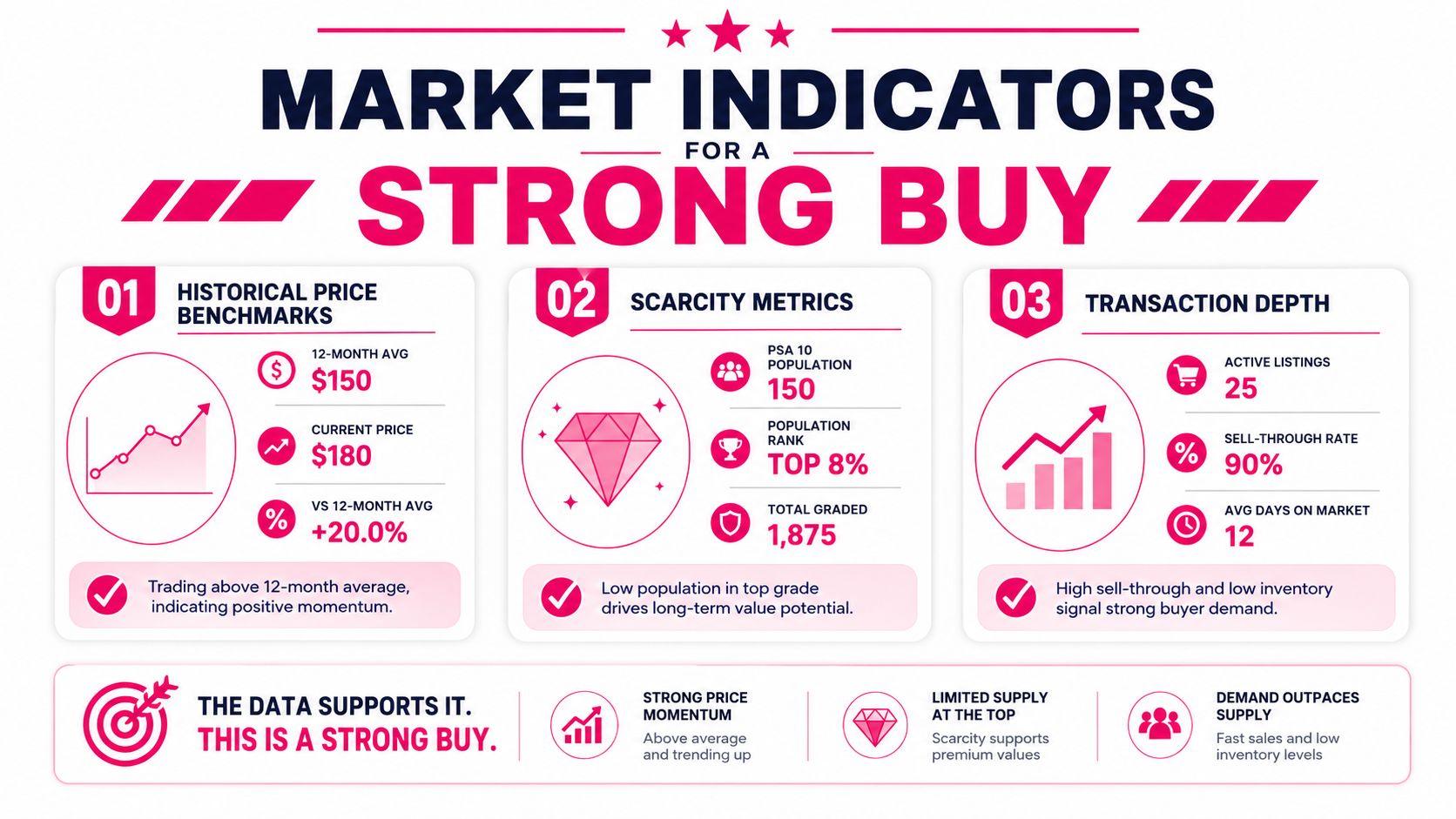
You can also use a broader pricing view to sanity-check whether the market is moving in your favor. A practical reference point for that is the internal analysis on Pokémon card market values, which helps anchor individual card decisions inside the wider market.
Raw Singles vs Graded Slabs vs Sealed Product
Collectors often blur these three categories together, but they don’t behave the same way. Raw singles, graded slabs, and sealed product each carry different risk, different liquidity, and different upside. Buying the wrong form is one of the fastest ways to turn a good card into a mediocre trade.
The form matters as much as the card
Raw cards usually offer the lowest entry cost, but they also carry the widest uncertainty band. You’re taking on condition risk, and that matters more for vintage and chase cards where grading spreads can be meaningful. If the card is structurally clean and the market rewards Gem Mint copies, the raw copy can be the better risk-adjusted entry because you’re paying less upfront for the same underlying demand.
Graded slabs reduce uncertainty, but they introduce a premium that only works if the grade is believable and the market already values that grade. The market’s top-end list shows that vintage and early-era cards can command major premiums in PSA 10 form, which makes slabs attractive for sellers who want cleaner pricing and easier comparisons, but not always for buyers who need room for upside.
Sealed product behaves differently again. It can be the more predictable hold when supply is capped and openings slowly drain inventory, especially for modern sets with strong chase mechanics. Guides focused on modern buying also separate ETBs, booster bundles, and booster boxes because the expected value and the opening profile aren’t the same thing.
| Segment | Entry Cost | Liquidity | Grading Risk | Upside Potential |
|---|---|---|---|---|
| Raw Singles | Lower on average | Depends on demand and condition | High if grading matters | Strong if underpriced conditionally |
| Graded Slabs | Higher because of the premium | Often clearer pricing, easier to compare | Lower after grading, but grade risk already exists | Strong when premium is justified |
| Sealed Product | Variable by set and supply | Often good when demand is broad | None from grading, but price is set by set demand | Strong when openings reduce inventory |
Language and set structure can change the math
Japanese promos and other language variants can create a different demand profile from English copies. That’s not just a collector preference issue, it affects how quickly a card finds a buyer and how much of a premium the market is willing to pay. The broader insight from the market is that the segment is the strategy, not just the card name.
If you want the cleanest risk-adjusted choice, match the form to your objective. Raw is about entry efficiency, slabs are about certainty and comparability, and sealed is about scarcity plus category demand.
Calculating Grading ROI Before You Submit
Grading should be a decision, not a reflex. Too many collectors send cards because they look nice in hand, then discover that the premium they hoped for doesn’t survive fees, grading risk, or a weaker-than-expected grade.
Start with the spread, not the hope
A card is worth grading when the expected post-grade value clears your all-in cost with enough margin to absorb uncertainty. The major graders still use the same basic condition logic, and that’s why centering, corners, edges, and surface matter so much when you’re deciding whether to submit. If a card only clears in a top grade, but the centering is borderline, the math can collapse quickly.
The process should be mechanical:
-
Estimate the raw market value.
-
Add your submission costs.
-
Decide what grade is realistic, not aspirational.
-
Compare that expected slab value to your all-in cost.
-
Walk away if the premium doesn’t leave room for error.
That sounds basic, but it prevents the most common mistake, grading for validation instead of value. A card can look special and still be a poor submission if the premium between raw and slab isn’t wide enough.
Good grading economics: If the grade doesn’t make the card easier to sell, the slab may just be an expensive receipt.
Use the grade to solve a market problem
The job of grading is to convert uncertainty into cleaner resale. That works best on cards where the market clearly differentiates between raw and high-grade copies, or where the underlying card is desirable enough that buyers want certainty. The internal framework on opportunity cost in Pokémon grading is useful here because it keeps the focus on lost margin, not just slab appeal.
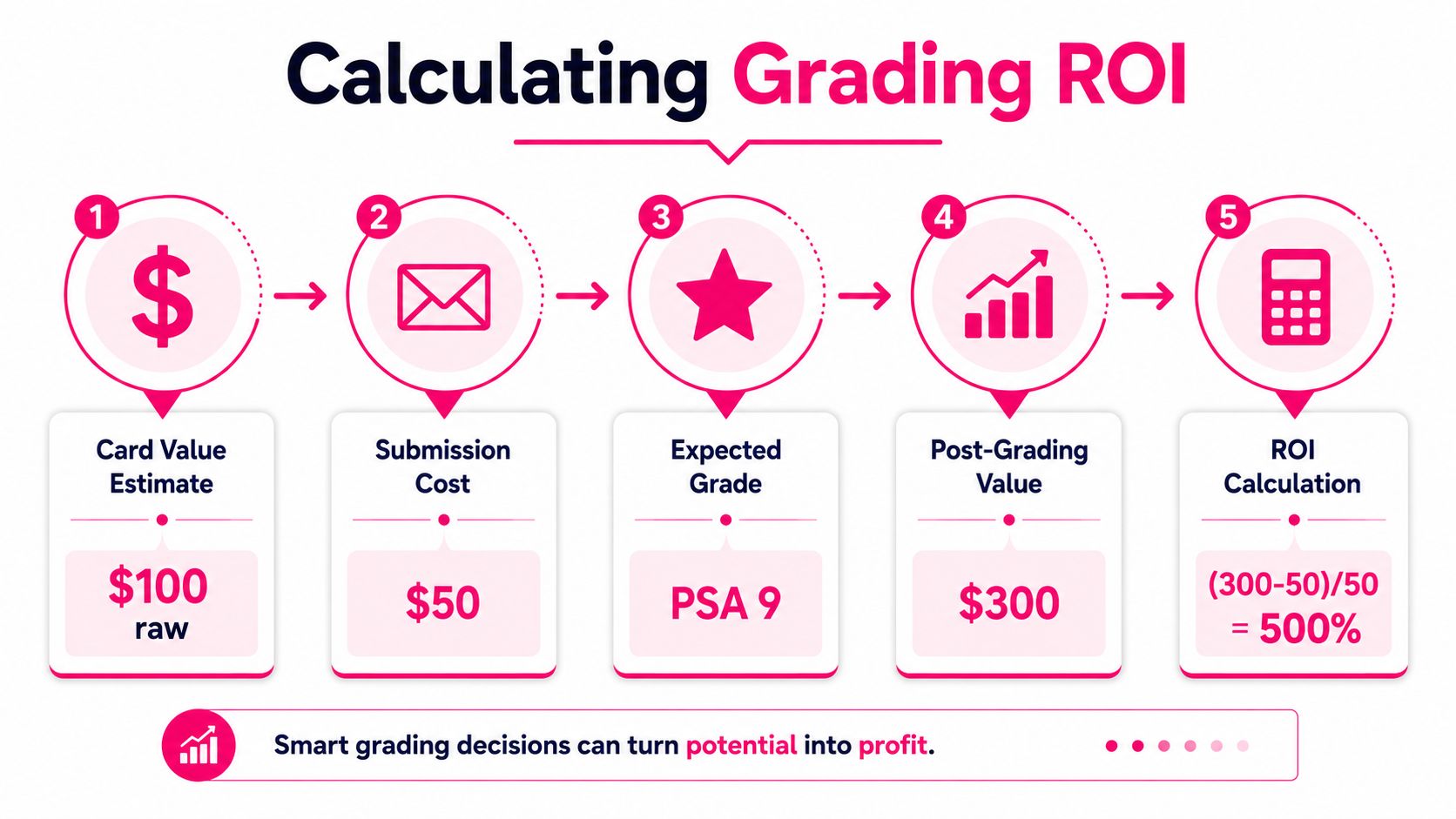
Use grading to improve exit quality, not to gamble on a nicer label. If the expected grade doesn’t support the spread, the raw card is often the smarter buy.
Liquidity and Exit Speed as Buying Criteria
Liquidity should sit near the top of your buying checklist. A card that can be sold quickly at a fair price is often more useful than a card with a bigger theoretical upside but a thin market and a wide bid/ask gap.
Sell-through confidence beats story time
The market data tools that matter most are the ones that show you how often cards trade. Live market platforms and hourly trackers exist because the market moves too quickly for static lists to stay useful. One major gap in Pokémon buying content is that it talks about upside but rarely tells you whether the card can be exited without a discount, which is exactly the difference between a collectible and a tradeable asset.
What matters in practice is sell-through confidence. That comes from broad collector demand, recent sales that keep clearing, and a tighter spread between asking prices and sold prices. A card can be iconic and still be hard to move if the market is shallow. Another card can be less famous and still be a better buy because buyers show up consistently.
How to rank a buy by exit speed
Use these questions before you buy:
-
Are buyers active now? If listings sit for a long time, the market is telling you something.
-
Does the card appeal to more than one audience? Collector demand plus player demand usually helps liquidity.
-
Is the ask close to realized sales? A wide gap usually means you’ll give up margin on exit.
-
Does the segment have depth across regions? Cross-market demand helps, especially for multilingual releases.
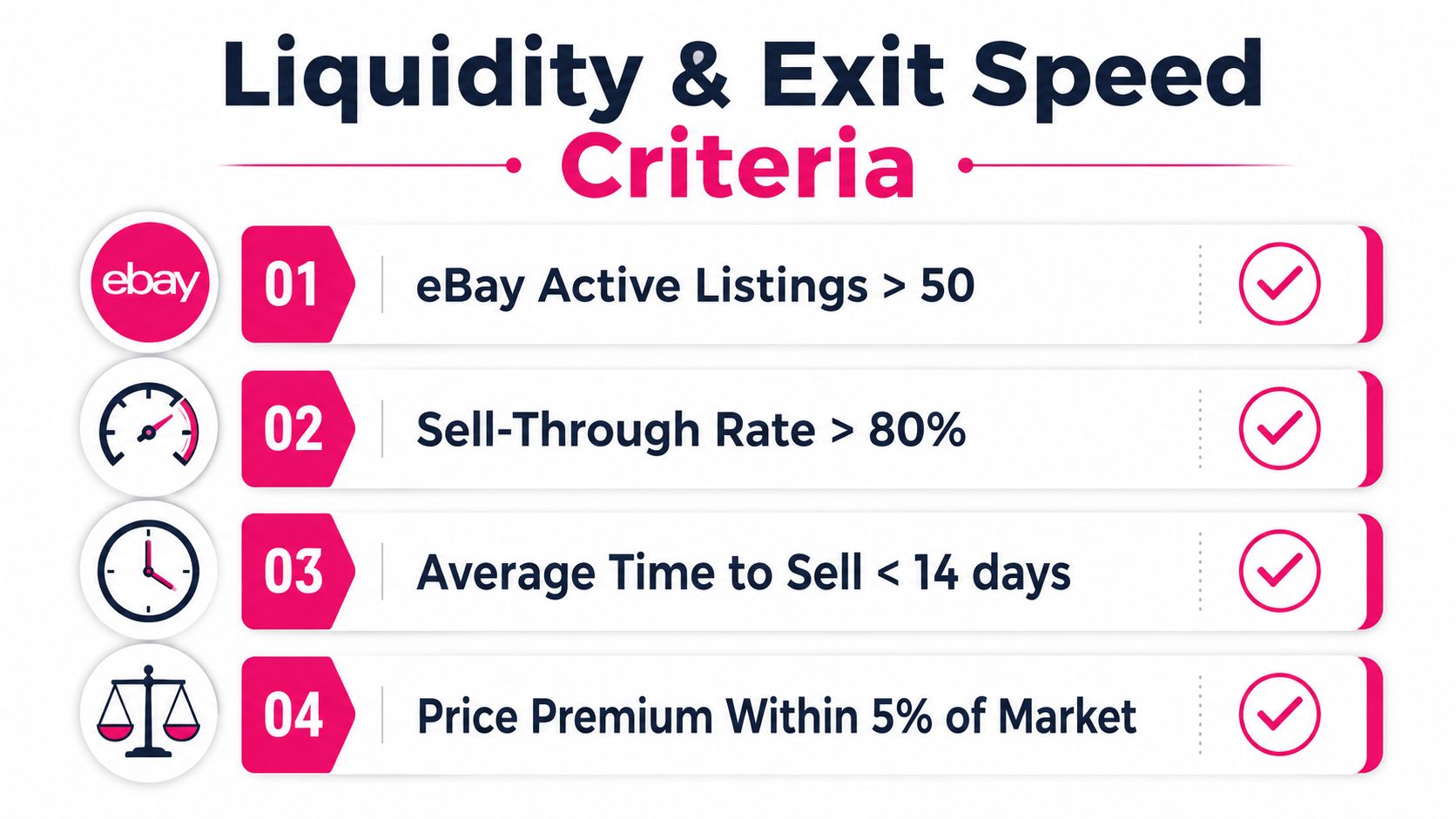
The best purchase isn’t just the card with the nicest story. It’s the one that gives you the cleanest exit when you need it.
Real-World Examples of High-Potential Buys
A useful framework should survive contact with actual cards. The market already shows which categories tend to anchor demand, and the pattern is more instructive than any single headline result.
Where modern chase cards fit
Modern chase cards are usually driven by pull-rate scarcity and special rarity mechanics, which is why Special Illustration Rares and Illustration Rares have become premium slots in Scarlet & Violet-era sets. These cards can be strong buys when the set has broad appeal and openings are pulling sealed inventory out of the market, but they still need liquidity checks. A shiny chase card with weak resale depth is still a trap if the market only wants it in one grade or one language.
For context on how collector sentiment moves around modern releases, the internal pricing note on Crown Zenith price behavior is helpful because it shows how set-level interest can shape demand outside of pure single-card prestige.
The useful takeaway isn’t that one card or one product wins. It’s that the market keeps rewarding three kinds of buys, iconic singles with real collector gravity, graded cards where condition creates a premium, and sealed product where scarcity and broad demand reduce uncertainty.
Building Your Data-Driven Buying Strategy
Static watchlists don’t age well in this hobby. A better approach is to monitor listings, compare spreads, and use tools that surface underpriced inventory before the rest of the market notices it.
Treat the market like a live system
A serious buying setup should track alerts, price trends, and sale history together. That’s how you catch arbitrage, spot a sudden spike, and avoid buying into a move that’s already exhausted. Professional charting tools such as RSI, MACD, and Bollinger Bands can help with timing, but only if you’re already filtering for cards with real liquidity and a believable exit path.
This is also where a platform like Double Holo fits naturally, because it combines raw and graded singles, sealed product, multilingual releases, live bid/ask pricing, daily AI buy/sell/hold picks, and grading ROI tools in one place. It’s one option among several market tools, but the important part is the workflow, one market view, one alert system, one place to judge whether a card is worth buying, grading, or passing on.
Buy with exit in mind
The hardest discipline is ignoring cards that look exciting but don’t fit your timeline. If you buy for resale, choose cards and products with enough depth that you can exit without waiting for a perfect day. If you buy for collection, the same framework still helps you avoid overpaying for a card that only feels liquid because it’s famous.
The market rewards people who read the spread, not the slogan.
If you want a more disciplined way to find the best Pokémon cards to buy now, use a framework that weighs liquidity, grading math, and segment choice before hype. Visit Double Holo to compare live market signals, monitor opportunities, and make your next buy with a clearer exit plan.