What makes Pokemon card price data trustworthy
A price chart is only useful if the numbers behind it are real. Double Holo's price history is built from actual market data rather than a static list price or a guess, and it draws on two different sources depending on whether a card is raw or graded, because those are genuinely different pricing problems.
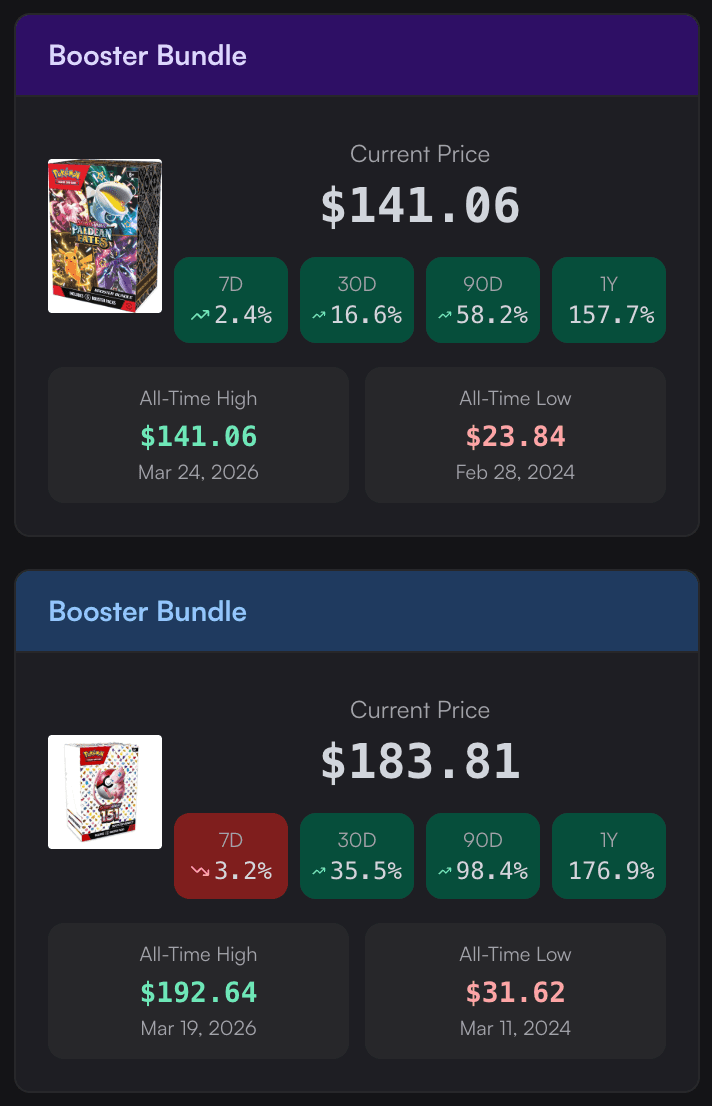
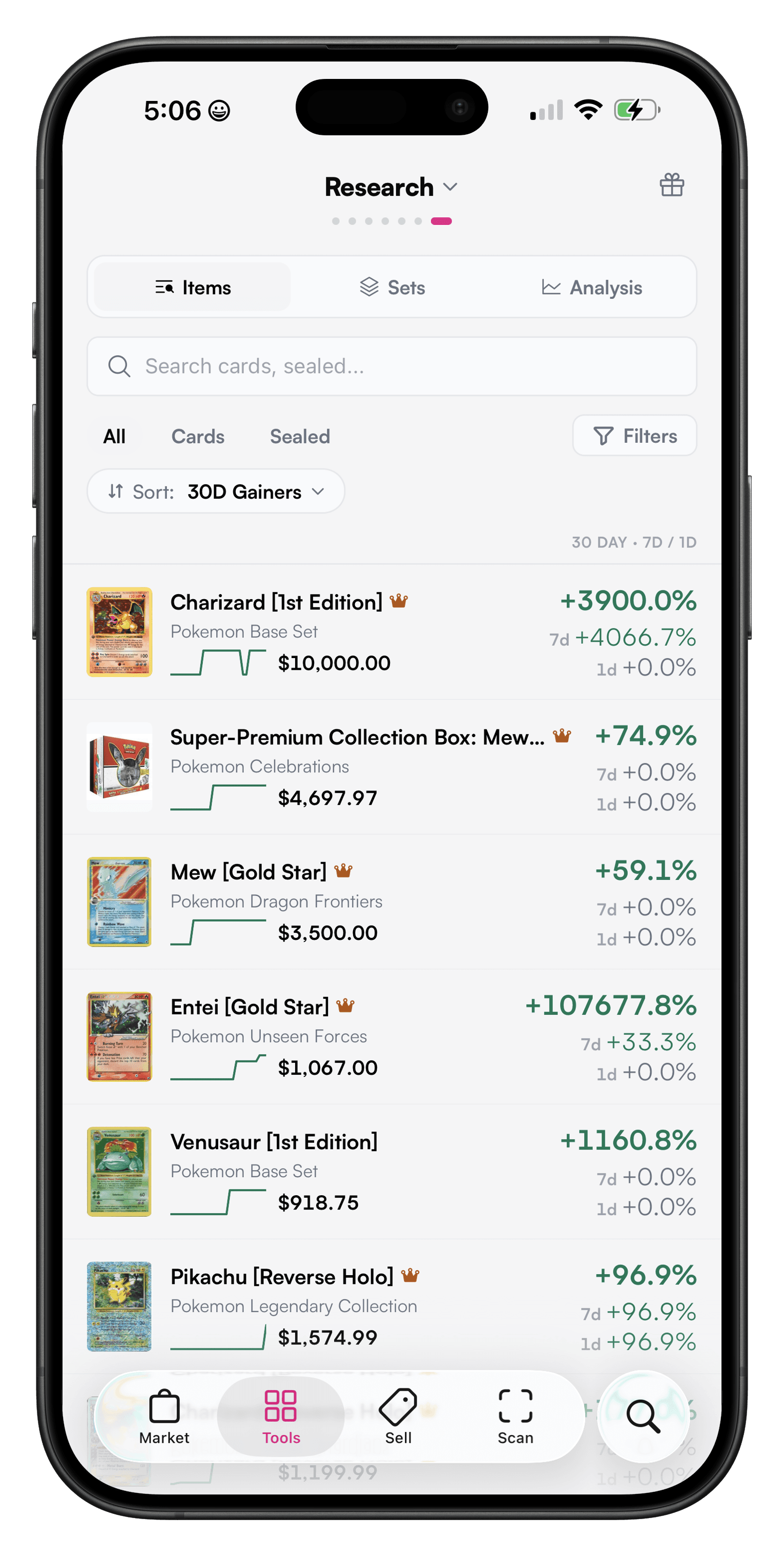
For raw cards and sealed product, Double Holo's research tools pull from a live market-price feed and match it against Double Holo's own card catalog, so the chart you see is tied to the specific card you searched for, not a generic average for the set.
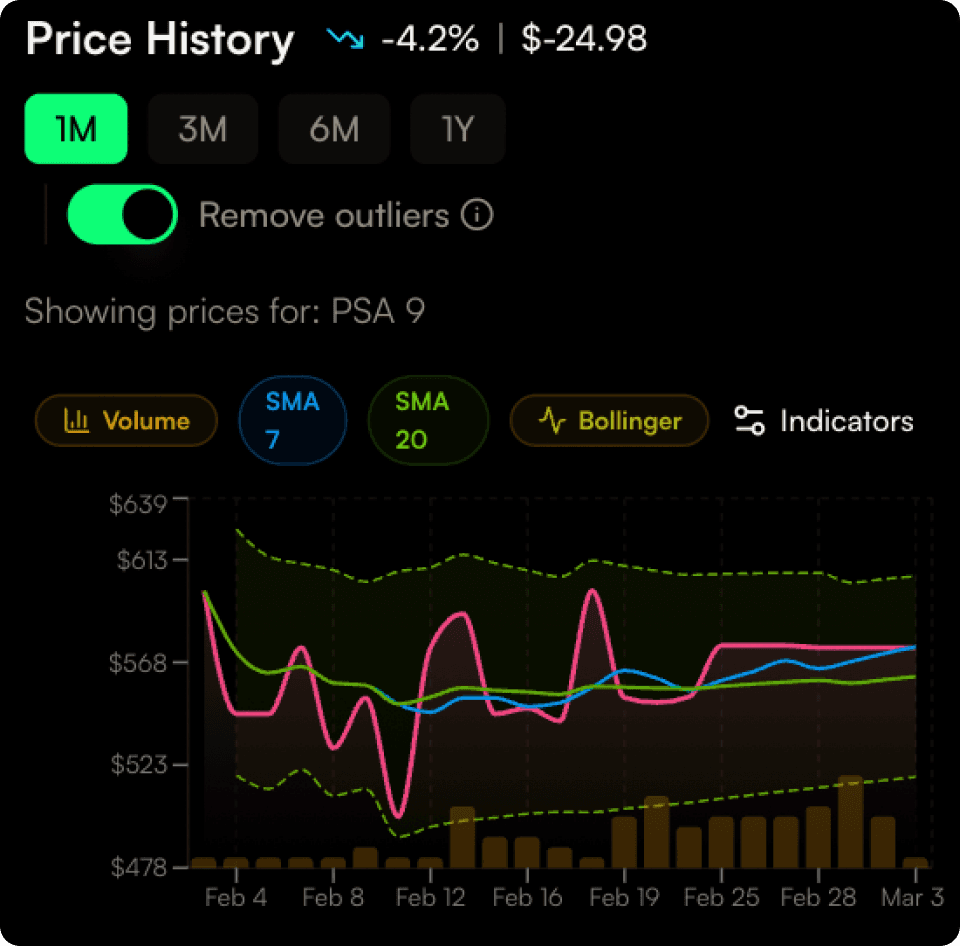
Graded cards work differently, because a graded card's price depends entirely on the exact grading company and grade, not just the card. A PSA 10 and a PSA 9 of the same card are not the same product, price-wise, so Double Holo's graded market price is built from real trusted sales in that exact grade rather than one blended number for "graded." When there isn't enough sales data to trust, Double Holo says so rather than showing a number that looks precise but isn't backed by real sales, the same discipline used across the whole platform, including the pokemon card price tracker on the premium tools hub.
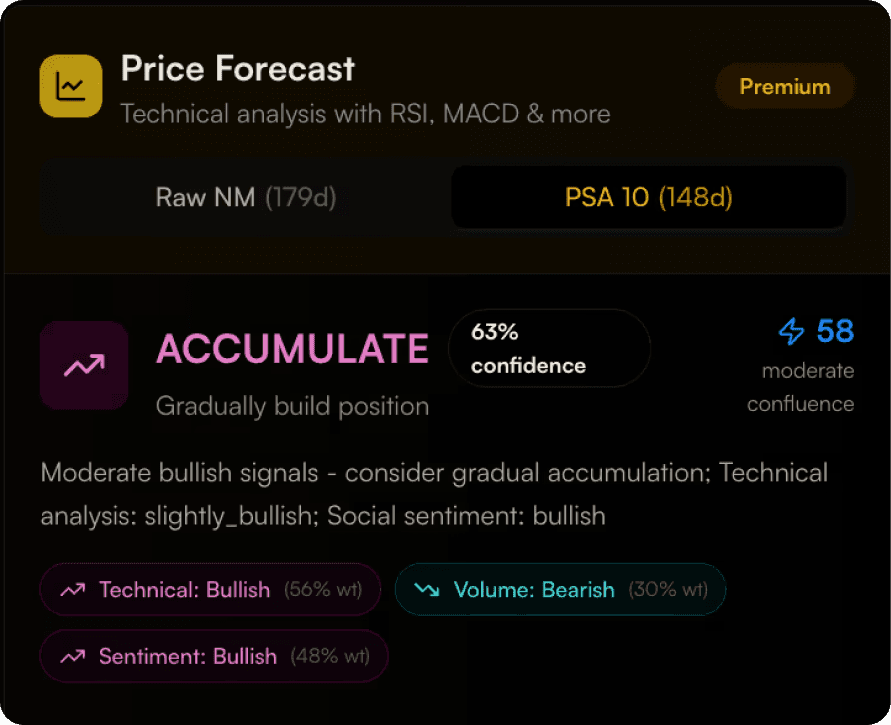
On top of the raw price history, Double Holo layers trend indicators (volume, RSI, MACD, Bollinger Bands) so you can read momentum, not just the price line, and a forecast that projects where a graded card's price may be headed based on its recent trend. A forecast is an analytical estimate to plan with, not a promise of what the card will actually sell for next.
Double Holo holds every analytical output to that same distinction: a price forecast, a Grading ROI average, or a sentiment score is a useful number, but none of them gets relabeled as the market price, so you can always tell an estimate from an actual sale. The comparison view carries that same rigor into how it measures two cards against each other, computing a correlation score over whichever timeframe you are viewing, 30 days, 90 days, one year, or the full history, so you see not just how each card moved but how closely their price movements actually track one another.
See the real price history, not a guess
Search any Pokemon card to see its charted sales history, trend indicators, and forecast, backed by real market data.