Grading ROI Calculator

A grading ROI calculator shows whether a raw Pokemon card is worth grading by comparing raw value against graded sale prices minus grading fees across PSA, BGS, CGC, and TAG. Double Holo runs that math for you from recent sales and shows worst, average, and best case profit for each grade, so you know whether a submission will make or lose money before you send the card in.

How the grading ROI calculator works

  1. 1

    Find your exact card

    Search for the card and set you are thinking about grading. The exact card matters because ROI is specific to that print, not the whole set.

  2. 2

    Pick a grading company and grade

    Choose PSA, BGS, CGC, or TAG and the grade you expect. The calculator scopes every number to that exact company and grade, since a PSA 10 comp is not a PSA 9 comp.

  3. 3

    See raw value versus graded, minus fees

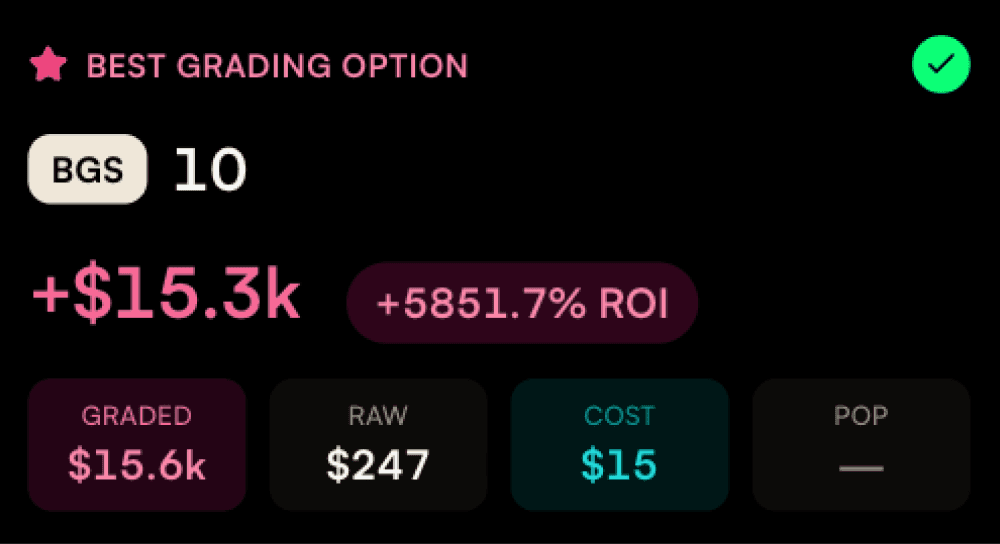
    Double Holo pulls recent sale prices for the raw card and the graded card, then subtracts the grading fee so the profit you see is what actually lands in your pocket.

  4. 4

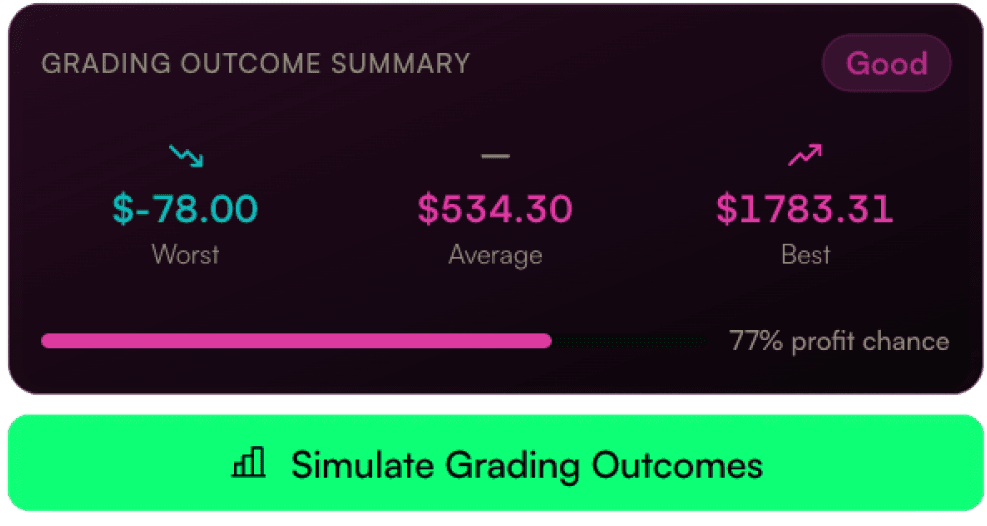
    Compare worst, average, and best case

    Read the profit range across all four grading companies side by side, so you can decide whether to submit, wait, or sell the card raw.

Grading ROI table comparing PSA, BGS, CGC, and TAG profit for a Pokemon card
Grading cost and expected profit breakdown for a Pokemon card submission
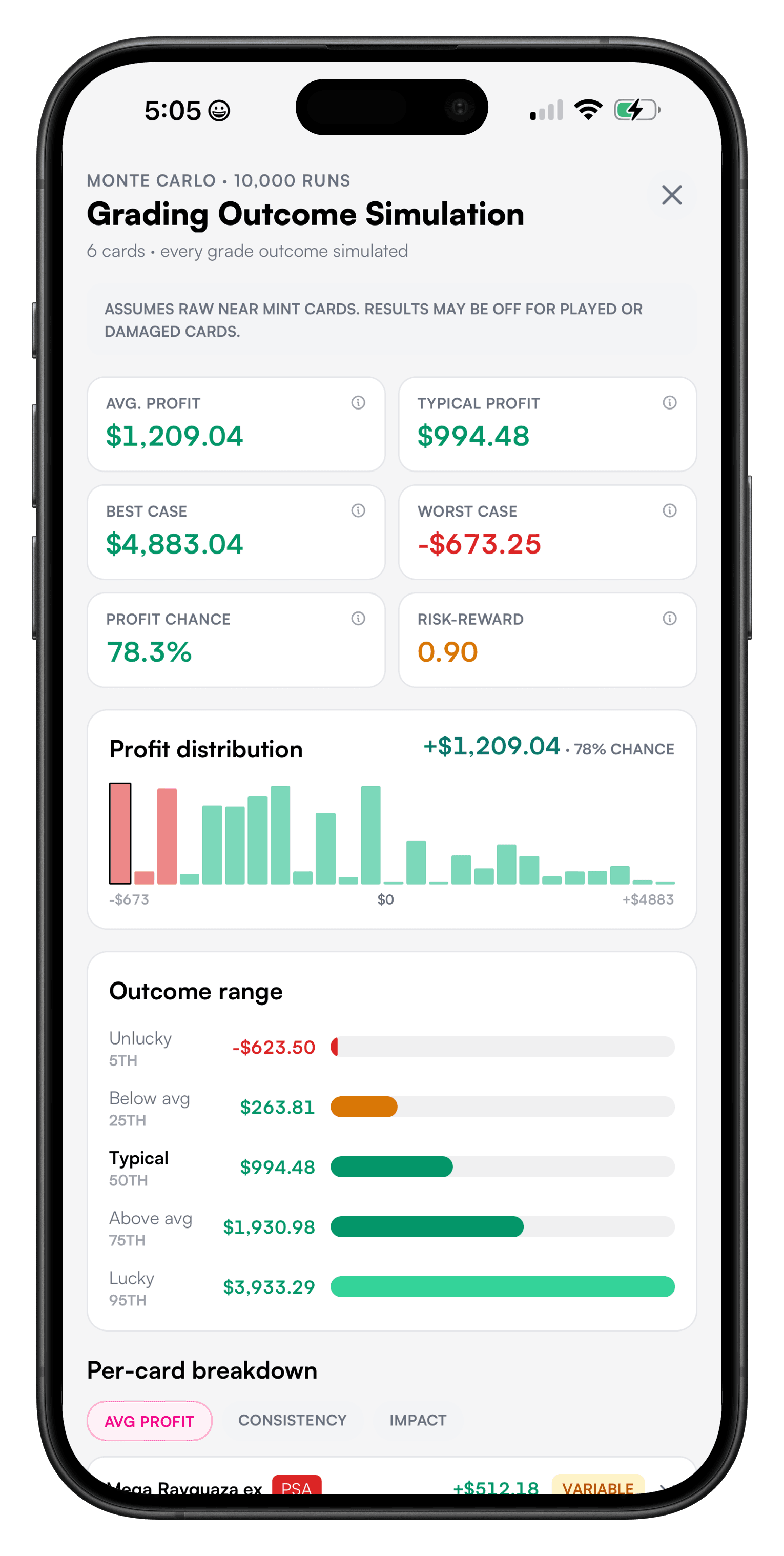
Grading ROI outcome on mobile showing worst, average, and best case profit for a graded Pokemon card

120,000+

collectors on Double Holo

4.6

average rating

  • Compares grading ROI across PSA, BGS, CGC, and TAG
  • Worst, average, and best case profit for every grade
  • Grading fees subtracted from every estimate
  • Prices scoped to the exact grading company and grade

What actually moves grading ROI

Grading a card only makes money when the graded card sells for enough more than the raw card to cover the grading fee and still leave a profit. That gap is the whole game, and it is different for every card, every grade, and every grading company. A grading ROI calculator exists so you do not have to gather all of those numbers by hand and guess.

The first thing that moves ROI is the spread between the raw price and the graded price. Some cards barely move in value once slabbed, so the fee eats any upside. Others carry a large premium in a high grade because collectors pay up for a clean copy. The calculator shows this spread per grade, because the premium for a top grade is usually far bigger than the premium for a mid grade.

The second thing is the gem rate, which is simply how often that card earns the top grade when it is submitted. A card that grades well most of the time is a safer bet than one with sharp edges or centering problems that usually land a grade or two lower. Since you cannot know your card's grade in advance, Double Holo frames the outcome as a range: worst, average, and best case, so you can weigh the downside instead of only dreaming about a perfect ten.

The third thing is grading fees, which vary by company and by service tier, with faster turnaround generally costing more. A fee that is small against a high-value card can wipe out the entire margin on a cheaper one, which is why the calculator subtracts the fee for you rather than leaving it as a mental footnote.

The fourth thing is population, meaning how many copies already exist in that grade. When a grade is already common, the graded premium tends to compress because supply is deep. When the top grade is genuinely scarce, the premium holds up better. All of this is grade specific, so a market price is only meaningful for one exact company and grade at a time. The graded prices Double Holo compares against come from recent trusted sales in that exact grade, and the ROI average is an analytical estimate to plan with, not a guaranteed sale price.

Unlock it with Double Holo Premium

Every annual plan starts with a 3-day free trial and full access to every tool.

Most popular

Essentials

The core tools serious collectors use daily.

$4.58/moSave 50%

Billed annually at $54.99/yr

or $8.99/mo billed monthly

  • AI Card Picks, Grading ROI Analysis, Social Media Sentiment, Pack Value Analysis, and Research tools
  • Watchlist alerts on up to 50 cards
  • Advanced charting indicators
Start free trial

3-day free trial. Cancel anytime.

Growth

Everything in Essentials, plus pro alerts and reduced fees.

$14.17/moSave 29%

Billed annually at $169.99/yr

or $19.99/mo billed monthly

Everything in Essentials, plus:

  • Free Shiny Pro access($72/yr value)
  • +50 more watchlist cards with alerts (100 total)
  • Real-time custom card alerts
  • Slab Insights chart
  • Discord market alerts (price spikes, arbitrage, buyouts)
  • Reduced seller fee from 4.9% to 4.7%
  • Reduced promote-a-listing fee to 1.9%
  • PokeNotify global restock alerts($96/yr value)
Start free trial

3-day free trial. Cancel anytime.

Frequently Asked Questions

How much does a Pokemon card need to be worth to make grading worth it?

There is no single dollar threshold, because it depends on the gap between the raw and graded price for that exact card. Grading pays off when the graded sale price, minus the grading fee, beats what you could sell the card for raw. The calculator does that subtraction for you per grade across PSA, BGS, CGC, and TAG, so you can see the break-even instead of guessing.

Which grading company gives the best ROI, PSA, BGS, CGC, or TAG?

It varies by card. PSA often carries the widest resale market, but a card can have a stronger premium in BGS, CGC, or TAG depending on demand and how many copies already exist in each holder. The calculator shows all four side by side so you can pick the company with the best expected profit for that specific card.

Does the grading ROI calculator include grading fees?

Yes. Grading fees are subtracted from every estimate, so the profit figure you see is after the cost of submitting the card. Fees change with the company, the service tier, and turnaround speed, and a fee that is small against a high-value card can erase the margin on a cheaper one.

How accurate is the grading ROI calculator?

The graded prices come from recent trusted sales in the exact grade you choose, so the estimate reflects the real market rather than a made-up multiplier. It is still an analytical estimate, not a promise: your card's final grade and the market on the day you sell both matter, which is why Double Holo shows a worst, average, and best case range instead of one number.

Can the calculator tell me the chance my card gets a PSA 10?

No tool can guarantee a grade from a photo, and Double Holo does not pretend to. Instead it models the outcome as a range across grades, so you can see what you make if the card comes back lower than hoped, not just the best case. Condition, centering, and edges drive the real result, so inspect the card carefully before you submit.

Related tools

Know before you submit

Run the numbers on any card and see the profit range across PSA, BGS, CGC, and TAG before you pay for a single submission.