You pull an old binder off a shelf, crack it open, and immediately hit the same question every collector asks sooner or later, what’s worth pricing carefully and what’s just nostalgia. A binder page can look messy and ordinary until you start matching the exact card, checking condition, and comparing it to real sales. That’s the difference between guessing and knowing how to find pokemon cards value the right way.
A common error is treating value like a single number printed somewhere on the internet. In practice, a card’s price depends on identity, condition, market timing, and whether grading changes the economics enough to matter. Serious sellers use a repeatable workflow, not a quick search, because one wrong comparison can lead to a bad trade, a lowball sale, or an expensive grading submission that never made sense in the first place.
Table of Contents
Found Your Old Binder? Here Is Where to Begin
The first reaction is usually emotional. You see a Charizard, a shiny reverse holo, or a stack of old commons, and your brain jumps straight to money. The better move is to slow down and treat the binder like inventory, because a real valuation starts with sorting what you have, not dreaming about what it might be worth.
A simple example makes this obvious. Two cards with the same Pokémon name can live in completely different markets if one is a promo, one is a rare set pull, or one has a finish variation. That’s why a quick scan of the binder should be about identifying candidates, not pricing them yet.
Practical rule: don’t price from memory. Pull the card, identify the exact version, and then look for sold comps that match that version.
If you’re trying to decide whether old cards deserve a deeper look, start with the binder as a triage job. Separate obviously modern bulk from older holos, promos, and anything with a rare symbol or unusual treatment. If you want a broader sanity check on older cards before going card by card, this guide on whether old Pokémon cards are worth anything is a useful companion read.
A valuable outcome here is avoiding the common trap of looking at a binder page and assuming the highest-visible card sets the tone for everything else. A seller at a show doesn’t do that. They sort, identify, and then verify. That’s the same mindset that keeps you from overvaluing a pile of bulk or underpricing a sleeper card hiding in plain sight.
Correctly Identify Your Pokémon Card
Start with the three identifiers that matter most
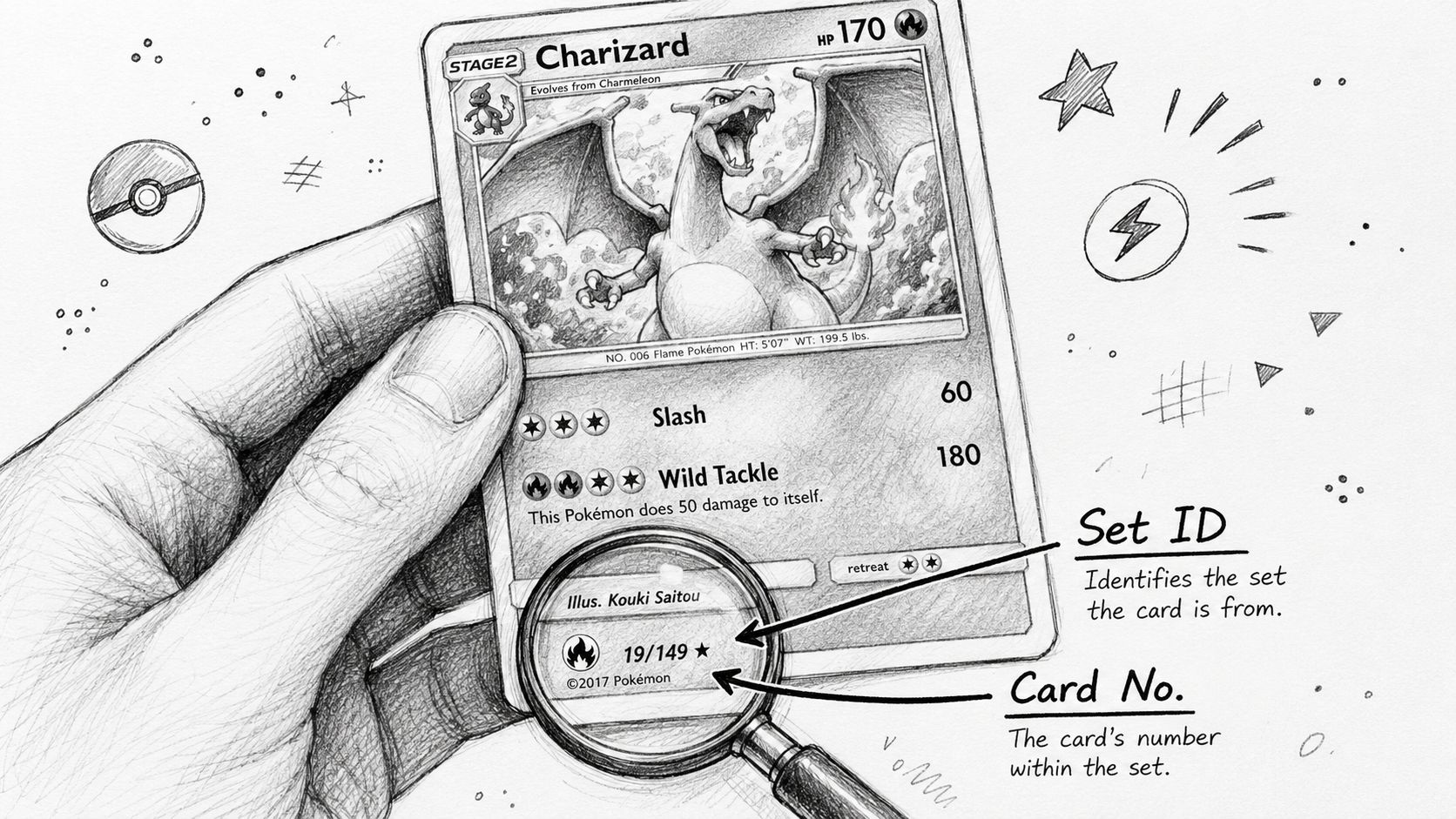
The card name alone is not enough. The reliable fields are the set symbol, the collector number, and the exact variant, because those details separate one printing from another and keep you from pricing the wrong card. One guide says those three details “uniquely identify any Pokemon card ever printed”.
Check the lower corner first, then read the set number and denominator. A card marked 6/102 is not the same SKU as a parallel print, a promo, or a different language release. That matters because different print runs and regions trade in separate markets, and a mislabeled comp can throw off the entire valuation.
Sort rarity and finish before you search
Use the rarity symbol as a fast filter. A circle means common, a diamond means uncommon, and a star means rare YouTube guide. That doesn’t tell you final value by itself, but it tells you which cards deserve real market attention first.
Then check the finish. Holo, reverse holo, and non-holo versions don’t price the same, and the same goes for edition markers like 1st Edition, Shadowless, or stamped promos. A robust valuation workflow also accounts for language/region, rarity/finish, and edition markers, because those variants often trade in different pools and different price bands.
A raw card, a graded card, and a card in another language are not interchangeable comps. Mixing them is one of the fastest ways to misprice inventory.
Keep one card, one exact identity
That rule sounds obvious until you’re standing at a table with ten nearly identical cards and a buyer asking for a number. If the card is from a set with multiple variants, use the card number, finish, and edition marker before you even think about comping it.
One more habit pays off fast. Write down the identity before you compare prices, because once you start opening tabs and bouncing between marketplaces, it’s easy to confuse similar-looking cards. If you’re pricing cards at a show, that discipline saves time and prevents the most expensive mistake in the whole process, pricing the wrong version.
Analyze Real Sales Data Not Asking Prices
Asking prices show hope, sold prices show reality
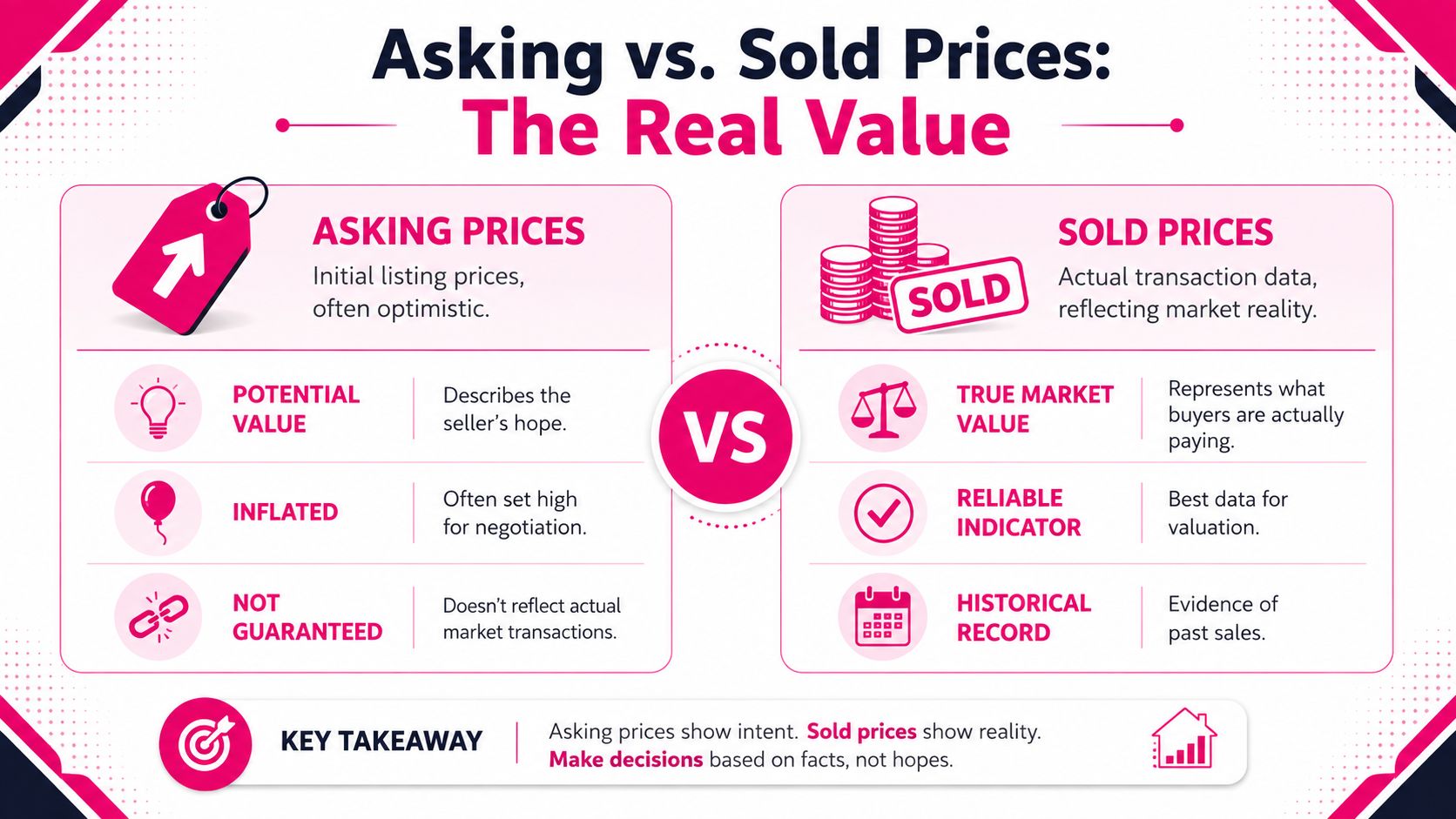
A listing price is just a seller’s opening number. It can be optimistic, inflated, or flat-out disconnected from what buyers pay. Sold data is the reliable anchor, because completed transactions show the clearing price, not the wish price.
The cleanest way to do this is to search the exact card name plus set and collector number, then filter to Sold Items and review recent results. One appraisal guide recommends looking at the last 10–20 sales for cards in similar condition to estimate current value PokeScope appraisal guide. Another workflow recommendation says to pull 3–7 recent sold comps that match on variant and condition, then use a median or trimmed average rather than asking prices.
Use recency as part of the filter, not an afterthought. Recent solds are the closest proxy for what clears now, while active listings mainly reflect seller optimism. That’s especially relevant in thin markets, where one unusual sale can warp a headline number and make a card look stronger than it really is.
Build a range, not a fantasy number
At the table, I don’t want a perfect answer from a single sale. I want a defensible range. The best practice is to look at several recent sales, discard obvious outliers, and average the rest so one hype sale or one distressed sale doesn’t distort the result.
That’s also where tools help if they’re using sold data correctly. Some modern checkers update daily, compare cards against large priced-card databases, and show live raw and graded values from actual marketplace sales. That’s useful because it reduces the time spent jumping between platforms and makes your first pass faster.
If you’re comparing a card from different marketplace contexts, keep the comparison tight. Don’t mix raw with slabbed, don’t mix English with Japanese unless you know the market split, and don’t rely on a single asking price that looks convenient. The goal is a realizable price, not a headline price.
Why sold data beats a quick lookup
A quick lookup can tell you what people hope a card is worth. Sold comps tell you what occurred. That distinction matters even more for cards with volatile demand, because a price that looks clean on a search page can hide a stale listing, a lowball outlier, or a value pulled from the wrong condition bucket.
A practical vendor workflow is to use sold comps first, then cross-check with a pricing tool that can show condition tiers and recent sales trends. If you want a simplified approach to that process, this guide to checking Pokémon card prices is worth keeping handy. Once you’ve locked the sold range, you can move on to condition with much less guesswork.
Mastering Card Condition Assessment

Inspect the card under strong light
Condition is where raw-card pricing becomes technical. Market prices usually assume near-mint quality, so even small flaws can move a card down several tiers in practice. One valuation guide states that edge whitening, scratches, and creases can reduce price by 10–70%, depending on severity.
Hold the card under bright light and check four areas in order, corners, edges, surface, and centering. Corners tell you about whitening and roundness. Edges reveal nicks and silvering. The surface shows scratches, dents, and print lines. Centering helps you judge how cleanly the borders were cut.
Use a simple grading bucket before you compare
Don’t try to sound like a professional grader if the card isn’t going to a grading company. Use a practical internal grade such as NM, LP, MP, HP, or DMG, then compare it to sold comps in that same bucket. That keeps you from comparing a lightly played raw card to a near-mint sale and calling it “close enough.”
A card that looks only a little worn can still fall hard in market value if the whitening, dents, or scratches are obvious under light.
The hard part is being consistent. One minute of inspection saves a lot of money later, especially on older or more fragile cards where small flaws matter more than they do on modern pack fresh pulls. For higher-end inventory, this is also where raw and graded markets should stay separate, because the same card can behave very differently once slabbed.
Don’t confuse wear with saleability
A card can be attractive to a binder collector and still trade like a lower-condition copy. That’s why a seller needs to think in buckets, not vibes. If the surface is clean but the edges are rough, the card may still be desirable, just not at the same price as a crisp near-mint copy.
The same logic applies when you’re sorting a pile for a show. Put the cards that need closer attention in one stack, then compare them against same-condition solds only. If you want a visual refresher on the process, the embedded grading clip below gives a useful walk-through of what collectors usually inspect first.
That discipline matters because condition analysis isn’t just about cosmetic judgment. It directly changes what you can ask, what a buyer will accept, and whether grading has any chance of making financial sense.
Calculate the Grading Premium or Penalty
Compare raw value against slab value
Grading only helps when the premium is large enough to justify the fees and time. One educational guide notes that a mint card can be worth 10× more than a damaged copy, and that value checkers commonly compare raw prices with PSA 10, BGS, and CGC values to show the top-grade premium YouTube grading guide. The same source shows a Rayquaza VMAX at about $630 raw versus about $1,400 in PSA 10 condition YouTube grading guide.
That spread is the core question. If a card’s raw market price is already close to what a graded copy might net after costs, the submission may not be worth the wait. If the premium is wide and the card is in strong condition, grading can turn a decent raw card into a much stronger resale asset.
Decide whether the card deserves the slab
Many sellers make their worst mistake, they grade by hope instead of by math. A card that looks nice is not automatically a grading candidate. It needs enough upside to survive fees, shipping, and turnaround time.
Rule of thumb: grade for margin, not for pride. If the spread doesn’t justify the process, sell raw and move on.
A practical workflow is to compare the raw card against recent graded sales in the same service level, then estimate whether the expected upside clears your all-in cost. If you want a structured version of that comparison, this graded card price guide is the right reference point.
Use tools that show the decision, not just the price
A good grading workflow doesn’t stop at a market number. It should show the likely return path, the downside if the grade comes in lower than expected, and whether the card is better off staying raw. That’s why tools with grading ROI logic are useful, because they frame the choice as a business decision instead of a hope trade.
Double Holo fits naturally here as one option among tools that combine market intelligence and grading analysis in the same workflow. Used properly, that kind of setup helps you decide whether to sell, hold, or grade before the card leaves your desk.
Putting It All Together Your Valuation Workflow
The professional process is simple once you strip away the noise. First, identify the exact card variant, not just the Pokémon name. Second, compare recent sold listings for the raw card. Third, adjust for condition by matching the closest condition bucket. Fourth, check whether grading creates enough premium to justify the cost.
That loop is how experienced vendors price cards at a show without getting trapped by a single listing or an optimistic asking price. It also keeps your decisions consistent when the market is moving, because you’re anchoring every number to the same sequence of checks instead of improvising from one card to the next.
A fast workflow matters most when the market is messy, because scattered comps and mismatched conditions can make the same card look cheap in one tab and expensive in another. The seller who wins is usually the one who compares the right version, the right condition, and the right sale history before speaking first.
If you want to make that process faster, Double Holo brings together market intelligence, sales data, and grading tools in one place for collectors and vendors who need to price accurately. Visit Double Holo and use it to check sold comps, test grading scenarios, and turn your next binder sort into a real valuation workflow.