

Old Pokémon cards can be worth about $5 to $500,000, but most of them aren’t valuable just because they’re old. The money sits in scarcity, condition, and grade, not age alone, which is why a worn binder card can be close to pocket change while a pristine chase card can sell for serious money.
Table of Contents
The Value Range and the Age Misconception
Old Pokémon cards can be worth anything from a few dollars to six figures. That sounds like a collector’s exaggeration until you look at the spread. One independent 2026 guide puts the overall range at about $5 to $500,000, and says a 1st Edition Base Set holographic Charizard can trade around $4,000 to $7,000 in PSA 7, $8,000 to $15,000 in PSA 8, $30,000 to $60,000 in PSA 9, and $250,000 to $500,000+ in PSA 10. The same source also notes that even an average played 1st Edition holo rare can still bring $200 to $5,000+.
That range is the first thing new sellers get wrong. They assume age is the asset, when the market pays for a narrow combination of scarcity, preservation, and demand. A heavily played common card from 1999 is still a card from 1999, but that doesn’t make it rare enough, desirable enough, or clean enough to command much money.
The headline card is not the average card
The vintage market is extremely skewed. A small number of iconic cards drive the headlines, while most common or badly worn cards sit near the floor. That’s why a child’s old binder can contain one card that matters and dozens that don’t, even if every card came from the same era.
A card’s age is the starting point, not the price tag.
The practical lesson is simple. If you found old cards, don’t ask first, “How old are they?” Ask, “Which card is this, how scarce is it, and what shape is it in?” That order matters because the same era contains both high-end collectibles and cards that are only worth the effort if you’re already selling in bulk.
The Three Factors That Determine Card Value
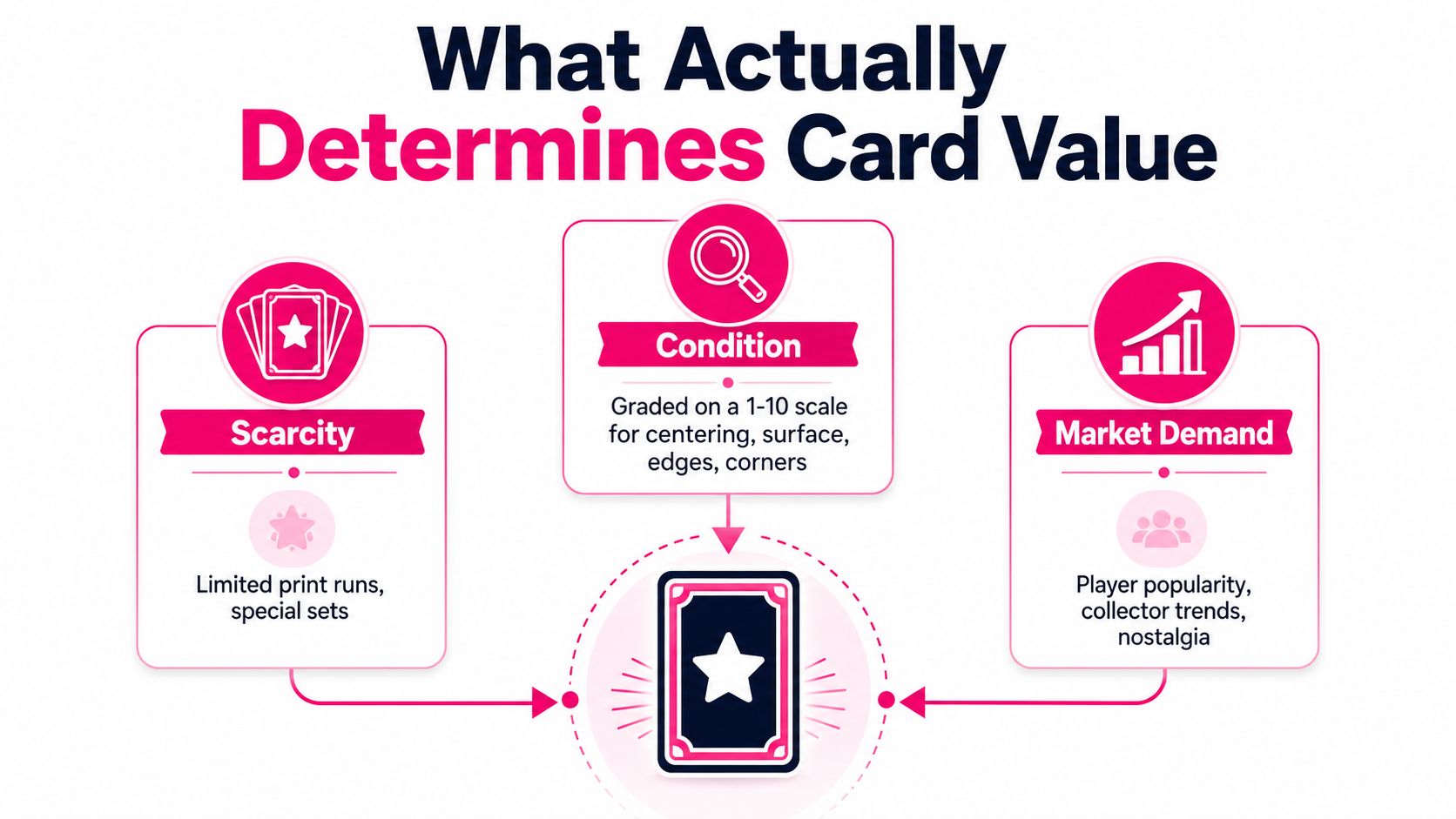
Old cards are only worth real money when scarcity, condition, and market demand all point in the same direction. If one of those three is weak, the price usually stays weak too. When they line up, a card that looks ordinary in a binder can still attract serious buyers.
Scarcity sets the ceiling
Pokémon’s first North American release in 1999 created the Base Set era, and early print runs benefited from limited supply and decades of attrition Elite Fourum market discussion. One market guide says 1st Edition cards are worth 5 to 20 times more than Unlimited prints, while Shadowless Base Set cards are worth 3 to 6 times Unlimited versions. That is not a minor premium. It shows that the print state can matter more than the age of the card itself.
The same source gives a useful real-world split. A 1st Edition Base Set Charizard in near-mint condition is about $3,000 to $6,000, while the Unlimited version is roughly $300 to $500. Another guide says a played Unlimited Base Set Charizard might only bring $30 to $50. That gap is a blunt reminder that print variant and wear can change the outcome completely.
Scarcity is also why collectors spend time hunting for the right copy instead of just any copy. If you are sorting through old binders, a scarcer version usually deserves a closer look, especially if the card is a chase piece or a recognizable holo. That is also why tools like a guide on finding Pokémon cards worth grading can help narrow down which cards deserve extra attention and which ones are better sold as raw bulk.
Demand has to be there too
Scarcity alone does not create value. Collectors still have to want the card, and that demand usually clusters around recognizable artwork, famous sets, and cards with a story people understand fast. That is why the market rewards iconic vintage chase cards far more than obscure old cards with little collector pull.
A card can be hard to find and still be a slow sell if nobody is chasing it. For a practical buyer or seller, the strongest cards are usually the ones that are both scarce and easy for the market to recognize. If a card needs a long explanation before anybody cares, the ceiling is usually lower. If it is a famous chase card from an early set, the ceiling can be much higher, especially in strong condition.
Condition and Grading The Value Multiplier
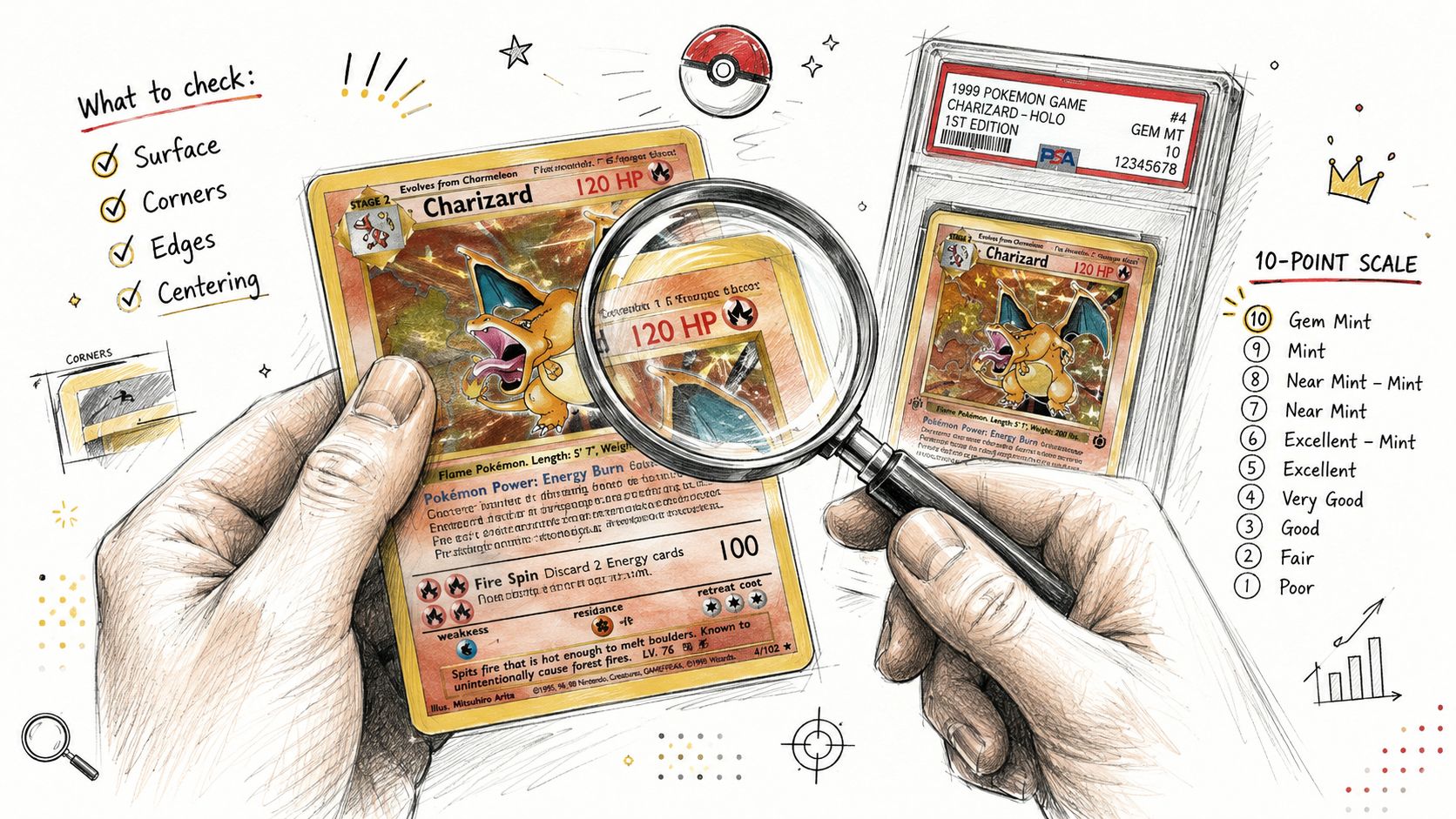
Condition is where a lot of owners overestimate a card’s value. A copy that looks fine in a sleeve can lose a large share of its price once it is inspected closely, because grading services judge centering, surface, edges, and corners on a 1 to 10 scale USA Today on card authentication and price impact. In practice, “pretty good for its age” and “worth grading” are very different standards.
Grading only helps when the card can justify it
The common mistake is assuming grading always adds value. A worn card with scratches, whitening, or off-center printing can come back in a grade that does not cover the submission cost or the wait, so the slab does not change the economics in a meaningful way.
Practical rule: grade the card, not the dream. If the raw copy does not already show strong condition, the slab will not fix it.
That is why low-grade vintage cards usually stay low-grade vintage cards. Buyers pay more for authenticated, well-preserved copies because they trust what they are getting, and because scarcity at the top end becomes part of the price. Industry guides consistently note that PSA 10 vintage cards can command 10 to 30 times raw Near Mint prices, which shows how steep the premium can be for a true gem copy.
When grading is the wrong move
Sellers need to be honest about wear. If the card already has edge whitening, obvious surface damage, or poor corners, grading can be a bad bet. The slab may still help with protection or authentication, but that does not mean it will improve the return.
For cards with modest value, I ask one question before sending anything in. If the card comes back lower than I hope, will I still be satisfied with the result? If the answer is no, I keep it raw and sell it raw, or I skip grading altogether. A practical way to narrow the field is to use this guide to choosing cards to grade before you package anything.
Print Variants and Rarity Markers to Look For
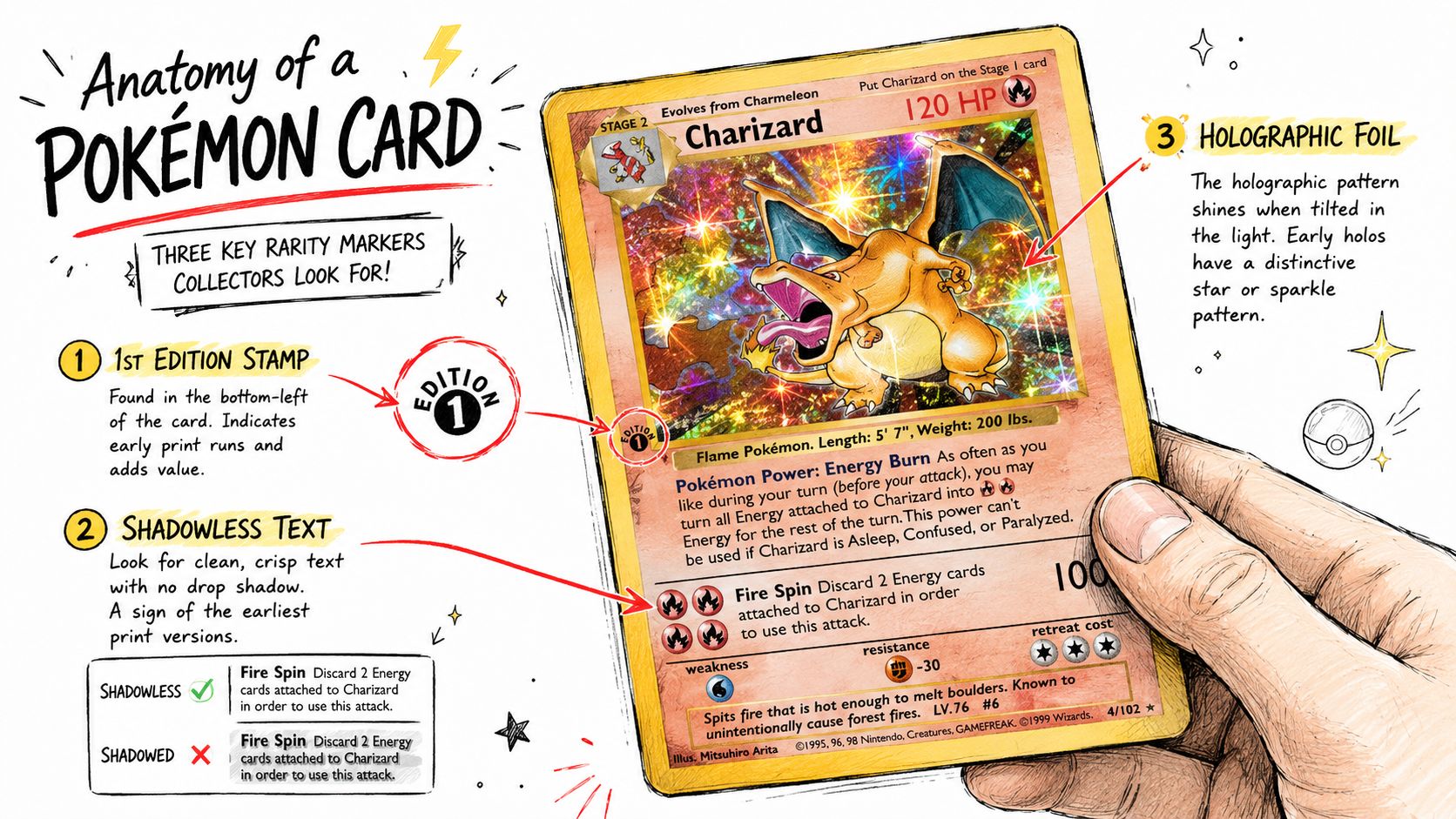
The quickest way to spot value in a binder is to check print-state markers, not just old artwork. Two copies can look almost identical and still trade very differently because one came from a scarcer printing. That is why the exact same character can have very different market outcomes depending on whether it has a stamp, a shadowless frame, or another recognized rarity marker.
What to check with your eyes
Start with the obvious signals. A 1st Edition stamp is one of the first things to look for on vintage cards, especially early Base Set cards. Shadowless Base Set cards are another key marker, and secret rares from later eras can also draw strong interest because they are tied to lower availability and collector demand. If you want a broader reference for how print states affect the market, this primer on first edition Pokémon cards is useful when you are comparing copies side by side.
These markers matter because collectors are not just buying nostalgia. They are buying a specific version of the card that the market already recognizes as harder to find. That is why a stamp, a missing shadow, or a rare slot in the set can matter more than the card’s age alone.
Look for the version first. Age only matters after you know which print you have.
If you are sorting a stack, separate anything with a stamp, any early Base Set card, and any card that looks unusually scarce or glossy. Then compare the exact set symbol and card number before you assume value. That small habit keeps you from treating a common Unlimited card like a premium variant.
Why print state beats vague nostalgia
A lot of collectors remember opening cards from childhood and assume all of them should have climbed together. They did not. The market rewards specific print states because those copies stayed scarce, while the more common versions stayed common.
A card with the right marker can still disappoint if it is beat up, but the marker tells you whether the card deserves a closer look in the first place. That is the practical cut. Separate ordinary copies from premium versions before you decide whether to list, grade, or hold.
How to Research Card Values Yourself
The safest research starts with sold comps, not asking prices. Listings can sit online for weeks at inflated numbers, while completed sales tell you what buyers accepted. That distinction matters a lot in vintage, where wishful pricing is common and liquidity is much narrower than sellers expect.
Use sold data, then check population context
When I research a card, I start by matching the exact name, set, and print state, then I look for recent sold examples in the same condition tier. After that, I compare the card against grading context, because the population at each grade tells you whether the premium is supported by scarcity or just by one outlier sale.
That second layer matters most for condition-adjusted cards. Independent guidance notes that most coverage skips the gap between raw, played, near-mint, and graded copies, even though that’s where most owners live. A childhood binder can easily land in the $10 to $40 range unless a true chase card is inside, and many old cards are under $1, which is why research has to be card-specific, not era-specific.
Use a simple three-part workflow
-
Match the exact card: Use the card name, set, and print variant so you don’t mix Unlimited with 1st Edition or shadowless copies.
-
Check sold comps: Focus on completed sales, because asking prices don’t tell you what moved.
-
Judge grade potential: If the card won’t justify the fee, skip grading and price it as a raw copy.
For a practical toolset, the Double Holo card value resource can be used alongside marketplace comps when you’re trying to decide whether a card is worth selling raw, holding, or submitting. That kind of cross-check is especially useful when the card sits in the middle, not at the obvious top or bottom.
Putting It All Together Your Card Evaluation Checklist
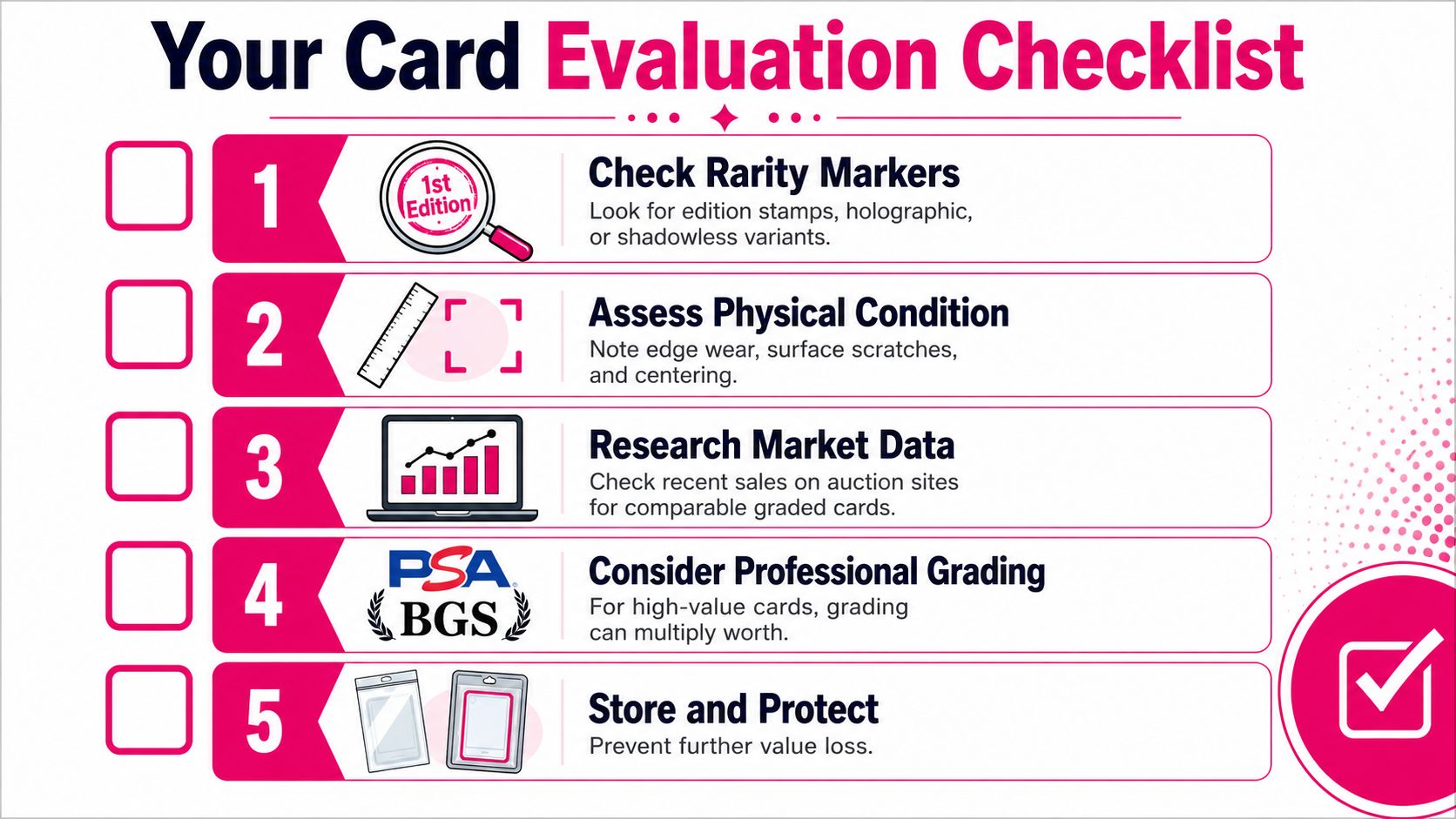
Card Evaluation Checklist
| Step | Action | What to Look For |
|---|---|---|
| 1 | Check rarity markers | 1st Edition stamp, shadowless print, secret rare slot |
| 2 | Assess physical condition | Corner wear, scratches, centering, surface issues |
| 3 | Research market data | Recent sold comps for the exact card and variant |
| 4 | Consider professional grading | Strong raw condition and enough value to justify submission |
| 5 | Store and protect | Sleeves, top loaders, and safe storage to prevent further wear |
The fastest answer to are old Pokémon cards worth anything is yes, but only for the right card, in the right condition, with the right print history. If you want a card to earn real money, treat it like inventory, not nostalgia. Check the marker, check the condition, check sold data, then decide whether grading helps.
If you want a practical next step, visit Double Holo to compare market data, review grading ROI, and see how serious collectors price raw and graded cards before they list. It’s a useful place to sanity-check old Pokémon cards before you send one out, sell one too cheap, or pay for grading that won’t come back in your favor.