

You’ve probably got the same scene in front of you right now, a binder or shoebox pulled out of a closet, a few cards that still look familiar, and a nagging question about whether any of it is worth money. That’s the right way to approach old Pokémon card value, because most collections aren’t one trophy card. They’re a mix of obvious bulk, a handful of cards that deserve attention, and a few that might justify grading if the numbers make sense.
Table of Contents
- Digging Out an Old Binder and Wondering Where to Start
- The Four Pillars That Drive Old Pokemon Card Value
- The Grading Curve and Why One Grade Step Changes Everything
- Triaging a Full Binder Without Getting Lost
- Pricing Resources That Actually Match Sales to Cards
- Where the Vintage Market Is Heading and Why Timing Matters
- A Practical Checklist for Pricing Your Old Cards
Digging Out an Old Binder and Wondering Where to Start
The first mistake people make is treating every old card like a separate investment thesis. That turns a simple sorting job into a weekend of guesswork, and guesswork is where bad pricing starts. A better move is to ask one question at a time, because the market for old Pokémon cards rewards triage, not nostalgia.
Start with the binder, not the headline card
If a childhood binder is sitting on the table, the fastest path is to pull out anything that looks holographic, anything marked 1st Edition or Shadowless, and anything featuring characters collectors consistently chase. Those are the cards most likely to deserve a closer look. Everything else can wait until you’ve separated the obvious contenders from the bulk.
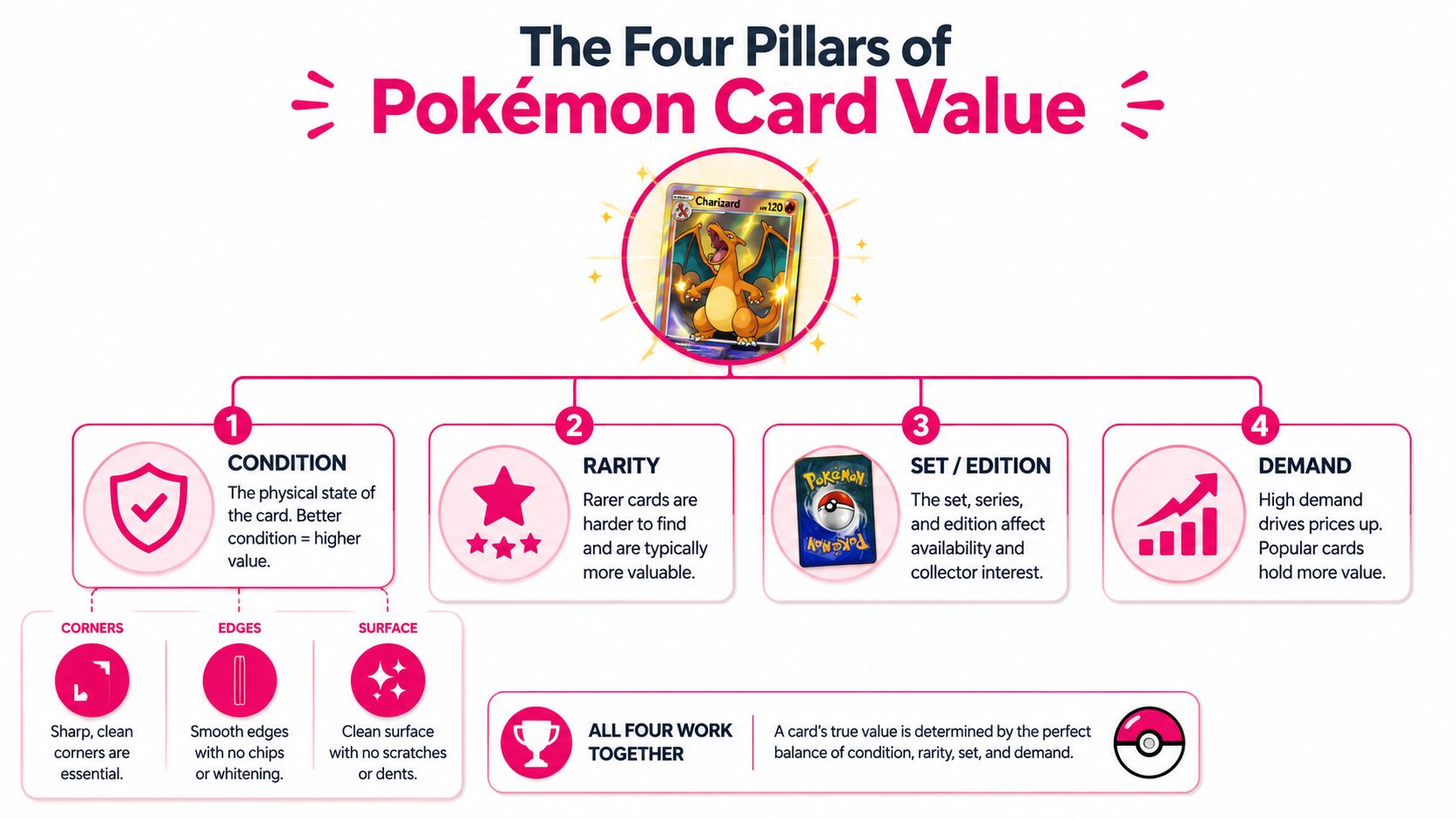
The reason this works is simple. Condition, print run, rarity, and demand are the four levers that move value, and a binder usually reveals clues about all four before you ever search a price chart. A card can be old and still be worthless in practical terms if it’s common, heavily played, or printed in huge quantities.
Practical rule: if a card doesn’t change your decision after you inspect it, price it like bulk and move on.
The hobby lore around Charizard gets all the attention, but most old binders don’t contain a top-tier chase card. They contain a few holo hits, some mid-tier favorites, and a lot of low-dollar paper. The goal is to find which pile each card belongs in, because that’s what decides whether you list it, grade it, or leave it in the shoebox.
The Four Pillars That Drive Old Pokemon Card Value
Condition is the report card
A binder full of old cards usually gives up its weak spots fast. The cards that were protected in sleeves, stored flat, and handled carefully rise to the top, while the ones with whitening, foil scratches, dents, or off-centering sink in value long before you look at a price chart. Condition comes first because collectors pay for what survived, not for what was printed.
Corners, edges, surface, and centering all matter together. A card can look decent from arm’s length and still be a poor candidate once you inspect it under light, especially if the holo is scratched or the frame is visibly tilted. That difference changes what a buyer will pay, and it changes whether grading is worth the cost.
Print run changes the ceiling
1st Edition, Shadowless, and Unlimited are label differences that signal how scarce a version is in the collector market. Scarcity shapes how hard buyers will push the price, and it can separate two copies of the same artwork by a wide margin. The image may be identical, but the market does not treat the variants the same way.
The earlier print carries the collector premium because fewer copies were made in that form. A later print reached more homes and usually has a bigger supply sitting in binders, boxes, and submission piles. That supply gap matters before you even start debating whether the card deserves a grade bump.
Rarity and demand are not the same thing
The symbol on the card tells you rarity, but rarity alone does not guarantee a strong price. A rare card with weak collector interest can be hard to move, even if it looks good on paper. A more common card can still draw real money if it features a favorite Pokémon, comes from a set collectors care about, or sits near the center of a chase.
Demand is where hobby memory shows up. Charizard, Blastoise, and Lugia attract attention because collectors recognize them fast, and that recognition creates a deeper buyer pool. That buyer pool keeps pricing steadier when a card gets listed, because more people are willing to compete for it.
The same pattern shows up in plenty of binders. A card can be uncommon, but if the fan base is thin, the sale can stall. Another card can be easier to find and still sell well because enough collectors want it at the same time, which is why opportunity cost and grading decisions matter when you decide whether a card deserves a submission.
A card gets expensive when the market agrees on three things at once, that it survived well, that the version is scarce, and that people want it enough to bid against each other.
The Grading Curve and Why One Grade Step Changes Everything
| Grade State | 1st Edition Base Set | Unlimited Base Set |
|---|---|---|
| Raw Near Mint | Qualitatively lower than top-graded copies | $300–$600 |
| PSA 7 | $4,000–$7,000 | Qualitatively above raw Near Mint |
| PSA 8 | $8,000–$15,000 | Qualitatively above PSA 7 |
| PSA 9 | $30,000–$60,000 | $3,000–$5,000 |
| PSA 10 | $250,000–$500,000+ | $30,000+ |
The Charizard curve is the cleanest way to see why condition drives so much of the market. A single grade step can move a card from “nice old card” into a completely different pricing bracket. The source data for vintage Pokémon pricing describes the relationship as exponential, not linear, and the table makes that obvious in plain English, not just in theory.
A raw Near Mint Unlimited Base Set Charizard sits around $300–$600, while the same card at PSA 9 is around $3,000–$5,000 and PSA 10 starts at $30,000+. On the 1st Edition side, the spread goes much further, with PSA 7 around $4,000–$7,000, PSA 8 around $8,000–$15,000, PSA 9 around $30,000–$60,000, and PSA 10 around $250,000–$500,000+. That is not a gentle ladder, it’s a cliff.
Opportunity cost and grading decisions matter because not every card can justify the time, shipping, and risk of a grading submission. A card that might land in the middle of the grade curve often doesn’t deserve the expense. A card with a real shot at a top pop can justify the gamble because the upside is doing the work, not the age of the cardboard.
Why top grades are scarce
Most vintage cards were printed in large numbers, but very few survived in perfect shape. Factory quirks, centering tolerance, and edge wear keep a lot of would-be candidates out of gem mint territory. That’s why a card can be common in memory and still scarce in top-grade form.
The practical takeaway is blunt. If you’re holding a card with small flaws, don’t assume age alone will rescue it. The market pays for the version that looks exceptional under scrutiny, not the version that merely exists.
Triaging a Full Binder Without Getting Lost
Pull the obvious keepers first
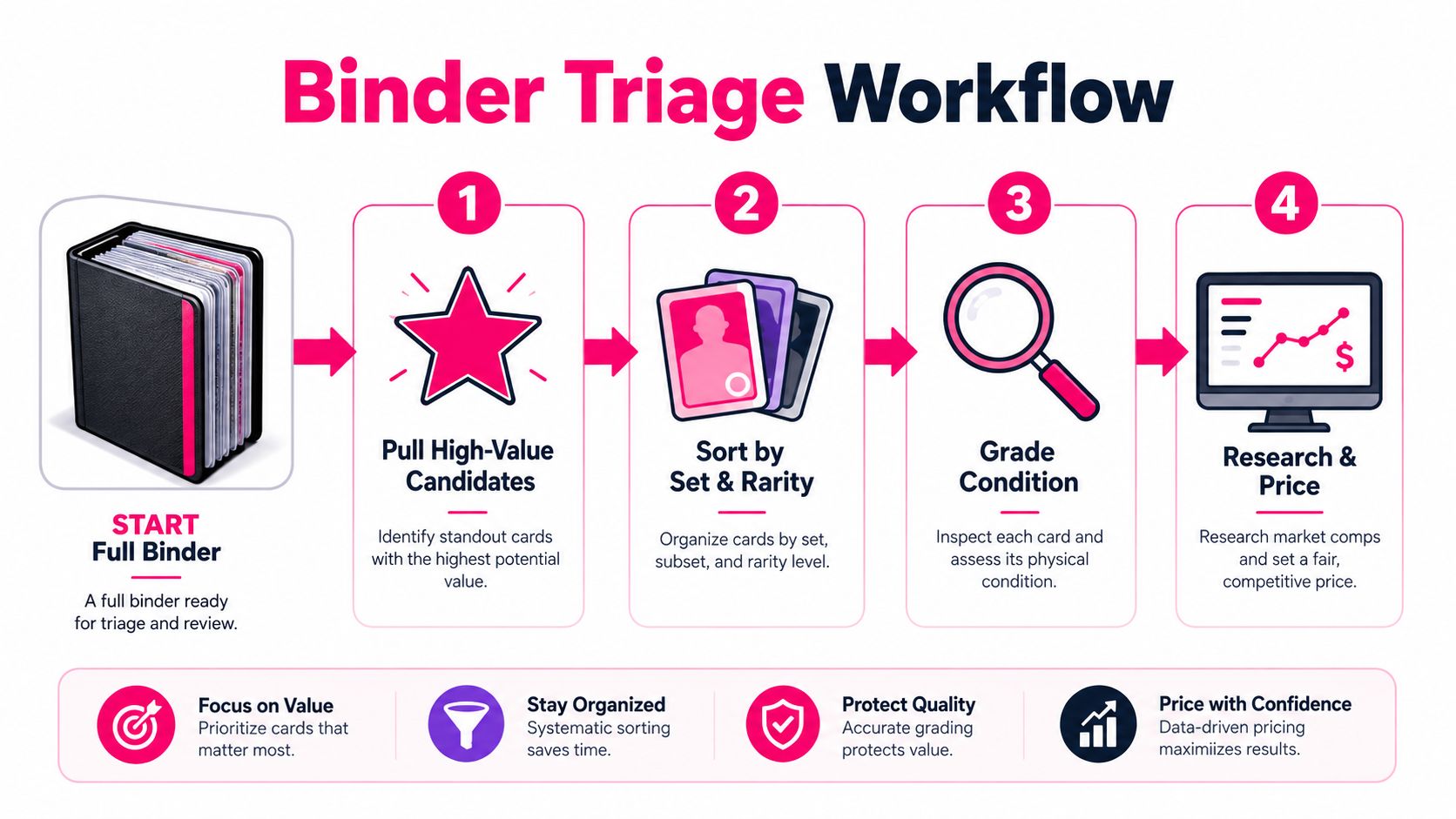
Open the binder and separate the cards into four piles, holo candidates, edition markers, character favorites, and obvious bulk. That sounds simple, but it saves time fast because you stop comparing low-value commons one by one. The quickest value is usually in the cards that already look different from the rest of the binder.
A lot of older cards are just not worth much in practical terms. Commons, uncommons, energy cards, and many unlimited-print rares are usually under $5, and even a played Unlimited Base Set Charizard may only bring around $30–$50. Start with the assumption that a card is bulk until it proves otherwise.
Decide what deserves grading, listing, or bulk
Once the obvious hits are separated, ask whether the card can clear the full cost of grading by enough margin to matter. The projected slab value needs room for shipping, insurance, and the chance that the card comes back lower than expected. If that spread is thin, the card probably belongs in the sell raw or bulk pile.
Don’t grade a card because it feels special. Grade it because the likely post-grade price still makes sense after the bill comes due.
For most binders, the right split looks like this. A few cards get graded, a few cards get listed raw, and the rest stay in the shoebox or move as a lot. That’s the right outcome, it prevents you from turning cheap cards into expensive mistakes.
Pricing Resources That Actually Match Sales to Cards
Match the tool to the question
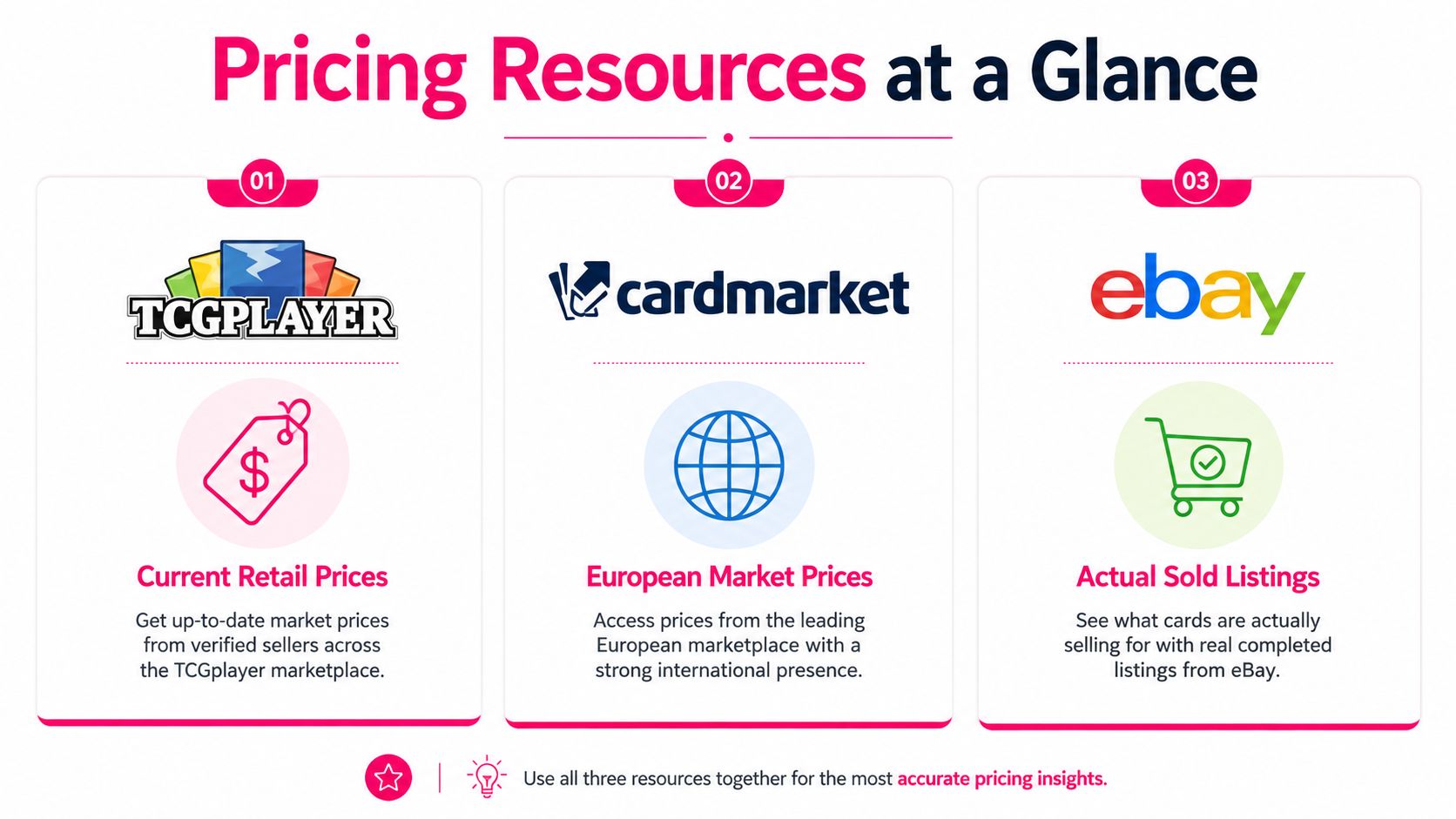
Different pricing tools answer different questions. TCGplayer is useful for current retail pricing on raw cards, Cardmarket is better for European market prices, and eBay sold listings show what buyers paid. Those three are not interchangeable, and treating them like they are leads to bad list prices.
For slabbed cards, use grading-specific references. PSA price guides and BGS references are more relevant than raw-card marketplaces when you’re pricing a graded copy. For trophy-level cards, high-end auction houses like Goldin and Heritage matter because that’s where outlier sales usually get documented.
Don’t anchor on one listing
A single asking price is not a market. A single sold result can be noisy too if it’s old, incomplete, or not comparable in grade and condition. The better habit is to triangulate from more than one source and put more weight on recent sold activity than on stale comps.
Price tracking on Double Holo is another option serious collectors can use to follow live bid and ask data instead of guessing from screenshots or random listings. That kind of market view helps when a card’s value depends on a narrow band of comps rather than a giant pool of repeated sales. If you’re pricing cards with limited sales history, the right question is not “what did one seller ask,” it’s “what range keeps the card moving.”
Read the market, not the loudest result
A 30-day sales view is more useful than a single dramatic sale because it shows whether the price is repeating or just spiking once. That matters most for vintage cards, where one flashy comp can distort expectations. If the sale history is thin, your list price should be conservative enough to attract real buyers, not just admire the screenshot.
Where the Vintage Market Is Heading and Why Timing Matters
The ceiling for famous cards has moved hard enough to change how collectors think about old inventory. A PSA 10 Pikachu Illustrator sold at Goldin Auctions in February 2026 for $16,492,000, which is the highest auction result ever for any trading card, according to the market data in the brief. That matters because it shows how far the very top of the hobby can stretch when condition and fame line up.
The broader category also expanded meaningfully, with spending on Pokémon and other non-sports trading cards increasing by 350% between 2020 and 2025, according to Circana as cited in the supplied market source. That doesn’t mean every binder card is suddenly a winner, but it does show why older cards have attracted more attention from buyers who think in terms of assets, not just nostalgia.
For sellers, timing matters because the market rewards the right card at the right grade more than the right age. A mid-tier vintage card can hold up well if it’s clean and desirable, while a beat-up copy of a famous card can still disappoint. The smart move is to separate the cards with real demand from the ones that only feel valuable because they’re old.
A Practical Checklist for Pricing Your Old Cards
Spread the binder out, then sort by card, condition, and likely sale path. I usually start by asking three questions in order. What is the card, what shape is it in, and does it belong in bulk, raw sale, or grading? After that, compare it against at least two pricing sources, and give recent sold comps more weight than live listings that may never close. If you’re unsure where to sell, match the card’s value tier to the marketplace that gets that kind of buyer traffic, and this selling guide helps separate those options without guessing.
The common mistakes show up fast once you’ve handled enough old binders. Don’t anchor on one eBay sale, don’t overrate a card in your head, and don’t send low-value cards to a grader, age alone doesn’t justify the cost. Fees and shipping still belong in the math every time, because a card that looks profitable before costs can turn into a weak move after them.
- Identify first: Confirm set, edition, rarity, and whether the card is holo or non-holo.
- Inspect carefully: Look at corners, edges, centering, and surface under good light.
- Triage fast: Separate bulk from raw sale candidates and possible slab candidates.
- Price from comps: Use recent sold data and compare at least two sources.
- List with intent: Put the card where the buyer for that tier is most likely shopping.
- Review results: Track what sells, what stalls, and adjust your next round.
If you want a cleaner way to sort cards, compare prices, and avoid grading mistakes, Double Holo gives collectors live market data and pricing tools built for the same decisions covered here. Visit Double Holo to check current card values, review real market ranges, and make the next binder you open easier to price.