


You’ve got a stack of Pokémon cards on the desk, a few are obvious keepers, and the rest are just taking up space. Some look valuable, some are bulk, and one or two might be worth enough to matter, but only if you sell them the right way. The question isn’t just where do you sell Pokémon cards, it’s where you sell each card so you keep more of the money after fees, shipping, and the time it takes to get paid.
Table of Contents
Understanding Your Selling Options
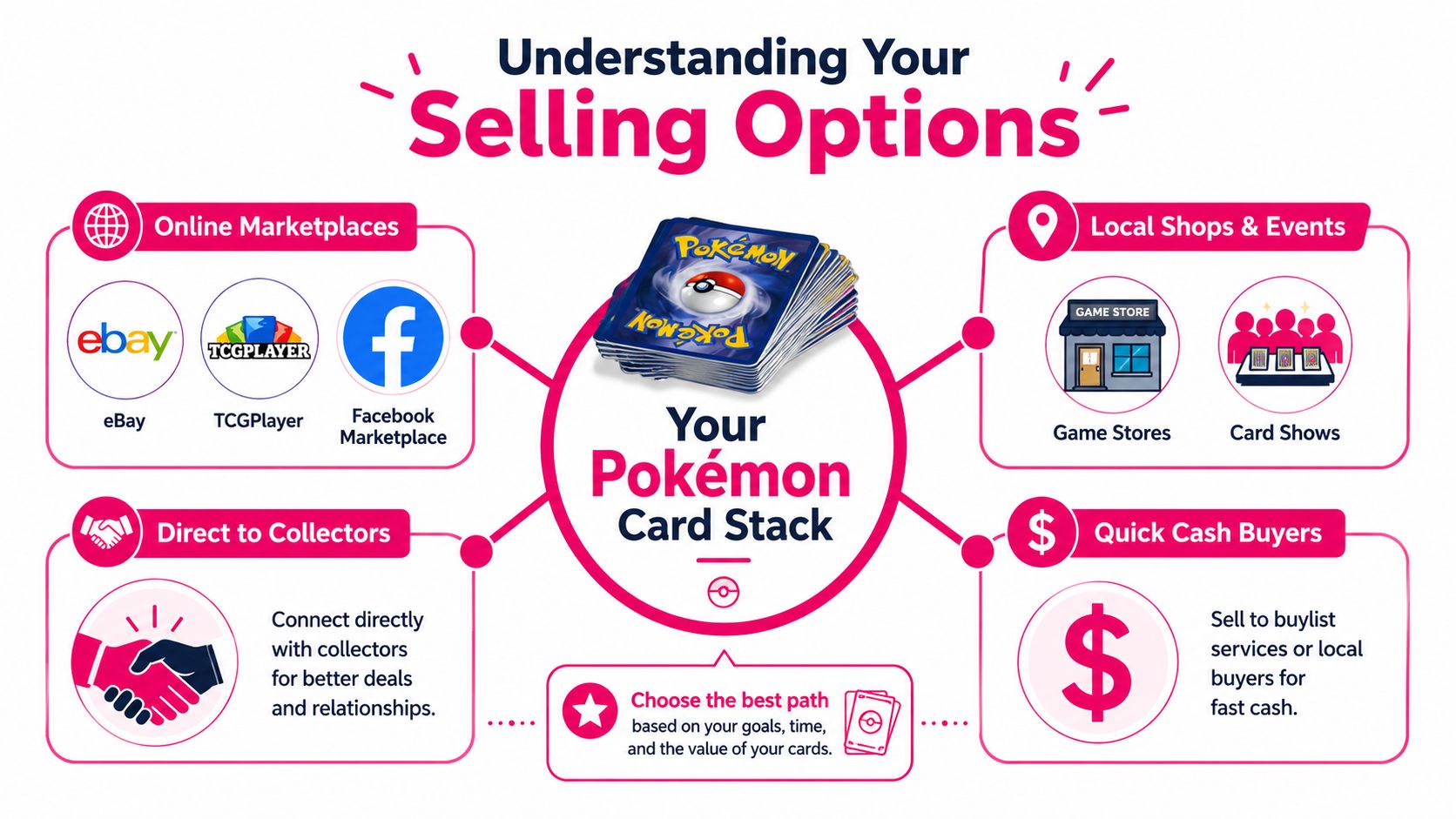
A lot of sellers start with the same pile, a binder, a few graded slabs, maybe sealed product in the closet, and no clear plan. The mistake is treating every card like it belongs in the same sales channel. A high-value graded card needs broad buyer demand and careful pricing from sold comps, while low-value singles usually move better in marketplace systems built for volume, and local options make more sense when you care more about speed than top-dollar.
Match the channel to the card
The practical way to think about it is simple. eBay is repeatedly identified as the main platform for higher-value cards, while TCGplayer fits lower-value U.S. singles and Cardmarket suits similar EU use cases, and the key is to sort inventory by value band and condition before choosing where to list it, then verify value with eBay sold listings, PSA price guides, and comparable completed-sales data before you post The Penny Hoarder guide on selling Pokémon cards.
That means a graded Charizard and a stack of modern commons should not follow the same workflow. The Charizard can justify time, better photos, and broader exposure. The commons usually can’t. If you try to force both through the same outlet, you either leave money on the table or waste hours chasing pennies.
Practical rule: sell based on card type, value band, and urgency, not on whichever platform feels familiar.
Think in terms of net proceeds
The overlooked decision is what you keep. Existing coverage often names the main outlets, but it rarely compares marketplace fees, shipping materials, insurance, returns, and payout delays as a bundle. That gap matters because the same card can produce very different net proceeds depending on how much friction sits between the buyer’s payment and your bank account JustCollect’s discussion of sales channels and net outcome.
Local shops and direct buyers can look weak on headline price, yet still win when the alternative is losing margin to fees and materials. Online marketplaces can deliver the highest sale price, but they also demand more prep and more patience. Live auction channels and regional marketplaces add another layer, especially for sealed product, multilingual cards, and lots where presentation matters as much as the card itself Eneba’s overview of newer selling channels.
The best sellers I’ve seen don’t ask “where should I list everything.” They ask, “which cards deserve a broad audience, which cards deserve a quick local exit, and which cards should be held until the market changes?” That shift alone saves a lot of bad listings.
Preparing Your Cards for Sale
Condition is where money is won or lost before a listing even goes live. Buyers forgive a lot when a card is priced right, but they don’t forgive sloppy photos, vague condition notes, or packaging that makes them worry about damage. If you want fewer disputes and better offers, prep the card as if the buyer is already skeptical.
Check condition before you touch the camera
Start with a clean surface, good light, and sleeves ready before you handle anything. A card that has edge wear, surface scuffs, or whitening should be described plainly, because overpromising only creates returns. For raw cards, I always inspect centering, corners, edges, and surface first, then decide whether the card belongs in a raw sale or should be considered for grading.
A card doesn’t become more valuable because the listing says “mint.” The buyer decides that from the photos.
Professional grading makes sense when the card’s upside can support the grading cost and the wait. For clean vintage holos, chase cards, or anything that clearly benefits from third-party authentication, grading can separate serious buyers from casual bargain hunters. For modern bulk-level cards, grading usually just adds cost and delay without changing the market reality.
Use the right supplies and inventory flow
Your basic prep kit should include penny sleeves, toploaders, and a rigid outer protector for higher-value items. A raw card in a sleeve is not enough for shipping. A slab should not rattle loose in a box. If the card is expensive enough to make you nervous, the packaging should look boring and overbuilt.
Organization matters once you move past a handful of cards. Keep separate piles for raw singles, graded slabs, sealed items, and bulk, and label them by value band so you don’t accidentally list the wrong item or ship the wrong copy. That habit matters even more when you’re selling across several channels, because one bad inventory mix-up can eat the profit from a whole week.
The listing photos should show the front, back, corners, and any visible flaw. If the card has a print line, ding, or edge whitening, capture it accurately. The cleaner the prep, the fewer follow-up messages you’ll get from buyers asking whether the card really looks the way it does in person.
Comparing Major Selling Platforms
A card can look profitable at the listed price and still leave very different cash in your pocket once fees, shipping, and payout timing are included. Platform choice should be a margin decision first. Traffic matters, but net proceeds pay the bills.
How the fee stack changes your payout
The most relevant public fee comparison in the brief comes from Double Holo, which lists a 4.9% standard seller fee (4.7% on premium) plus a 2.9% + $0.50 card processing fee, compared with eBay at 12.9% and TCGPlayer at 10.75%. For sellers who care about margin, that spread changes the actual money you keep on each sale. A cheap single can lose most of its value to fees and postage, while a stronger card can absorb those costs more easily. Double Holo fee comparison
| Platform | Standard Fee | Net on $50 Card | Net on $200 Slab | Payout Speed |
|---|---|---|---|---|
| eBay | 12.9% | Highest standard rate of the three | Higher fee drag, but broad buyer demand can offset it | Varies by seller setup |
| TCGPlayer | 10.75% | Often better for low-value singles | Less attractive for slabs and rare items | Marketplace dependent |
| Double Holo | 4.9% + 2.9% and $0.50 processing | Usually stronger net retention | Stronger net retention on higher-value cards | Marketplace dependent |
| Facebook Marketplace | Not standardized in the brief | Can work if local pickup avoids shipping | Works best when you want immediate cash | Fast if a buyer shows up |
| Local card shop | Buylist pricing, not a posted fee | Usually lower payout, faster cash | Useful for clearing inventory quickly | Immediate |
Where each platform actually wins
eBay still makes sense for rare singles, graded cards, and cards where broad buyer demand matters more than a lower fee. TCGplayer is usually the smoother fit for low-value U.S. singles because the marketplace is built for volume. Local shops win on speed. You walk in, make the pitch, and leave with cash or store credit, but you pay for that convenience through a lower offer.
Facebook Marketplace sits in the middle. It can work well if you have a buyer nearby and want to avoid shipping entirely, but it also puts more of the transaction on you. You handle messages, meetups, and safety. That fits a binder purge or a sealed lot better than a premium slab.
For a seller who wants to compare platform economics against real fees and payout trade-offs, the breakdown in TCGplayer vs eBay vs Double Holo is worth reading alongside your own numbers.
Pricing Your Cards Correctly
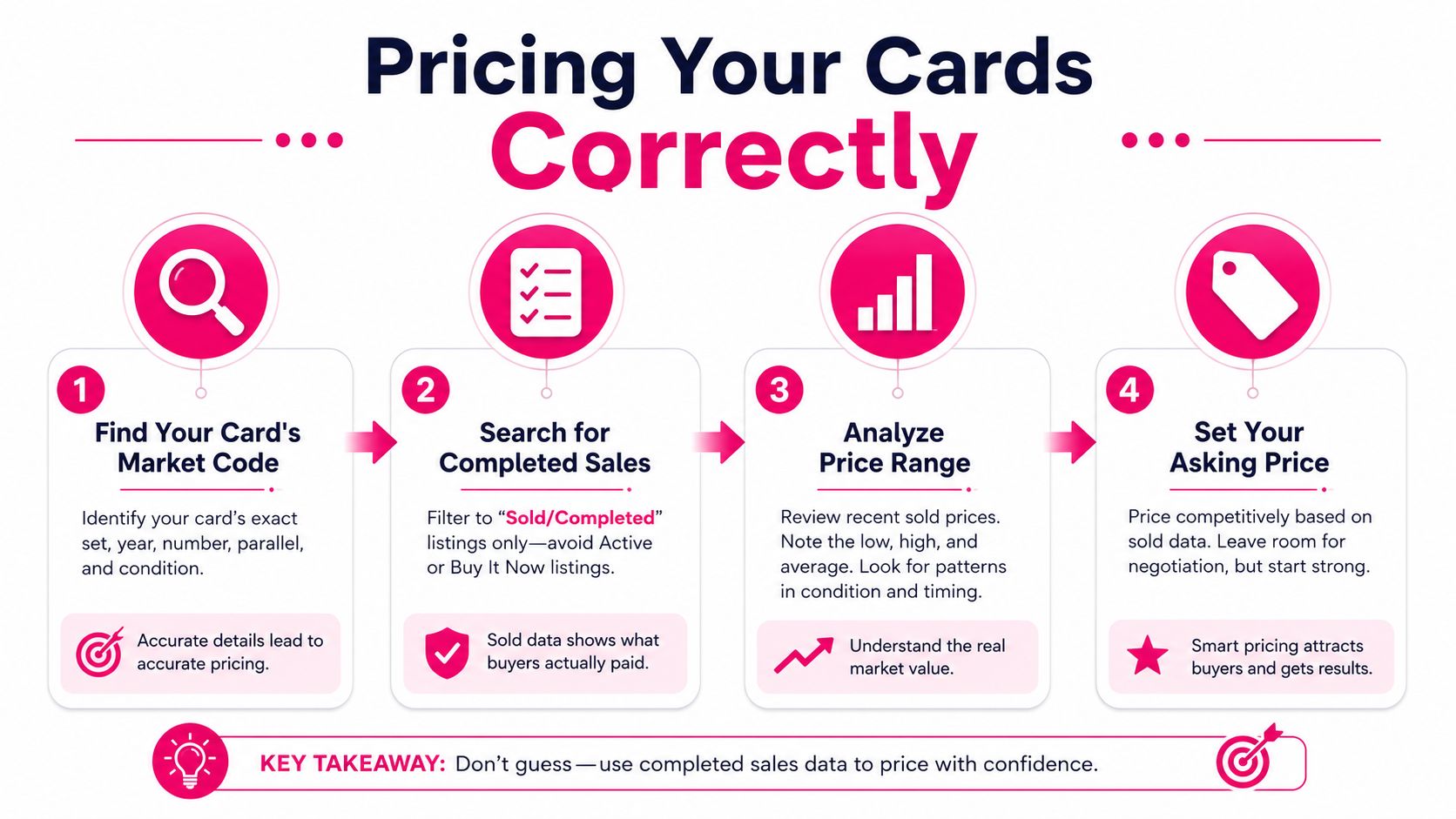
A card can look expensive on a listing page and still produce weak net proceeds once fees, shipping, and payout timing are factored in. I price from completed sales first, then decide whether I want a faster turn or a higher final number. That approach keeps me focused on what lands in my account.
Use sold comps, not wishful thinking
The cleanest workflow is to check eBay sold listings, compare them with PSA price guides, and then cross-check completed-sales data before you commit to a number. Live listings show what sellers hope to get. Sold comps show what buyers paid. That gap matters most on rare cards, graded slabs, and sealed items, because a bad price can leave money tied up for weeks.
For a card with steady recent sales, the sold history gives you a usable range quickly. For a scarcer card with fewer comps, condition, grading status, and eye appeal carry more weight. The same card can justify different prices if one copy is cleaner, better centered, or tied to a more desirable language or print variant.
Price to your goal, not the market headline
If you want a fast sale, stay toward the lower end of the recent sold range and make the listing easy to trust. If you want the highest possible payout, you can ask more and wait, but only if the card sits in a category with real buyer demand. Modern cards in crowded categories usually need sharper pricing than vintage pieces with loyal collectors.
One useful signal is inventory type. A Japanese release, sealed lot, or graded card may attract a different buyer pool than a standard English raw single, so the price should reflect the channel as much as the cardboard itself Eneba’s note on multilingual and sealed demand. That is also why market tools matter. A platform with current bid and ask behavior keeps you closer to real movement than a stale listing page does.
For a practical reference on what a Pokémon card is worth, I keep a separate pricing note handy before I decide whether a card belongs in a quick-sale pile or deserves a slower listing.
Listing and Shipping Best Practices
A strong price still falls apart if the listing feels sloppy or the package arrives damaged. Buyers decide fast whether they trust you. Clear photos, precise wording, and serious packaging do more for conversion than another vague promise of “near mint.”
Write listings that reduce friction
Lead with the facts a buyer needs. Card name, set, condition, language, whether it’s raw or graded, and any visible flaw. Don’t bury the important stuff in a long paragraph. A seller who hides damage in the last line is setting up a return, not a sale.
Use photos that match the item exactly, not stock imagery. For slabs, show the label and the case edges. For raw cards, use daylight or a neutral light source so the surface doesn’t lie. If the card has whitening, scratches, or edge wear, make that visible and note it plainly.
Buyers don’t read around uncertainty. They click away from it.
Package for the card, not for your convenience
For commons and low-value singles, a penny sleeve plus toploader inside a rigid mailer is the baseline that keeps the card from moving. For graded slabs and higher-value pieces, step up to extra rigidity and tracking, and add insurance if the value justifies it. The goal is simple, no flex, no rattle, no mystery.
Keep proof of what you sent. I photograph the card, the sleeve, the toploader, and the sealed package before it leaves. That habit helps if a buyer claims the wrong item arrived or the package was damaged in transit. It also keeps your own inventory clean when you’re moving a lot of cards in a short period.
If you’re managing listings with software rather than sticky notes, this guide on workflow tools is useful: best software for Pokémon card sellers.
Making Your Final Decision
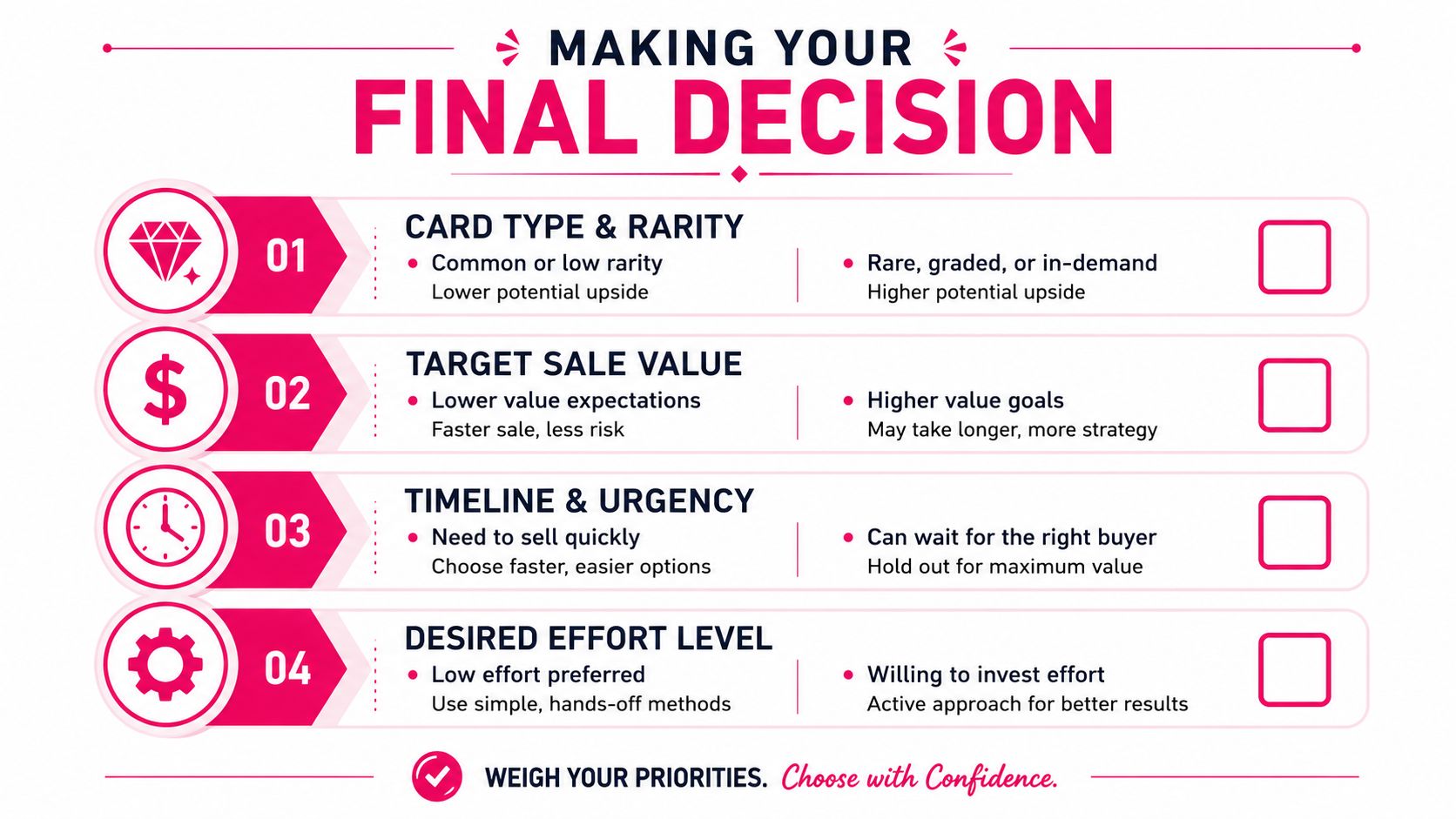
There isn’t one correct answer to where do you sell Pokémon cards. There’s only the answer that fits the card in front of you. A binder cleanout, a graded slab, a sealed case, and a bulk box each want a different exit plan.
Use a simple decision filter
Start with card type and rarity. Rare singles and graded cards usually deserve broader exposure. Bulk and low-value singles usually don’t. Then look at target sale value. If the card is high enough value to absorb fees and shipping friction, an online marketplace can make sense. If not, a local sale may protect your margin better.
Next, check timeline and urgency. If you need cash fast, a local shop or direct buyer can be the right move even if the payout is lower. If you can wait, broad marketplaces and sold-comps pricing usually give you more upside. Finally, judge desired effort level. Some sellers want the highest net and don’t mind the work. Others want the transaction gone today.
For sellers who want a single place to list, price, and manage inventory, Double Holo is one option, since it combines a live marketplace with pricing and vendor tools for raw and graded cards, sealed product, and multilingual releases Double Holo overview. That doesn’t change the basics, but it can reduce the number of separate places you have to manage.
When in doubt, split the stack. Test one channel with a low-risk card, watch how quickly it moves, and compare the actual net against your expectation. The best selling system is the one that matches your cards, your schedule, and the amount of work you’re willing to do.
If you’re ready to sell smarter, start by comparing your cards against sold comps, then choose the outlet that leaves you with the best net. Double Holo gives sellers a marketplace plus the tooling to price, track, and move Pokémon cards with less guesswork, so it’s worth a look if you want a more efficient way to handle singles, slabs, sealed product, and multilingual inventory.