

A standard Japanese Pokémon booster box contains 30 packs of 5 cards, for 150 cards total. An English booster box is usually 36 packs of 10 cards, for 360 cards total, so the two products are not comparable on pack count, card count, or opening feel.
That difference is why buyers get misled so easily. A pokemon japanese booster box looks compact on the shelf, but the sealed unit carries its own pull math, its own resale logic, and its own import risk, especially once you start comparing modern Scarlet & Violet and MEGA-era boxes with English sealed product.
Table of Contents
What a Pokémon Japanese Booster Box Actually Is
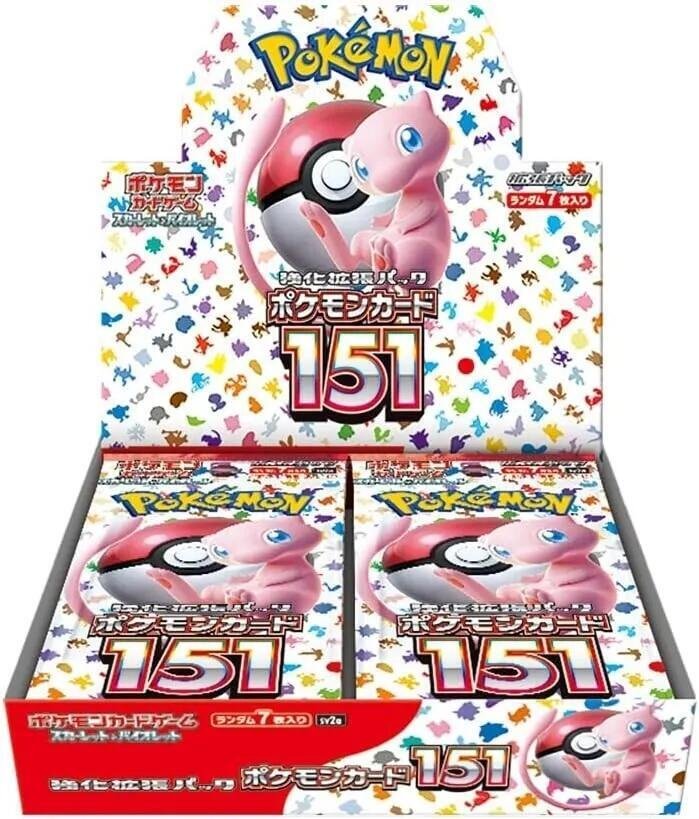
151 Booster Box (Japanese)
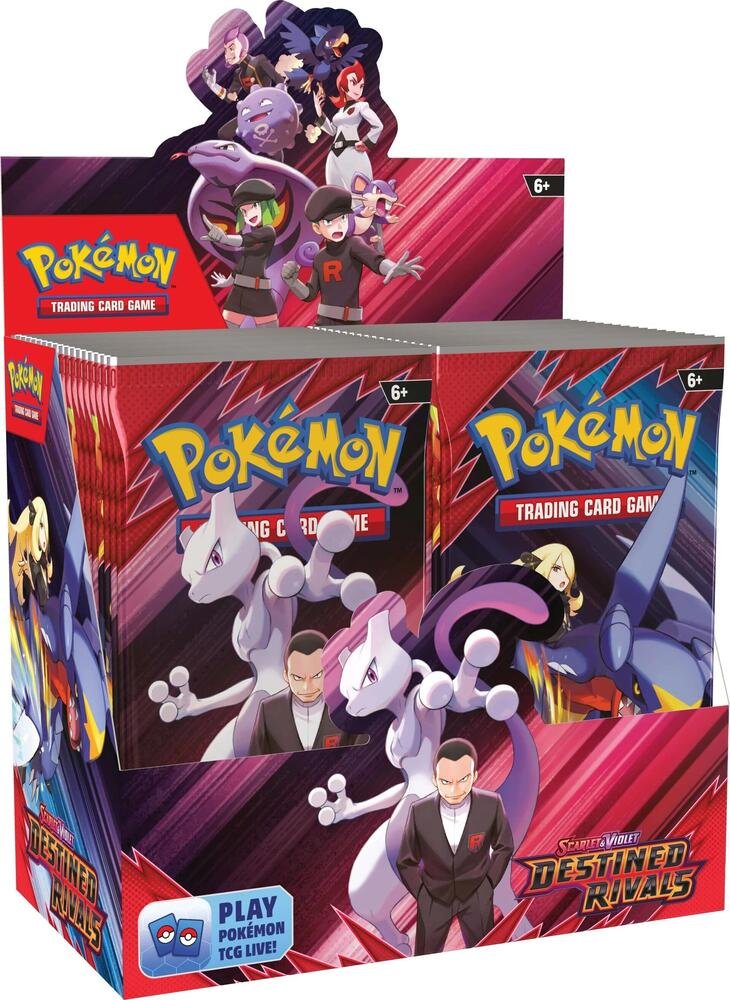
Destined Rivals Booster Box (English)
A standard Japanese booster box is a factory-sealed retail unit built around 30 packs of 5 cards each, for 150 cards total. That structure is the core of mainline Scarlet & Violet-era and MEGA-era expansions, and it is materially different from English boxes, which are usually 36 packs of 10 cards for 360 cards total. The first mistake many collectors make is treating both as if they’re just different language versions of the same thing.
What you’re actually holding
A sealed Japanese box is usually tighter, smaller, and easier to store than an English box. It’s also easier to open through quickly because every pack has only 5 cards, so the opening pace feels sharper and more concentrated than English product, where filler and larger packs slow the experience down. That difference matters if you sell singles, sort bulk, or crack boxes for stream content.
Japanese sealed product also behaves differently on the resale side. A lower card count per box means the box is not priced like a simple “smaller English box.” It’s a separate sealed asset with its own buyer base, especially among collectors who want cleaner pack structure and vendors who need predictable set completion inventory.
Practical rule: treat Japanese and English sealed product as different inventory classes, not interchangeable comps.
The structure is also why Japanese boxes show up so often in sealed-product arbitrage and set-completion strategies. A buyer who only compares box price without comparing pack count, card count, and rarity structure usually misses the underlying economics. Once you’ve handled both formats a few times, the difference is obvious in hand, on camera, and in the margin spreadsheet.
The key is simple. If you know the box contains 30 packs of 5 cards, you can immediately judge storage, opening experience, and resale position without guessing. If you don’t start there, every later valuation step gets distorted.
Pack Structure, MSRP, and Real-World Pricing
Japanese pack pricing is easier to read once you anchor to the official reference point of ¥200 per pack, which implies a standard box around ¥6,000 when sold as 30 packs. Some 2026 market writeups still cite an earlier retail reference near ¥5,400, and secondary-market box prices can sit well above that level depending on the set and the channel. The main point is that Japanese sealed product usually starts from a lower per-box retail base than English sealed product, even before chase-card demand enters the picture. Use this pricing checklist when you compare listings.
How to read the price tag
A seller listing a box in yen is not necessarily offering a bargain. You need to separate three numbers in your head, the pack MSRP, the box MSRP, and the market price. If a box is around ¥6,000, it’s sitting near the pack-based retail math. If it’s materially above that, the premium is usually being driven by demand, scarcity, or tourist markup, not by the box’s built-in contents.
That matters because the lower entry cost of a 30 × 5 Japanese box doesn’t mean the expected return is automatically better than English. The EV question is different. Japanese product often feels stronger to open because the packs are tighter and the hits are more concentrated, but the card count per box is still much lower than English, so you cannot compare them as if they have the same cost basis per card.
What the price structure tells you
-
Near MSRP: usually a sign the set is still broadly available or the seller is moving volume.
-
Above MSRP: usually reflects demand, limited stock, or import friction.
-
Far above MSRP: usually means you’re paying for convenience, location, or scarcity, not just product.
The best habit is to price a Japanese box in its own currency first, then translate it into your local buy box only after you’ve checked whether the listing is near retail. That keeps you from mistaking a common set for a premium one.
Pull Rates, Rarity Tiers, and What Is Actually Inside
Japanese boxes are often sold with language like “guaranteed pulls,” but that phrase gets used loosely. The practical distinction is simple. Community pull tables can be useful for buying and grading decisions, yet they are still estimates because The Pokémon Company does not publish official pull rates. For a closer look at why that matters in sealed-product pricing, see This pull-rate breakdown shows why that distinction matters, and compare it with how booster box value is evaluated before you treat any one opening result as a baseline.
Modern Japanese Scarlet & Violet and MEGA-era sets are usually discussed through AR, SAR, SR, UR, and MUR. That shorthand matters because each tier plays a different role in the box. AR cards are the full-art illustration hits that many collectors chase first since they are visually strong and easier to land. SR is the slot buyers often use as the working “box floor,” while SAR is where the chase often tightens hard on popular sets. UR and MUR sit above that in the premium tier, especially in sets where a single card pulls in grading demand and sealed demand at the same time.
A sealed box can have a floor without having a profit guarantee. Two boxes from the same set can open very differently, even when the pull structure looks familiar from case reports or collector chatter. The reason is simple, the distribution is stable only at a community-observed level, not as a published contract. That is why experienced buyers focus on distribution stability instead of repeating the same guaranteed-value claim.
A box with a floor still needs context. If the set’s lower-tier art cards are liquid, the box tends to feel healthier on open because the mid-range hits have real resale use. If the set’s chase card is the one buyers want for grading, the box can look much stronger when that single card lands, even if the rest of the pack stack feels ordinary. The opposite also happens, a set can offer a tidy hit pattern on paper and still trade weakly if the cards do not move well in the market.
What collectors usually mean by a floor is that the box structure gives the opening some built-in collectible value. That helps sealed buyers because a box is less likely to feel dead, but it does not remove variance. One box may spread value across a few serviceable hits. Another may concentrate most of the value into one card and leave the rest thin.
Important: the better question is whether the set’s rarity mix holds up across repeated openings, not whether every box behaves the same way.
That is the practical test vendors use. A set with strong AR demand can still underperform if buyers are only chasing one card and ignoring the rest of the pool. A set with a highly desired SAR can outperform if grading demand stays strong and the card has enough liquidity after the initial hype cools. Buyers who understand the hierarchy stop looking for a magic number and start reading the set like inventory.
Japanese Booster Box vs English Booster Box
A sealed pokemon japanese booster box usually gives you a lower entry price per box, but that does not mean it is the cheaper way to chase value. English sealed product gives you more cards in the box, while Japanese product gives you a tighter pack structure and a different kind of pull experience. The trade-off shows up fast once you compare how value is distributed, how often the useful hits land, and what it costs to bring the box in after shipping and fees.
| Dimension | Japanese Box | English Box |
|---|---|---|
| Packs per box | 30 | 36 |
| Cards per pack | 5 | 10 |
| Total cards per box | 150 | 360 |
| Box structure | Tighter, more concentrated | Larger, more padded |
| MSRP basis | Around ¥6,000 from ¥200 packs | Higher per-box base in practice |
| Buying logic | Better for sealed arbitrage and set completion | Better for higher bulk volume |
The table looks simple, but the practical read is not. Japanese boxes concentrate the opening into fewer cards, so the hit pattern feels cleaner and the chase card has a bigger impact on the box’s perceived value. English boxes spread the same spend across more cardboard, more bulk, and more time spent sorting if you are opening at scale. For a vendor, that extra handling matters. For a sealed collector, it changes how quickly a box turns into liquid singles.
What changes the math
Japanese product usually makes more sense if you care about concentrated value, cleaner inventory, and easier sealed presentation. A box can still be ordinary on paper and feel strong if the set has a real market for its mid-tier arts, especially AR cards that move well in Japan. That keeps lower hits from feeling dead stock. If the chase is a grading target, a single SAR can carry the open much harder than the raw box price suggests.
English boxes lean the other way. The larger pack count gives you more cards to process, but it also means the chase is diluted across a wider stack. That can work fine for bulk openings or casual ripping, but it does not automatically improve return. If you are buying sealed with resale in mind, you still need to account for shipping, import fees, and the spread between raw pulls and slab premiums. A box that looks inexpensive at checkout can end up much less attractive once it lands in your hands.
For buyers comparing sources, a good starting point for broader sealed-product research is this guide to where to buy Pokémon cards.
Practical decision points
Japanese boxes usually fit better when the set has stable demand, the pack structure is the reason you want the box in the first place, and you care about cleaner pull distribution rather than raw volume. English boxes make more sense when you want more cards per opening, more bulk to sort, or you are chasing a format where volume itself is part of the plan.
The mistake is treating the two as direct substitutes. A Japanese box is often the stronger sealed piece, while an English box can be the better open for sheer card count. If you buy both with the same expectation, one side will usually feel off. The better approach is to judge each product by its own pull distribution, liquidity, and real landed cost, then decide which format fits the job.
Where to Buy Japanese Booster Boxes
A sealed Japanese box usually starts with the official channels. Pokémon Center stores and Pokémon Center Online are the cleanest entry points when stock is live, and they are the first places collectors check for current releases. After that, the practical hunt moves into Akihabara in Tokyo, Den Den Town in Osaka, and shops such as Mandarake and Book Off. Card-specific stores and domestic importers fill the gap for buyers who are not in Japan, and this guide to where to buy Pokémon cards covers the wider buying logic beyond sealed Japanese product. This buying thread captures the practical store mix collectors keep returning to.
Where stock still shows up
The store name matters less than the stock rule behind it. Some shops cap purchases at one box, some move to pack-only sales, and some price above retail because the location pulls in tourists who will pay for convenience. A famous street can still be a bad buy if the set is hot and the shelf price has already drifted.
Pokémon Center locations and the online store are the most obvious retail checks, but they are not a guaranteed win. A walk-in trip can end with nothing left in the current chase set, especially when demand is already high. Akihabara and Den Den Town can still produce good finds, but the result depends on the set, the day, and the shop’s own policy. The same district can hold both clean retail and inflated pricing on the same afternoon.
How collectors usually buy
-
Pokémon Center stores: best for official retail when stock is available.
-
Pokémon Center Online: useful for domestic buyers who can catch drops.
-
Akihabara shops: strong selection, but tourist demand can push prices up.
-
Den Den Town, Osaka: similar setup, with store-by-store variation.
-
Mandarake and Book Off: useful for mixed inventory and occasional sealed finds.
-
Card-specific stores: best when you want a specific set or era the shop actively tracks.
-
Domestic importers: best for buyers who value convenience over travel.
Buy the channel, not the label. A well-known district can still be overpriced if the set is moving fast, while a quieter store can sit closer to retail because its customer flow is different.
For Japanese sets with steady demand, the better question is whether a shop is still near MSRP or already selling convenience. That split often decides whether the box belongs in a collection stack or in a resale plan.
Why Japan Is Not Automatically Cheaper
The “buy it in Japan, it’s cheaper” idea falls apart once you total the landed cost. Airfare, domestic shipping inside Japan, export handling, customs or duties on arrival, marketplace fees, and tourist-area markup all sit on top of the box price. A box with a clean retail tag can still cost more by the time it reaches your hands.
A real purchase decision starts with where the box comes from. If you buy in person, the sticker is only one line in the total. If you use a proxy buyer or domestic importer, service fees and shipping layers get added before the box ever leaves Japan. If the shop sits in a tourist-heavy district, you may already be paying above retail before any other cost shows up. The product being Japanese does not remove those charges.
Older and hotter sets create a different problem. Once a set gets collectible momentum, it stops behaving like ordinary sealed stock and starts acting like a scarce hobby asset. Newer boxes in some regional stores can still sit close to MSRP, but desirable sealed product often trades like a collector item instead of a restockable SKU. That matters more than the country on the label.
What I look at first is the full stack, not the headline price. A box that looks cheap in Tokyo can end up expensive after fees, while a box that looks expensive from a domestic seller may already include the hassle I would otherwise pay to handle myself. The spread is real, and it changes by set, shop, and buying method.
A simple decision framework
-
Travel purchase: best when you are already in Japan and can hit retail stores without proxy fees.
-
Proxy or importer: best when you value convenience and access more than pure price.
-
Domestic purchase: best when you want predictable delivery and lower friction.
If your only goal is the lowest possible landed cost, a trip is not automatically the right move. If your goal is access to a specific set, Japan can still make sense, but only after you price the box, the shipping, the fees, and the market it is being bought in. That is where a Japanese booster box value guide helps, because the number on the shelf rarely matches the number that matters.
How to Value a Japanese Booster Box Before You Buy
The quickest way to value a Japanese box is to stop thinking about it as a sealed mystery and start treating it as a sealed asset. Three things move the price in practice: set liquidity, chase-card depth, and EV spread. If you can read those three signals fast, you can usually tell whether a box belongs in your opening pile, grading pile, or sealed pile. This box-value guide helps anchor that process.
Read the set first
A liquid set has active buyers, visible comps, and a market that doesn’t freeze the moment attention moves on. That matters because a strong-looking box is useless if the singles are hard to move after opening. A set with lots of chase cards also behaves better because demand isn’t concentrated in only one card.
The third lever is EV spread, which is the gap between what the box costs and what the expected card mix is worth after you apply community pull estimates. Since the pull rates aren’t officially published, you’re not looking for certainty. You’re looking for a reasonable spread that survives real-world selling friction.
Grading changes the equation
Grading matters because some Japanese chases justify submission while others don’t. The box can be profitable as sealed product, but the singles inside might be even better if condition is strong and the market is responsive. That decision depends on whether PSA, BGS, CGC, or TAG pricing and turnaround still leave room after fees.
-
Strong sealed candidate: liquid set, broad chase demand, stable sealed premium.
-
Strong grading candidate: high-condition singles with real slab demand.
-
Strong opening candidate: box value is in the experience or in immediate singles demand.
If you can’t explain why the set is liquid, don’t assume the box is valuable just because it’s Japanese.
That’s the mental filter. First, ask whether the set trades cleanly. Second, ask whether more than one card in the set matters. Third, ask whether the spread survives fees, shipping, and the way you exit the position.
Smart Ways to Add Japanese Boxes to Your Collection
The best Japanese box strategy is simple. Pick the format that matches your budget, buy only from channels that don’t bury you in avoidable friction, and decide upfront whether you’re opening, grading, or holding sealed. If the set has active liquidity and a stable pull profile, it can fit into a broader sealed and singles plan without becoming a guess.
A good collector doesn’t chase every listing. They choose a set with real demand, compare retail and import channels, and leave room for the exit. That discipline matters more than the language on the box.
If you want to price Japanese sealed product, compare set liquidity, check market behavior, and keep your buy decisions tied to actual exit paths instead of hype. Double Holo gives collectors and vendors the market tools to do that with more confidence, and you can see how it fits your workflow at Double Holo.