

You pulled a Base Set Charizard from a binder, a box, or a recent purchase, and now you’re squinting at the border, the stamp, and the holo like the answer should jump out at you. That moment is where most expensive mistakes start, because Charizard First Edition Shadowless isn’t just one card name, it’s a set of print identifiers that people mix up constantly. If you’re holding one, the difference between 1st Edition Shadowless, Shadowless, and Unlimited can decide whether you’re looking at a modest vintage card or a true trophy piece.
Table of Contents
Why the Charizard First Edition Shadowless Demands Attention
A seller sends over a “shadowless Charizard.” The photos are soft, cropped badly, and shot under yellow room light. The stamp looks right from one angle, but the listing title says “1st Edition” while the description never confirms it. That is the kind of listing that gets collectors burned on vintage Base Set cards. The stamp and the shadowless frame are separate identifiers, and the value sits in that combination.
Why this card sits at the top of the hobby
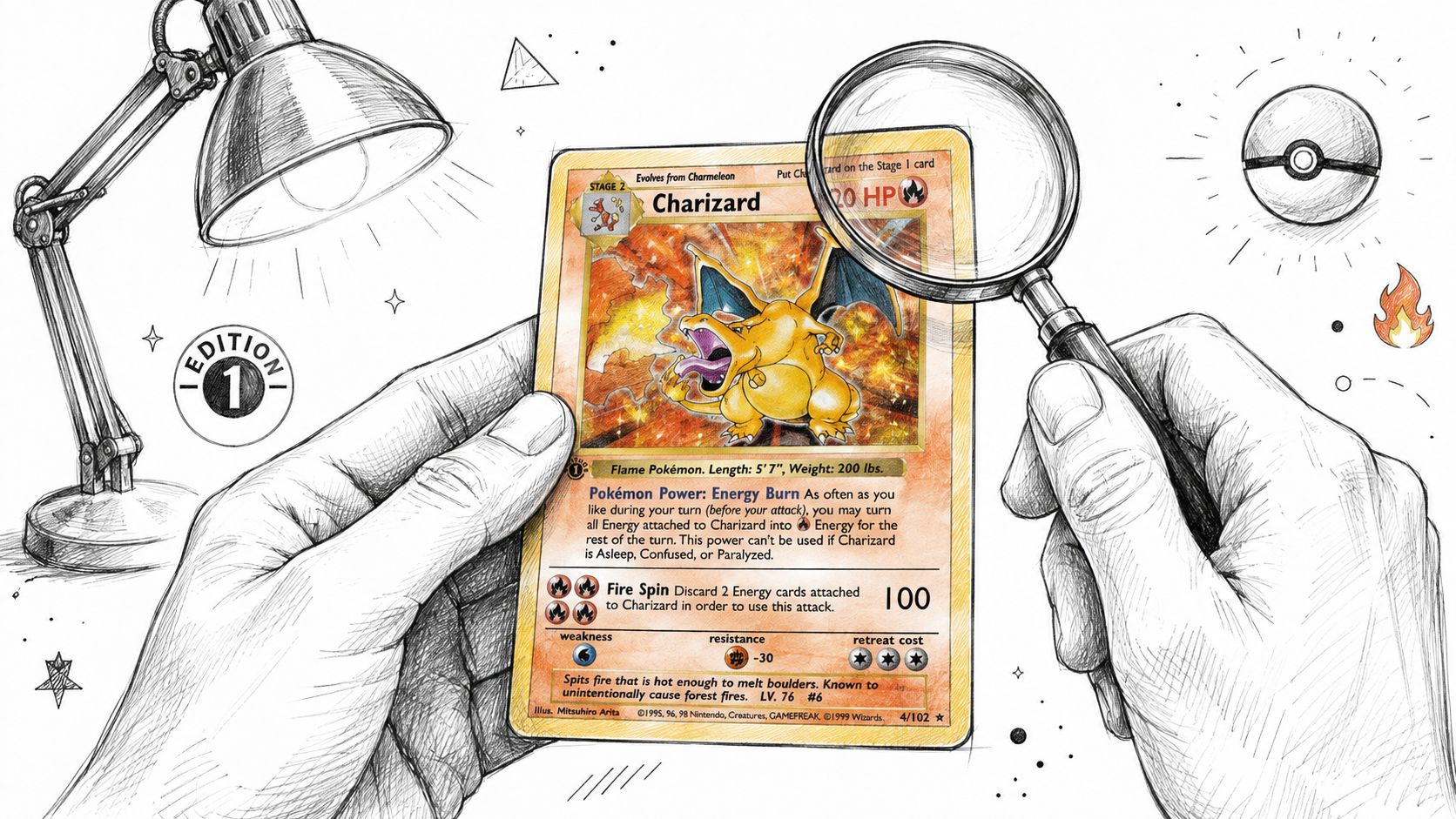
The Base Set Charizard comes in three distinct print variants, 1st Edition Shadowless, Shadowless, and Unlimited. That sequence matters because the earliest English print run is the one collectors chase hardest, and the 1st Edition version is also shadowless by definition. The card sits at the center of Base Set collecting for a simple reason, people pay for the earliest verifiable release, not for a loose description in a title field. The Base Set spotlight from Double Holo gives useful set context, but the problem buyers often face is skipping the taxonomy and jumping straight to price.
Scarcity is not an abstract talking point here. Analysts at Elite Fourum’s print-run discussion have pointed to census figures that separate Base Set 1st Edition English Charizards from Base Set Shadowless copies, and the discussion reflects why this card is treated as a different tier altogether. Graded examples also make the spread obvious, especially when buyers compare the 1st Edition pool with the much broader Shadowless pool and then notice how few top-grade copies surface in trade.
The market history backs that up. PSA 10 sales have sat in the hundreds of thousands of dollars, and a private sale to Logan Paul was reported at $5,275,000 for a PSA 10 1st Edition Shadowless Base Set Charizard.
A practical rule holds up in real deals. If the seller cannot clearly show the stamp and the shadowless art frame, there is not enough information to price the card with confidence.
Practical rule: if the seller can’t clearly show the stamp and the shadowless art frame, you don’t have enough information to price the card.
The Three Base Set Charizard Print Variants Explained
The cleanest way to think about this card lineage is chronological. Early English Base Set printings started with the 1st Edition Shadowless version, then moved to a Shadowless reprint without the 1st Edition stamp, and later to Unlimited, which added the drop shadow around the art box. That sequence is the backbone of Charizard collecting, and it’s why casual labels create expensive confusion.
The visual markers that matter
The key test on the early versions is the absence of the right-side drop shadow behind the art box. A true 1st Edition Shadowless card combines that shadowless frame with the 1st Edition stamp, while a Shadowless non-1st Edition card keeps the same no-shadow frame but loses the stamp. The Unlimited print is the later release with the shadow restored, so the border treatment changes immediately even before you get into grading or value.
Shadowless is the border style. First Edition is the stamp. Those are related, but they’re not interchangeable.
The card text itself is fixed, which helps when you’re checking whether the card matches the right early-print profile. For this lineage, the stat block is Fire / 120 HP / Stage 2 with Pokémon Power: Energy Burn and Fire Spin (100) that discards 2 Energy.
A visual concept map helps here because most errors happen at the naming layer, not the image layer.
If you want the broader set context, the Base Set spotlight on Double Holo is a useful companion read.
The Taxonomy Confusion That Costs Collectors Real Money
The most expensive mistake with this card is semantic, not technical. Buyers often ask whether a Charizard is “shadowless” as if that settles it, but all English 1st Edition Base Set cards are shadowless except Machamp, while a shadowless card without the stamp is still not 1st Edition. That’s why listings get misread, offers get mispriced, and buyers end up paying for a description instead of a verified print run.
What buyers should actually ask
A real purchase question sounds like this. Does the card have the 1st Edition stamp and the shadowless art frame. If the answer is only one of those, it’s a different card. The distinction isn’t academic, because the stamp is the separator collectors use when they’re pricing English Base Set Charizard, not the border style by itself.
A lot of marketplace confusion comes from the way people compress the terminology. Sellers may write “first edition shadowless” when they mean the earliest Charizard print, or they may describe a shadowless non-1st Edition card as if it belongs in the same bucket. That language drifts into the wrong comp set fast, especially when a listing has one blurry front scan and no back photo.
The safest habit is simple, ask for the stamp, the shadowless frame, and the copyright line in the same set of photos.
The market punishes sloppy naming because the card’s value depends on print identity, not just the card name. If you’re buying raw, the difference between an accurate listing and a vague one can be the difference between a real early-run trophy and a perfectly ordinary shadowless copy. In a card this expensive, “looks right” isn’t a standard.
Authentication Beyond the Stamp Test
A genuine 1st Edition stamp is necessary, but it isn’t enough. When money gets serious, I don’t rely on one visual check, because doctored cards, fake stamps, and altered borders are all part of the reality around early Charizard cards. The easiest rule catches the obvious fakes, but the better check is whether several details agree with each other.
What experienced graders and dealers verify
The first layer is print dot structure. Authentic early prints have a texture and dot pattern that should look consistent under magnification, while counterfeits often show muddy reproduction or odd dot spacing. Next is font consistency, including the weight and placement of the stamp and the look of the HP line, because small type errors stand out fast when you’ve handled enough Base Set cards.
Then comes color tone and border width. Early shadowless cards are often described as lighter in tone, so a card that looks unnaturally saturated or oddly dark deserves a second look. I also check surface wear patterns and the back print, because the card’s blue back should present cleanly and the Poké Ball details should stay sharp rather than fuzzy or off-center.
The card’s fixed stat block helps anchor the authentication process. If you know the correct early-print configuration is Fire / 120 HP / Stage 2, with Energy Burn and Fire Spin (100), you’re less likely to be distracted by a seller’s vague language or a recycled listing photo. The point isn’t to prove authenticity from one feature, it’s to confirm that all the expected features line up.
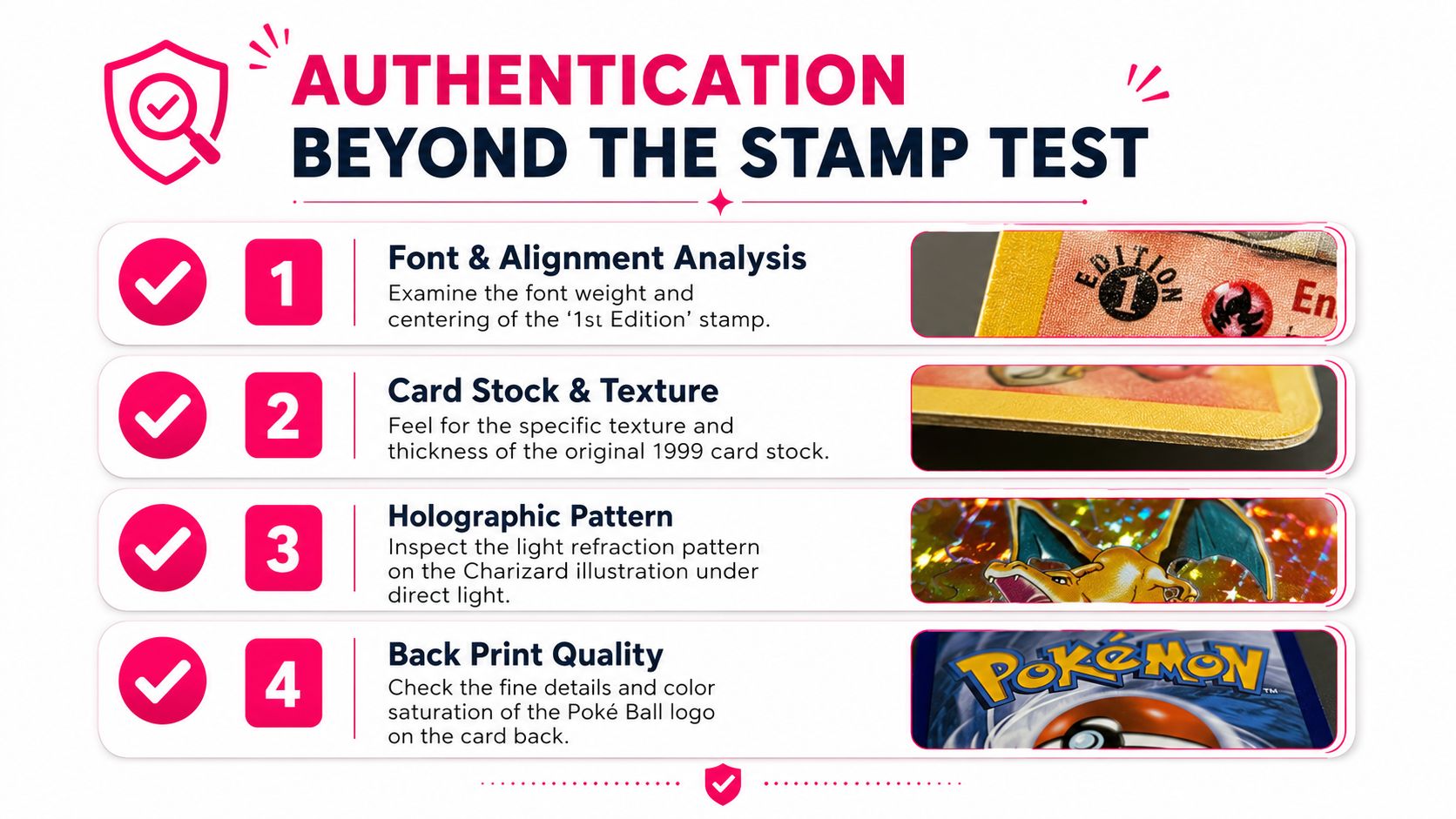
A simple checklist helps keep the process disciplined.
-
Font and alignment: Inspect the 1st Edition stamp for weight, placement, and spacing.
-
Card stock and texture: Compare feel and thickness against a known authentic Base Set card.
-
Holographic pattern: Examine the holo layer under direct light for normal refraction behavior.
-
Back print quality: Check the Poké Ball and color saturation on the back for sharpness.
Market Value and Price Tiers Across Grades
A clean Charizard 1st Edition Shadowless can look like a serious card in a binder and still sit in a very different price band once the market decides whether it belongs in the top tier. The spread starts with the label, then widens fast when grade, centering, and eye appeal enter the conversation. Buyers get burned when they treat every early Base Set Charizard as the same card.
The numbers reflect that split. One guide places PSA 10 at $300,000–$954,800+, PSA 9 at $80,000–$200,000+, and raw copies at $3,000–$6,000 for the 1st Edition Shadowless version. The same guide puts the Shadowless non-1st Edition copy much lower, at roughly $40,000+ for PSA 10, $3,600–$4,200 for PSA 9, and $500–$900 raw, which is exactly why the stamp and print category cannot be treated as a minor detail.
Charizard Base Set Variant Pricing by Grade
| Grade | 1st Edition Shadowless | Shadowless (No Stamp) |
|---|---|---|
| PSA 10 | $300,000–$954,800+ | $40,000+ |
| PSA 9 | $80,000–$200,000+ | $3,600–$4,200 |
| Raw | $3,000–$6,000 | $500–$900 |
Top-end history shows why people keep chasing this card even after the spread gets irrational. A PSA 10 1st Edition Shadowless Base Set Charizard was reported in a 2022 private sale at $5,275,000, and SI’s coverage of population and sale history also notes a reported $420,000 PSA 10 sale in 2022. Those are not normal transaction comps. They are the outer edge of what a perfect copy can bring when the right buyers are in the room.
Scarcity is what keeps the top tier supported. The same census discussion shows 4,993 graded 1st Edition Charizards and only 124 PSA 10s, while CGC reported 297 Base Set 1st Edition English Charizards and 965 Base Set Shadowless Charizards as of mid-November 2022. Elite Fourum’s census discussion is useful because it ties the rarity story to actual census data instead of wishful pricing. For a broader look at how graded examples are priced across different card conditions, see this graded card price guide.
Grading Decisions and Condition Impact on Value
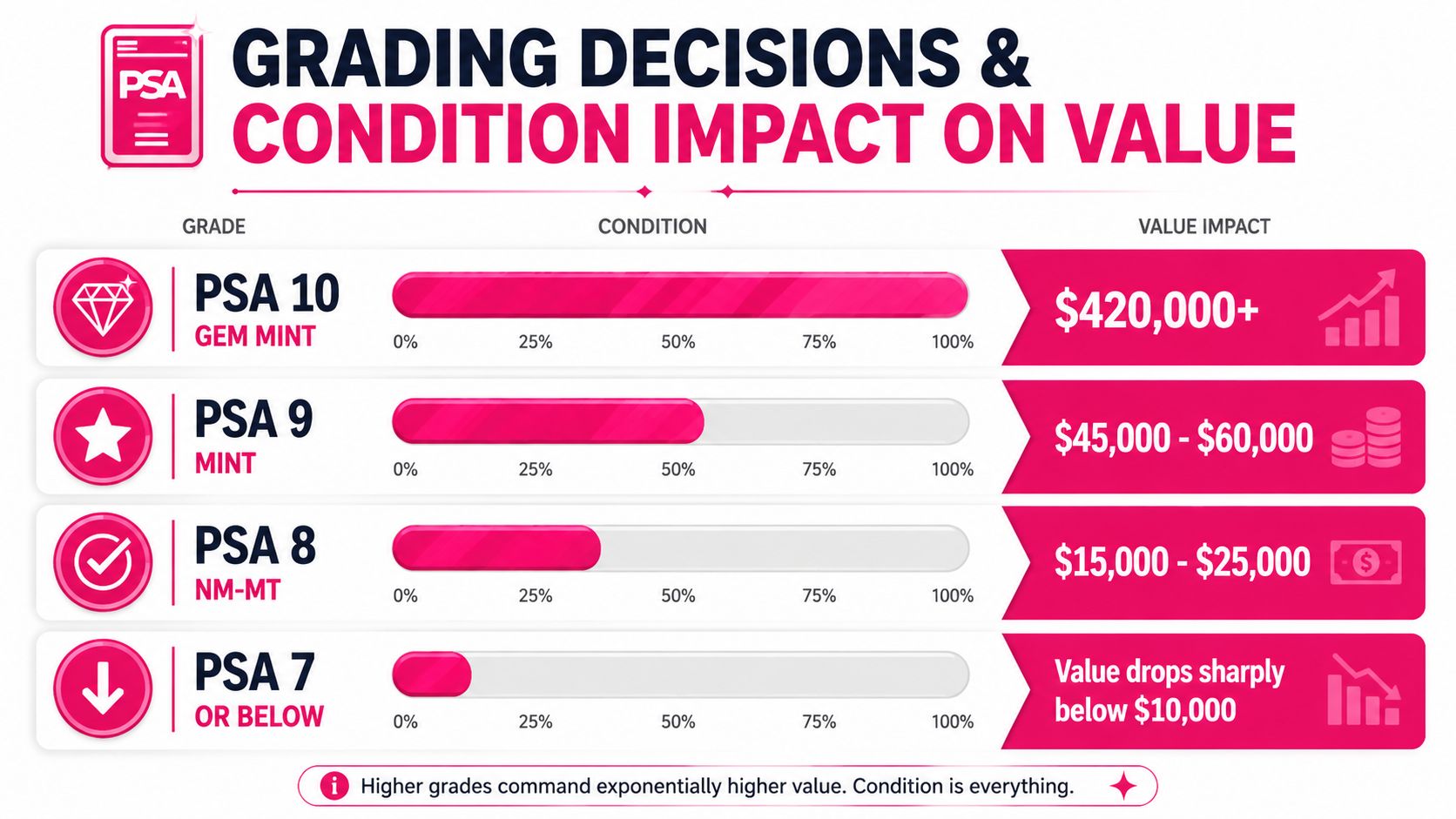
A raw Charizard can look clean in a sleeve and still miss the grade that makes the numbers work. Centering, corner wear, surface gloss, and edge quality all shape the result, and on a card like this, a small flaw can push it into a very different price tier. Two authentic copies can separate sharply before the grader even assigns a number.
When submission makes sense
If the card has clean borders, strong holo, and no obvious edge whitening, grading may be worth the trip. If it shows heavy surface scratching, poor centering, or a dinged corner, the submission fee and turnaround risk can wipe out the upside quickly. The question is not whether the card is rare, because it is, but whether the condition supports the grade needed to justify the cost.
The population numbers give that decision context. Only 124 PSA 10 examples appear in the cited graded pool of 4,993 1st Edition Charizards, which shows how hard it is to reach Gem Mint status on a card from this era. That thin top end matters even before you weigh centering preferences or eye appeal, and it is one reason so many raw cards never make sense to submit.
Collector rule: grade for upside, not for hope. If the card already has visible flaws, the slab will not erase them.
That same discipline applies when comparing vintage cards with modern singles.
If you want a practical reference for how condition tiers map to outcomes, the Double Holo grading scale guide is a useful starting point when deciding whether to submit, keep raw, or list as-is.
Buying and Selling With Confidence
A good purchase starts with paperwork and photos, not optimism. Ask for front, back, close-up stamp, and edge shots, and make sure the seller confirms whether the card is 1st Edition Shadowless or just Shadowless. If the listing uses sloppy wording, treat that as a risk signal, because the market already has enough confusion without adding guesswork.
What to verify before money changes hands
-
Confirm the stamp: The card should clearly show the 1st Edition mark if it’s being sold as the earliest print.
-
Check the frame: The art box should be shadowless on the early variant.
-
Review all four edges: Whitening, dings, and uneven borders change the value quickly.
-
Ask for unfiltered photos: Clear, straight-on images are better than angled glamour shots.
-
Match the condition to the ask: A high asking price needs a condition story that supports it.
If you’re selling, describe the card precisely and leave out the marketing language. Say whether it’s 1st Edition Shadowless, note the condition accurately, and disclose any visible wear before a buyer asks. That protects you from disputes and saves everyone time.
If you want live pricing, listing comparison, and grading-related market tools in one place, Double Holo is built for buyers, sellers, and vendors who need to make faster decisions on vintage singles like this one. Use the data, verify the print run, and move only when the card in front of you matches the story on the listing.