

You’re staring at two sealed boxes from the same set, one listed at $110 and the other at $180, and both sellers swear they’re untouched. That’s the core friction point when you buy Pokémon booster box inventory today, because the box is never just cardboard and shrink wrap, it’s a bundle of 36 pack openings, a sealed collectible, and a bet on what the set will do next.
The mistake most buyers make is treating every listing like a simple shopping decision. The better move is to treat it like a sealed-product allocation problem, where pack count, expected value, authenticity, channel fees, and timing all shape the outcome. If you get those four things right, you stop overpaying for hype and start reading a listing the way a serious sealed buyer should.
Table of Contents
What a Booster Box Actually Is and Why It Matters
A collector looking at two sealed boxes, one at $110 and one at $180, is really looking at three different questions at once. Is this 36-pack inventory, is it a sealed collectible, or is it both? That distinction matters because the economics change as soon as you stop thinking in terms of the outer box and start thinking in terms of what’s inside it.
In the Scarlet & Violet era, a booster box typically contains 36 booster packs, and a widely cited buyer guide pegs fair retail at about $4.49 per pack, or roughly $161.64 per box (reference). That’s the clean baseline. If a seller wants less than that, you’re looking at a discount to retail. If they want more, you need a reason, like scarcity, strong set demand, or a sealed premium.
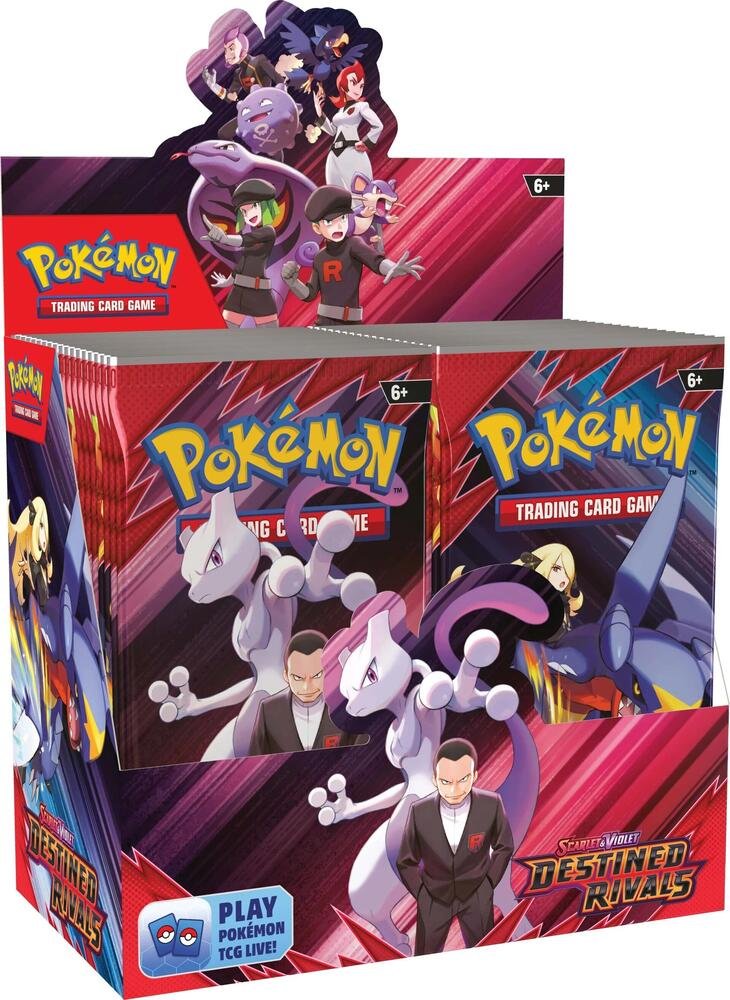
Destined Rivals Booster Box
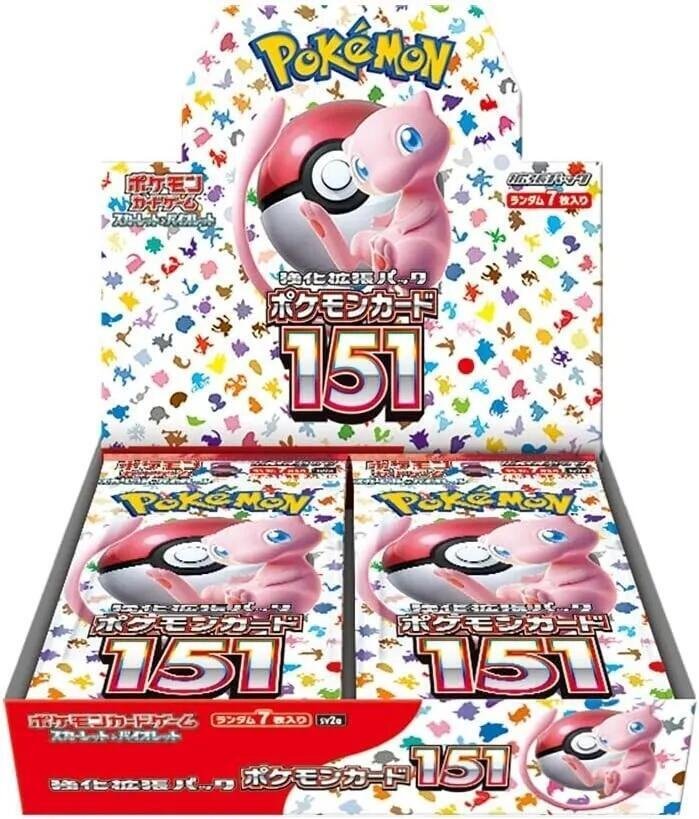
151 Japanese Booster Box
Why veterans price by the pack, not the box
People who’ve bought and cracked hundreds of boxes don’t usually ask, “Is $180 cheap?” They ask, “What does that work out to per pack?” That mental model protects you from getting psychologically trapped by the sealed package and forgetting that the box is just a container for 36 openings.
The same buyer guide notes that some buyers target boxes below retail, with examples around $105 being treated as roughly 55% to 60% below the $161.64 retail anchor (reference). The exact discount matters less than the habit. Once you compare a listing to the pack-level baseline, it becomes much easier to tell whether the premium is justified or just loud pricing.
Practical rule: if you can’t explain the per-pack cost in one sentence, you’re probably paying attention to the wrong number.
That’s the baseline every buy Pokémon booster box decision should start with. Before authenticity, before seller trust, before whether the set is hot, you need to know what you’re paying for. If the listing can’t survive that first comparison, the rest of the decision usually won’t save it.
Running the Expected Value Math Before You Buy
A sealed box looks expensive until you do the math on what ripping it can return. The clean way to estimate expected value is simple, even if the data collection is tedious, you multiply each chase card’s market value by its pull rate, then add the results across the set. That gives you a rough EV for the box, and it tells you whether opening it is entertainment, speculation, or a value leak.
The rough math most buyers skip
For many current boxes, independent EV analyses suggest the singles you pull only add up to about 40% to 70% of MSRP on average. One guide gives the simple version of the problem, if a box costs $150, the average rip may produce only about $75 in singles. That’s the kind of gap that changes the whole decision.
A separate EV tracker shows a box with an expected value of $90.03 against a box price of $134.29, which works out to 67.04% of box price. That’s not a bad outcome for a rip, but it still means the math starts below cost. If you’re opening for value, you’re already fighting uphill.
This booster box value guide is useful if you want to compare sealed cost against pack EV with the same kind of discipline you’d use on singles.
What the long-term data says
The bigger investor picture is even more telling. A 2025 data analysis reported a mean annualized ROI of 43.62% across tracked boxes, with standout sets like Evolving Skies at 110.53% annualized ROI and Fusion Strike at 58.63%. That doesn’t mean every box is an easy hold. It means sealed-product returns vary wildly by set, age, and supply.
When a set has been out of print for a while, ripping often makes less sense than holding sealed unless you have a very specific grading or chase-card thesis.
The practical rule is easy. If your estimated EV sits well below the box price, ripping destroys value. If the set has real sealed demand and the spread is ugly, holding may be the smarter move. That’s why experienced buyers don’t just ask whether they want to open the box. They ask whether the box still has enough EV, scarcity, or long-tail demand to justify being sealed at all.
Authentication Checks That Actually Catch Fakes
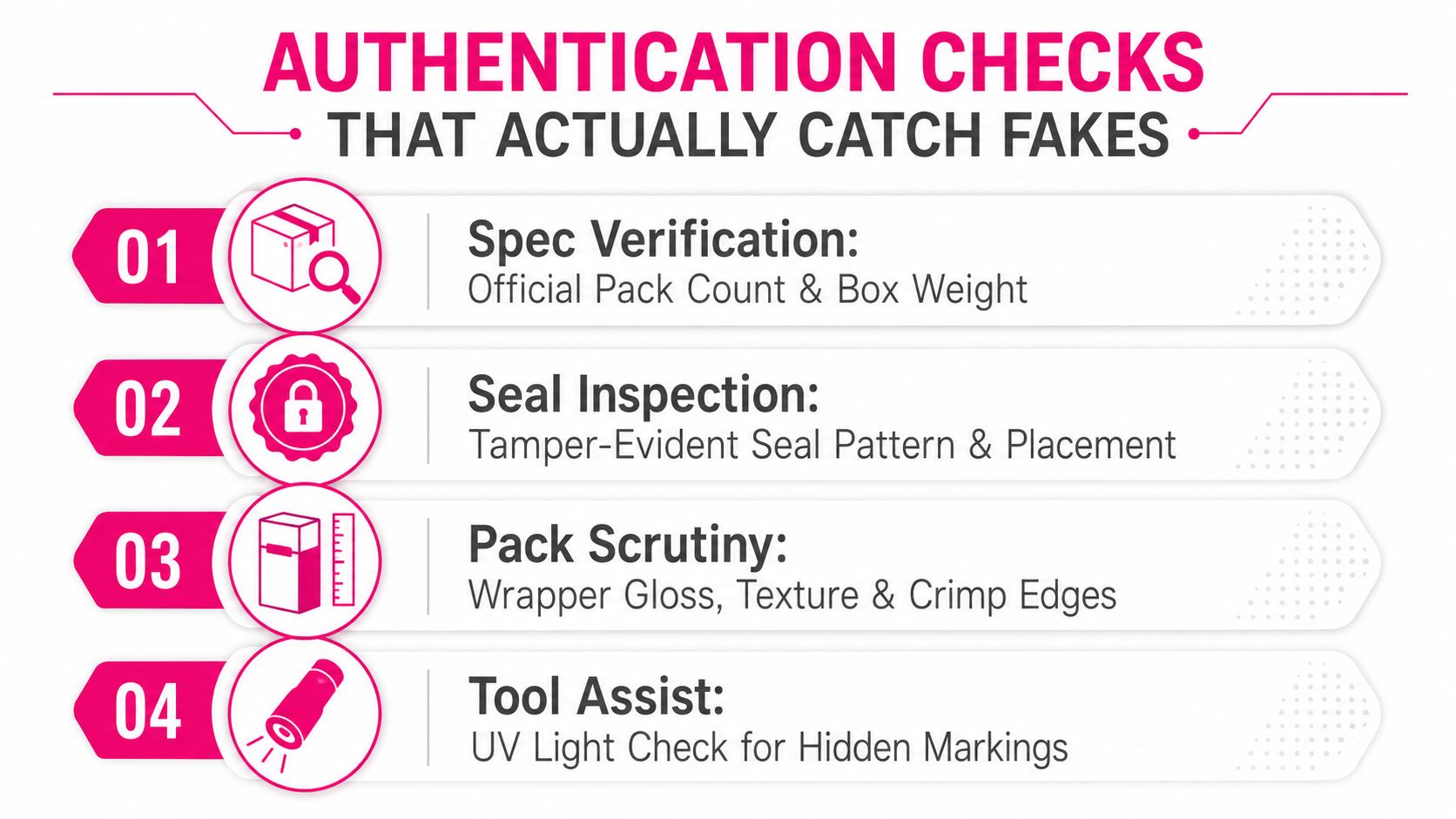
Fake sealed product usually survives one sloppy check. It rarely survives four. The strongest approach is layered, not clever, because counterfeiters can mimic one signal and still miss the others. If you want a fast way to buy Pokémon booster box stock without getting burned, use a multi-signal screen every time.
Start with the spec, then inspect the seal
The first check is boring, and that’s why it works. Verify the official pack count and the region-specific product spec printed on the box. If the seller won’t show that clearly, stop there. After that, inspect the shrink-wrap seams and box construction, because the factory finish on a real box usually looks consistent and deliberate.
A buying guide recommends using a calibrated scale with ±1 g accuracy and says standard Scarlet & Violet-era English boxes typically weigh about 3,080–3,140 g. That’s useful as a screen when you have the exact item in hand or a seller can give you an exact weight. It’s not a verdict by itself.
Don’t trust one signal alone
Weight checks fail when people treat them as magic. The same guide warns that weight, smell, and vague feel tests are not reliable on their own. That matches what experienced buyers learn the hard way. A box can feel right and still be tampered with, resealed, or just misrepresented in photos.
-
Check the wrap first: look for clean seams, uniform shrink, and packaging that matches the set and region.
-
Check the box itself: compare print quality, corners, and alignment against known-good examples.
-
Check the weight only as a screen: use it to rule out obvious problems, not to prove authenticity.
-
Check the seller history: prior sales, invoice trail, and reputation usually matter more than a dramatic photo.
Good fakes beat single tricks, not layered scrutiny.
If you need a fast decision framework, use all four checks in order. Spec, seal, weight, seller. That sequence catches more bad listings than trying to get smart with one isolated test, and it’s the right habit any time the box price looks unusually good.
Where to Buy and What Each Channel Really Costs
Once authenticity is under control, channel choice becomes the primary cost driver. A sealed box can be the same product across channels and still land at very different all-in prices because fee drag, seller markup, and access all change the number you ultimately pay. If you’re trying to buy Pokémon booster box inventory intelligently, the channel is part of the decision, not an afterthought.
The main buying paths
Big-box retail, like Walmart, Target, and Amazon, is usually the cleanest path when the listing is sold and shipped by the retailer. The upside is obvious, low tamper risk and simple returns. The downside is availability, because stock disappears fast and you don’t control when it comes back.
Dedicated card stores, including UK names like Chaos Cards and Magic Madhouse, plus local game stores, often offer more hobby knowledge and better product context. The trade-off is that stock can be constrained or uneven. In the UK, buyers often describe the process as luck-based, with lotteries, invite-only drops, and short-lived restocks replacing normal shelf availability (reference).
Fee math changes the whole buy
General marketplaces like eBay and TCGPlayer widen access, but they also add cost. eBay sits at roughly 12.9%, TCGPlayer at 10.75%, and Double Holo at 4.9% standard or 4.7% on premium, plus a 2.9% + $0.50 card processing fee (reference). On a $200 box, that fee gap is real money. Even before you think about shipping, the channel can eat into the edge you thought you had.
| Booster box buying channels at a glance | |||
|---|---|---|---|
| Channel | Typical Fee | Authenticity Risk | Best For |
| Big-box retail | Usually built into shelf pricing | Lower when sold direct by retailer | Buyers who want simple, low-friction purchases |
| Dedicated card stores | Varies by store | Lower to moderate | Buyers who want hobby guidance and local availability |
| eBay and similar marketplaces | 12.9% on eBay | Moderate to higher | Buyers who can vet sellers well |
| TCGPlayer | 10.75% | Moderate | Buyers looking for broad market access |
| Double Holo | 4.9% standard, 4.7% premium, + 2.9% and $0.50 processing (reference) | Depends on seller quality | Buyers who want sealed product plus market context |
The right channel depends on what problem you’re solving. Retail works when you want certainty. Marketplaces work when you need access. Hobby stores work when you value relationships. Fee-heavy platforms work only when the box price is low enough to absorb the drag or the seller trust is strong enough to justify the premium.
Timing the Buy Around Release Cycles and Scarcity
A good channel gets you a box. Timing decides what that box costs, and sometimes what it becomes worth later. The same set can move through different phases, and the smart buyer watches the phase, not just the price tag. That’s especially true if you’re trying to buy with a sealed hold in mind instead of a quick rip.
The four phases that matter
At launch, supply is usually strongest and prices are anchored by retail. In the 3-to-6 month window, prices often soften as more boxes circulate. By the 12-month mark, out-of-print status starts to matter more, and that’s when sealed demand can separate from rip value. After that, scarcity can pull sealed premiums away from the box’s opening value.
For ripping purposes, independent ROI analysis says boxes out of print for 12+ months often have EV only around 30% to 60% of MSRP. That gap is why many buyers stop thinking like openers and start thinking like holders once a set ages out of print.
How the market shifts when buyers rotate
Recent market listings show buyers getting more selective, with attention moving toward sets like Paldea Evolved, Surging Sparks, Scarlet & Violet Base, and Vivid Voltage as undervalued or under-followed options (reference). The important part isn’t that every one of those sets is a buy. It’s that the market keeps rotating toward perceived value pockets, while Japanese and special-set products also show wide price dispersion across listings.
This Japanese booster box guide is a useful comparison point if you’re trying to understand why some sealed products attract attention faster than others.
Buy retail in the launch window if you want clean access. Buy secondary only when the market discount is real. Stop buying once the box’s sealed premium stops making sense against your own exit plan.
A simple rule works well here. If the set is fresh, retail is the first stop. If the set is older but still liquid, secondary can make sense only if the box has softened enough. If the set is out of print and demand is thin, pause before you keep adding inventory just because the listing looks familiar.
Putting It All Together Before You Click Buy
A serious sealed buyer doesn’t ask one question, they run a sequence. First, confirm the box is really the standard 36-pack product and compare the implied per-pack cost to the $4.49 retail anchor, which works out to about $161.64 per box in the Scarlet & Violet frame (reference). Then ask whether the set’s EV justifies ripping or whether sealed hold logic makes more sense.
A five-minute pre-buy routine
Start with the box itself. Check the printed spec, the shrink, and the seller’s exact listing details. Then compare the box price to a quick EV estimate, even if it’s rough. If the expected singles value is clearly below the purchase price, the box is not a value rip, it’s an entertainment rip.
After that, compare channel cost. A marketplace with a lower sticker price can still be worse if fees and risk are high. A retail or hobby-store listing can look expensive and still be cleaner if it saves you from a bad seal or a messy return. Finally, place the set in its release-cycle phase so you know whether you’re buying into launch supply, a post-release dip, or scarcity.
-
Confirm the structure: 36 packs, correct region, correct product type.
-
Check the economics: per-pack price and rough EV versus the asking price.
-
Check the authenticity signals: spec, seal, weight, seller.
-
Check the channel cost: fees, shipping, and trust level.
-
Check the timing: fresh release, normal supply, or out-of-print scarcity.
That’s the actual decision framework. Not “where’s the cheapest box,” but “which box has the best risk-adjusted upside for what I want to do with it.” If you keep that discipline, you won’t need to chase every hot listing or every hype post. You’ll know when to buy, when to pass, and when the box is better left sealed.
If you want a cleaner way to compare sealed product, singles, and grading decisions in one place, use Double Holo to check market context before you buy. It gives sealed buyers and sellers a more structured way to look at price, fees, and timing, which is exactly what this decision needs when the listings start moving fast.