

Most buyers misread the VSTAR Universe Booster Box as a pure gamble, but the box itself already tells you the smarter game. A VSTAR Universe booster box contains 36 packs with guaranteed high-rarity hits, and the market now prices it around $150 to $240 depending on condition and source.
That gap between structure and price is the whole story. VSTAR Universe is a Japanese high-class Pokémon TCG set released on 2 December 2022, and one market guide says the set contains 262 cards total: 172 main-set cards, 37 Art Rares, 35 Special Art Rares, 14 Super Rares, and 4 gold Ultra Rares. Once you look at the box as a bundle of guaranteed value plus a small layer of upside, the usual chase-card hype starts to look lazy.
Table of Contents
- Introduction to the VSTAR Universe Booster Box
- What Comes Inside a VSTAR Universe Booster Box
- MSRP versus Secondary Market Pricing
- Expected Value versus Guaranteed Value
- Practical Tips for Buying a VSTAR Universe Booster Box
- Is VSTAR Universe Still a Good Sealed Hold
- Conclusion and Frequently Asked Questions
Introduction to the VSTAR Universe Booster Box
The common mistake is treating VSTAR Universe like a lottery ticket instead of a structured sealed product. That mindset pushes some buyers to overpay for sealed boxes at hype peaks, while others open boxes too casually and ignore the math behind the guaranteed hit structure. The better way to look at it is simple, a box is a known content package first and a chase opportunity second.
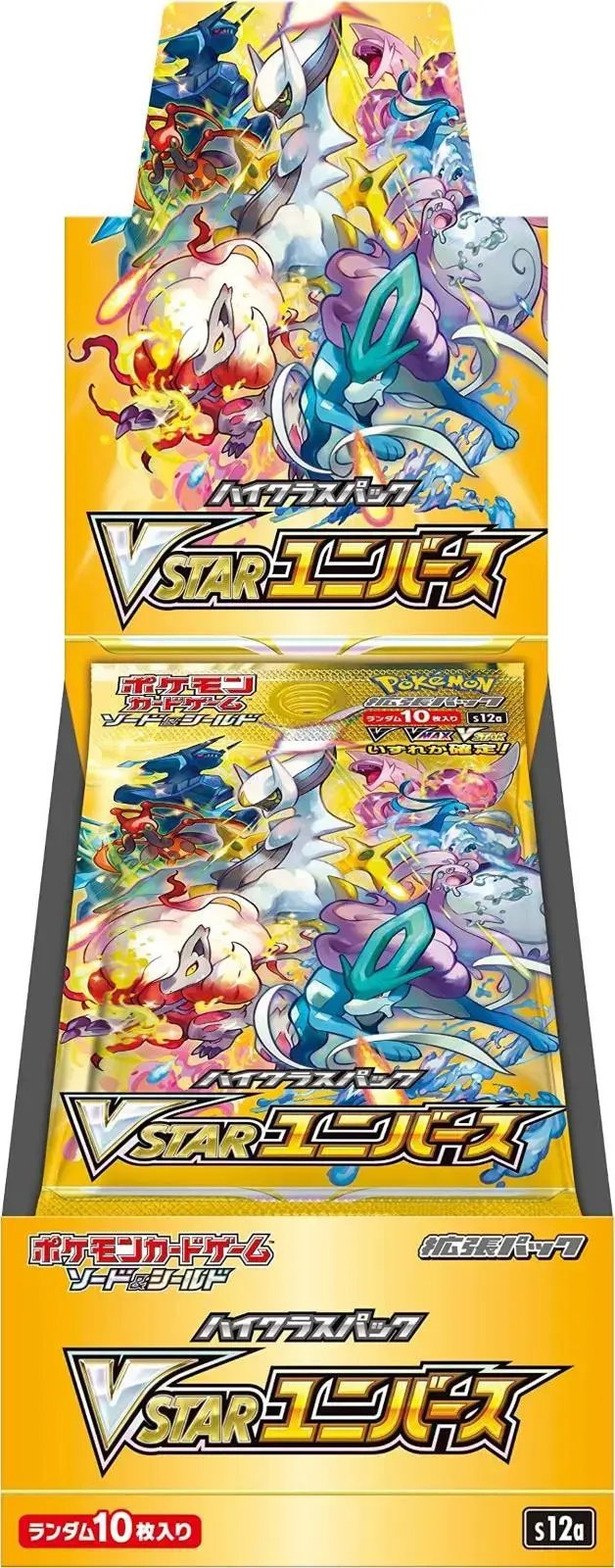
The appeal starts with what you get. A VSTAR Universe booster box has 36 packs, and the set’s high-class format makes the box far denser than a normal Japanese booster product. One opening guide reports that a normal booster box guarantees at least 1 Pokémon SAR, 1 SR, 3 AR, 3 RRR, 6 RR, and 1 Brilliant-style slot, which is why collectors often describe it as one of the most hit-dense modern sealed products.
Why the market still cares
The market does not reward this box only because of the chase cards. Community pull-rate analysis also puts the odds of a God Pack at about 1% per box, or roughly 1 in 100 boxes, and estimates that every box contains at least 15 high-rarity pulls when all premium slots are counted. That structure made VSTAR Universe especially important in major Japanese and global secondary markets because sealed-box value became a blend of guaranteed hits and rare upside, not a pure lottery.
Practical rule: if a sealed product has a reliable floor, price it like inventory, not entertainment.
That’s the frame I use here. Buyers who only ask, “Can I hit the big card?” miss the more important question, whether the sealed premium is justified by the contents and the resale reality. Once you ask that, the box becomes easier to judge and much harder to overbuy.
What Comes Inside a VSTAR Universe Booster Box
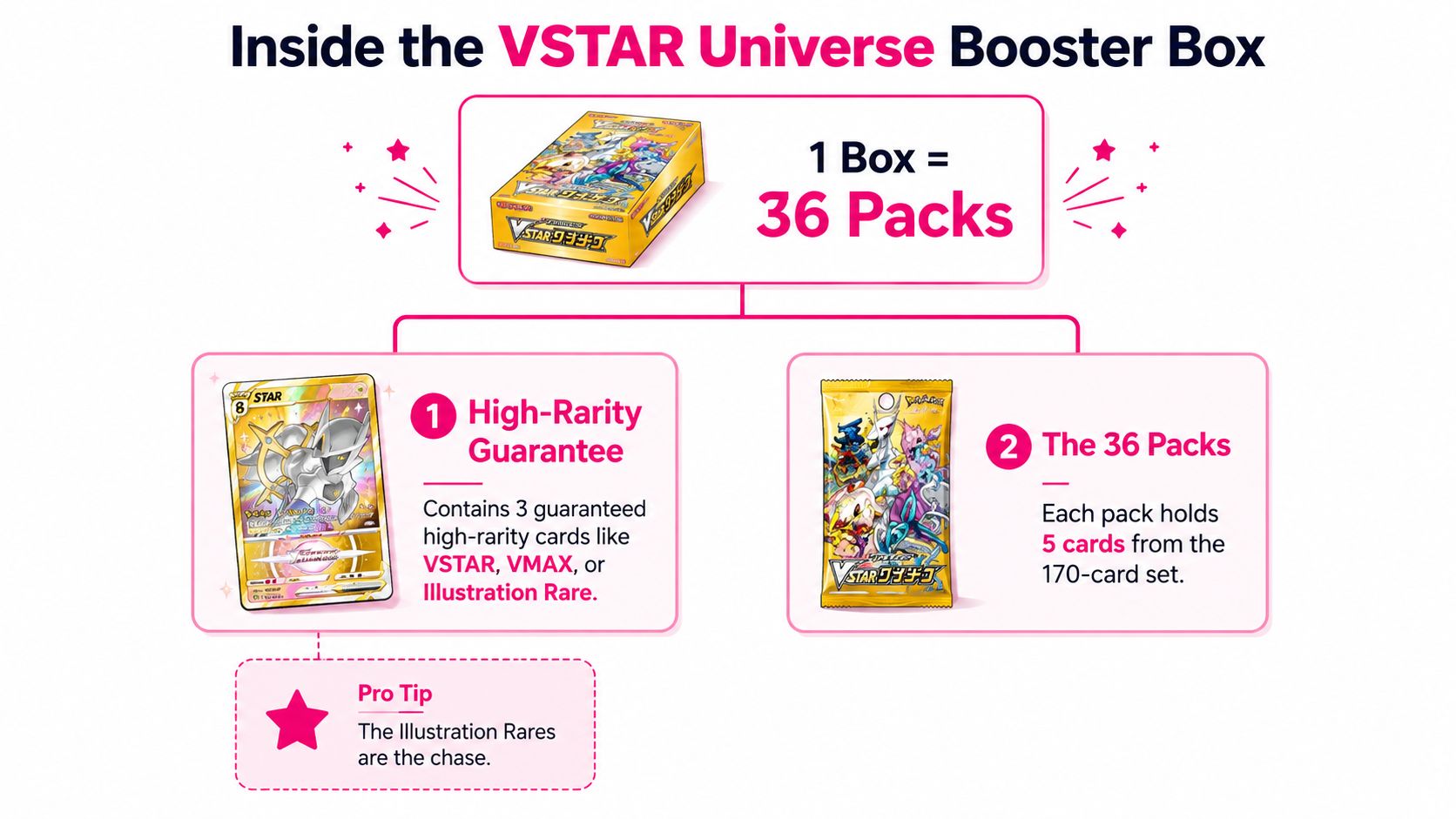
A sealed VSTAR Universe booster box is built around 36 packs, but that count is only the starting point. The reason this product keeps showing up in sealed discussions is the way those packs are stacked with premium slots, so opening one feels very different from ripping a standard Japanese booster box. The experience is less about hoping for a single isolated hit and more about working through a box that already has a strong internal floor.
What the slot structure changes
The slot structure changes the opening strategy immediately. Buyers who open sealed product for entertainment usually judge a box by how many cards feel meaningful from one session, and VSTAR Universe gives that opening a higher concentration of premium results than a normal set. That does not guarantee profit, but it does make the box easier to justify if your goal is to extract value through opening rather than just sit on sealed stock.
The collector experience changes too. A box with several premium lanes tends to create more sustained interest across the opening, because the expectation is not tied to one chase card or one lucky pack. Even when the top hit misses, the box can still deliver a spread of cards that feel collectable, which is why sealed copies remain attractive to buyers who care about both display value and openability.
Why the set size matters
The set guide places the total card count at 262 cards. That matters because a large card pool spreads attention across many possible pulls, while the premium slots concentrate value back into the box. In other words, the product is designed to make the chase feel broad, but the premium structure keeps the box from becoming a pure lottery.
That mix is what makes VSTAR Universe unusual. A box with a large set list can still feel rewarding if enough of the higher-rarity slots are built into the opening model. Buyers evaluating sealed inventory should care about that balance, because it affects how much of the box’s value comes from guaranteed pull quality versus pure upside.
What the chase cards actually do
The infographic label points to the right conclusion. Illustration Rares are the cards most collectors remember first, and they carry a big share of the product’s appeal even when the biggest headline pull does not appear. They are also the reason some openers treat this box less like a gamble and more like a curated rip, because the card pool gives them multiple chances to land something visually strong.
That is the part many casual buyers miss. The set is not only about chasing a single standout card after the fact. It is also about opening a product where the sealed experience already has enough built-in premium content to keep the box interesting from pack one to pack thirty-six.
MSRP versus Secondary Market Pricing
| Condition | MSRP (Estimated) | Secondary Market Range | Typical Spread |
|---|---|---|---|
| Sealed booster box | Around $120 | Roughly $150 to $240 | Above MSRP |
| Ungraded sealed box examples | Around $120 | About $149.79 to $238.05 | Above MSRP |
VSTAR Universe becomes a real pricing case once you compare estimated MSRP with the sealed market. The box has consistently traded above launch-level assumptions, but the gap is not uniform. Condition, source, and market channel all matter, which is why “the price” is never a single clean number.
Why the spread exists
The premium is easy to explain and hard to dismiss. A market listing shows the booster box at $238.05, which suggests steady demand rather than a brief launch spike. The same listing also shows an ungraded booster box around $149.79, with roughly 3 sales per day, which points to real liquidity for a sealed Japanese Pokémon product that has already matured in the market.
What the spread means in practice
That gap says two things at once. Collectors still value sealed copies enough to keep prices above estimated MSRP, but the difference between lower and higher listings shows how much condition and seller confidence affect the final number. A clean box from a trusted source can command a very different price than a loose or uncertain copy.
The pricing context is even clearer in Double Holo’s booster box MSRP guide, which gives buyers a straightforward way to compare estimated retail anchors with secondary-market behavior. In a product like this, the premium is part of the market identity, not an exception to it.
Expected Value versus Guaranteed Value
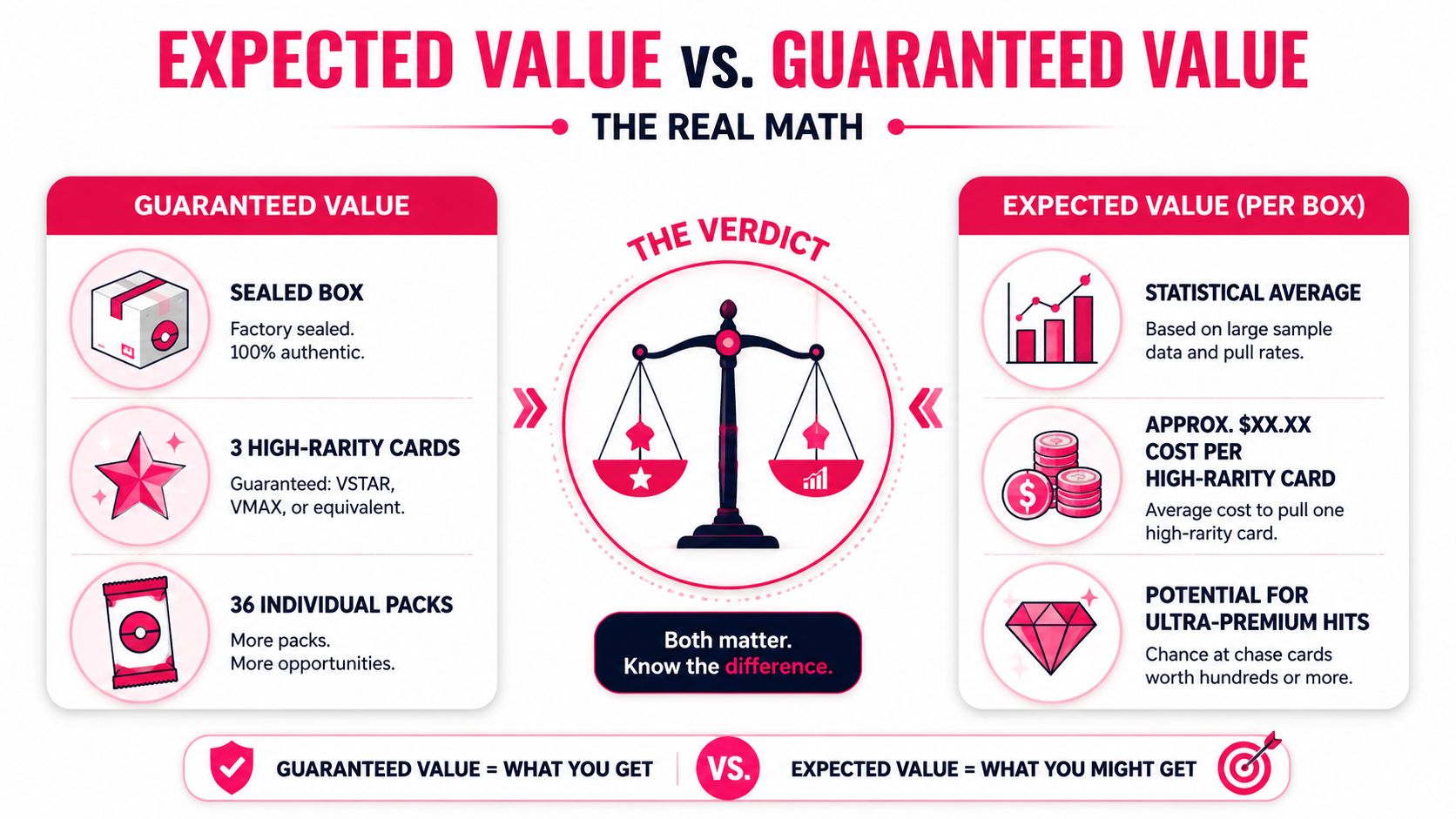
VSTAR Universe is easy to misread if you treat every box like a simple chase-card lottery. The sharper way to look at it is through guaranteed value versus expected value. That distinction matters because a box can be structurally appealing to open and still be a weak choice if the resale math does not support the rip.
The guaranteed floor is stronger than the chase suggests
The box gives buyers a defined pull profile, not a blank slate. A standard box includes 1 Pokémon SAR, 1 SR, 3 Art Rares, 1 Radiant Pokémon, 3 RRR, and 6 RR, while community pull-rate estimates also point to a rare God Pack outcome and a separate shot at a gold UR card. The point is not that the chase is impossible. The point is that the set already returns a meaningful baseline before you get lucky.
That baseline changes how the box should be judged. Buyers who focus only on the top hit are really pricing a tail event, while the actual box is built around a much broader bundle of guaranteed and semi-guaranteed cards. For collectors, that structure creates consistency. For investors, it means the opening thesis has to clear a higher bar than “there are good cards in the set.”
Expected value is the number that decides the opening case
The more useful question is what the average box returns after the likely outcomes are blended together. Independent opening analysis puts the box’s expected pull value at about $65 per box. That figure is far below the sealed prices discussed earlier, which means the spread between opened value and sealed cost is already doing most of the work against rip-and-resell buyers.
That gap is the story. Opening a box converts a collectible asset into singles immediately, and singles enter a market where grading risk, listing fees, shipping, and timing all cut into realized value. The sealed box keeps optionality intact. Once you open it, that optionality disappears and the market forces you to cash out card by card.
For a broader framework on sealed-product math, Double Holo’s booster box value guide gives a useful reference point for how sealed premiums and opening value diverge. The conclusion is direct. VSTAR Universe is easier to justify as a sealed hold than as a box to rip for profit.
Practical Tips for Buying a VSTAR Universe Booster Box
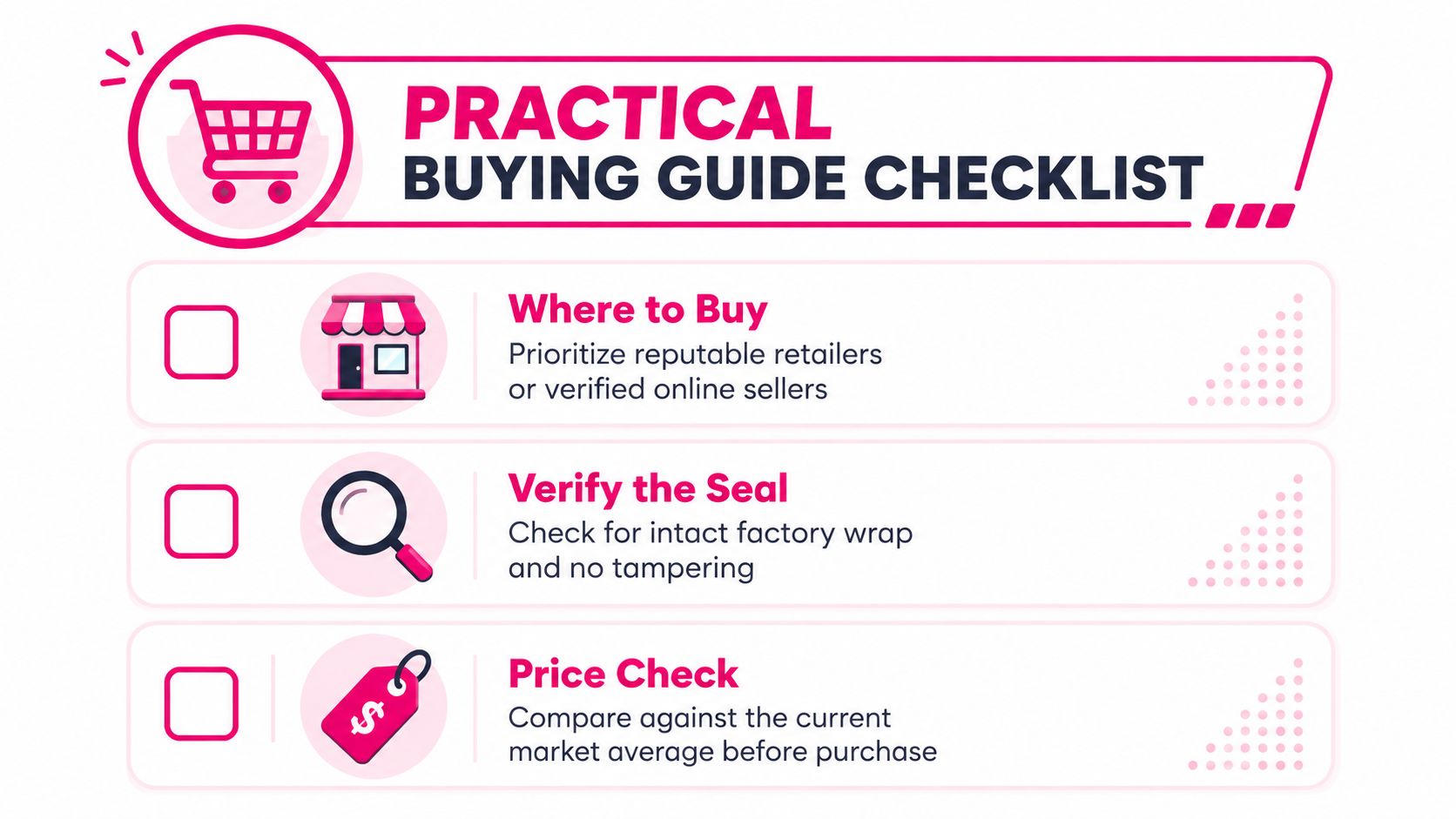
Smart buying starts before you compare prices. The box is popular enough that buyers sometimes focus on the listing photo and skip the parts that protect them, seller reputation, seal integrity, and return policy. That’s where mistakes happen.
What to check first
-
Where to Buy: Prioritize reputable retailers or verified online sellers, because sealed Japanese product needs trust more than hype.
-
Verify the Seal: Check for intact factory wrap and any signs of tampering. If the wrap looks loose, uneven, or reworked, walk away.
-
Price Check: Compare the asking price against the current market average before you buy. A low number is only a good deal if the box is real and the seller is credible.
The buying question becomes simpler when you filter out noise. If you can’t verify source and condition, you’re not buying an asset, you’re buying uncertainty.
Timing matters more than most people admit
Release-window buyers often pay for momentum, not value. Later buyers can sometimes step into a more rational market, but only if supply hasn’t tightened too far. That’s why sealed product works best when you know whether you’re buying to open now, hold for scarcity, or exit quickly.
For sellers and collectors comparing marketplaces and stores, the practical buying path is clearer in Double Holo’s guide to the best place to buy Pokémon booster boxes. I’d still keep the same rule in mind, if the source isn’t clean, the deal isn’t clean.
A simple decision filter
-
Trusted source first.
-
Sealed condition second.
-
Market price third.
If those three don’t line up, keep your money in your pocket. The box is good, but bad purchasing habits turn a good product into an expensive mistake.
Is VSTAR Universe Still a Good Sealed Hold
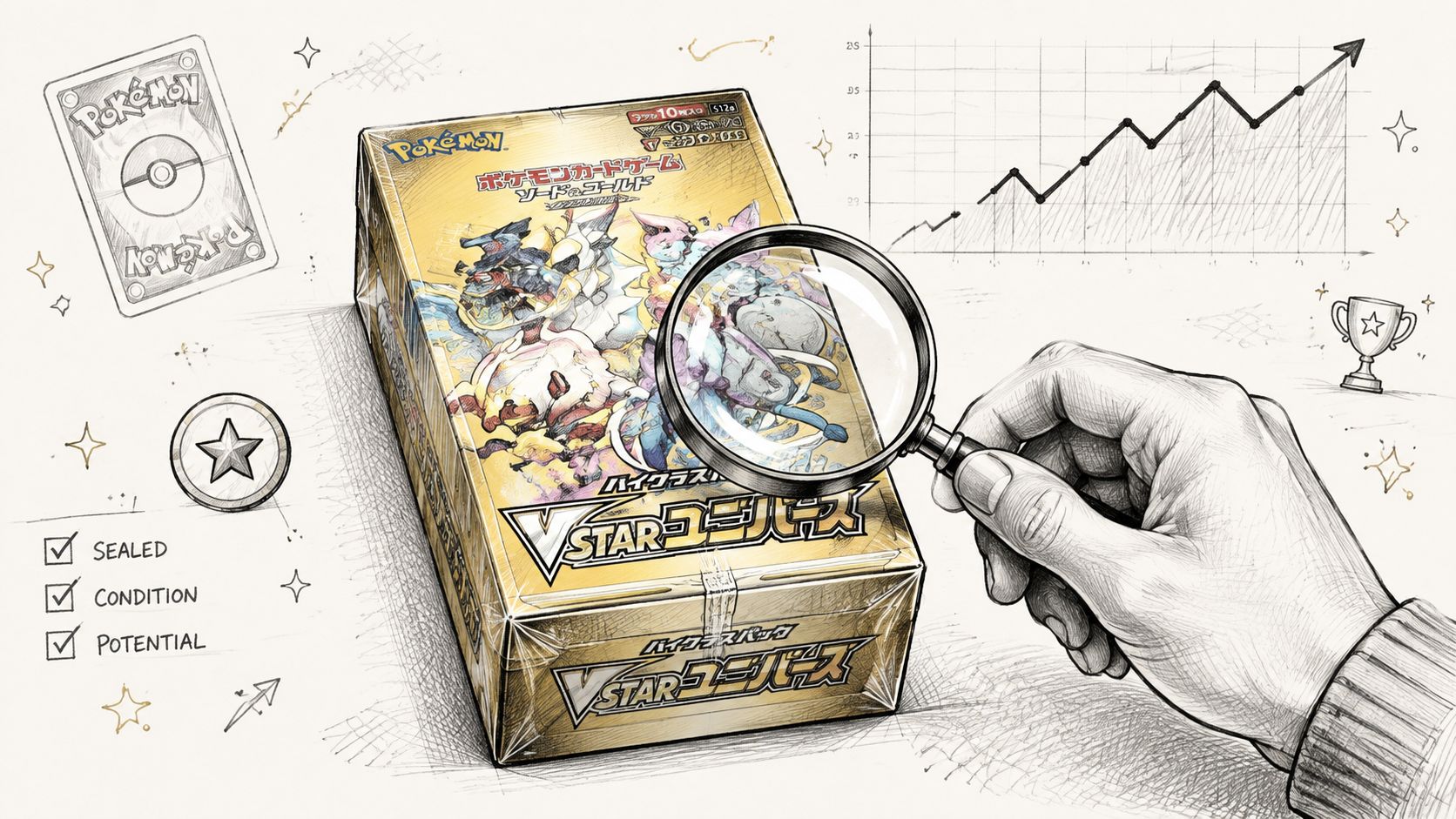
VSTAR Universe still makes sense as a sealed hold if you care about liquidity plus collector demand more than quick resale. The box has enough name recognition, chase appeal, and broad collector awareness to stay active in the market, but that same popularity keeps opening pressure alive. Every box opened adds more singles to the market, and that supply can cap how far sealed upside extends.
The more important question is what happens next. Hold decisions for sealed Japanese product depend less on nostalgia and more on supply, reprint risk, and whether buyers keep treating the set as a premium hold rather than a rip-first product. If supply stays constrained and collectors keep preferring sealed copies over loose singles, the box can remain supported. If new attention shifts to newer releases, or if opened inventory keeps feeding the singles market, sealed appreciation can slow even if demand does not disappear.
Opening appeal versus sealed scarcity
VSTAR Universe still has a strong opening appeal, and that is exactly why sealed holders need to be selective. The set was designed around pull excitement, so each open box adds more chase cards back into circulation. High-population hits do not become scarcer because a rip felt special, and that matters for anyone relying on sealed appreciation rather than personal enjoyment.
That dynamic cuts both ways. Strong collector interest helps the box retain a premium, but it also means the market has already priced in a large part of the excitement. Future gains are more likely to come from continued scarcity and steady collector demand than from a new wave of discovery. If those conditions soften, sealed value can flatten even while the set remains popular.
If you want enjoyment, open one. If you want optionality, hold one. If you want certainty, buy singles.
Video for a closer look at the box and its market context.
The strategic verdict
The better sealed hold case depends on discipline, not hype. Buyers should ask whether they are paying for exposure to the box itself, or just paying for a chance to chase the cards inside it. VSTAR Universe still works as a sealed hold for collectors who can tolerate a longer time horizon and understand that opening demand is part of what supports the price in the first place.
That also means the box is not the right answer for every buyer. If the goal is a fast gain, sealed Japanese product can be a poor fit when the market already recognizes the set’s appeal. If the goal is to hold a recognizable product with strong collector demand and real liquidity, this one still has a case.
Conclusion and Frequently Asked Questions
VSTAR Universe sits in a rare category of sealed Pokémon product. It has a strong pull profile, a real market premium, and enough liquidity that buyers can still move boxes without feeling trapped. The catch is that the same qualities that make it attractive to collectors also make it expensive to open as a profit play.
Frequently Asked Questions
Is opening a VSTAR Universe booster box ever worth it?
Yes, if you’re buying for enjoyment, collecting, or content. It’s a weak choice if your goal is to beat sealed-market pricing on resale.
How do I verify authenticity?
Start with the seal, the seller’s reputation, and whether the box matches normal sealed presentation. If anything looks rewrapped or off, don’t rationalize it.
What’s the best way to compare prices?
Look at multiple recent listings and pay attention to condition, not just the headline number. The box can trade very differently depending on source and confidence.
Do Japanese-import boxes carry extra risk?
They can, mainly because buyers need to be stricter about seal integrity and seller trust. That risk is manageable, but only if you’re careful.
If you’re buying sealed Pokémon product with a real investment lens, use the same discipline you’d use on any other asset. Double Holo gives collectors and sellers the market tools, sealed-product context, and pricing workflows to make better decisions around boxes like this, and you can start by visiting Double Holo.